Can A Dog’s Reactivity Ever Be 100% Fixed?
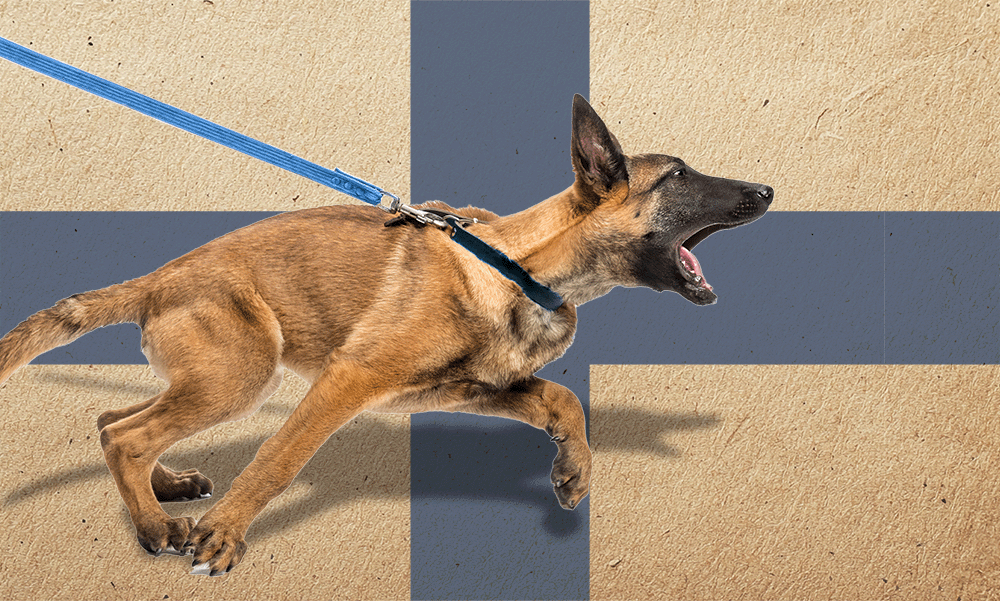
A significant share of reactive behavior is fear-based, whether from gaps in early socialization, trauma, or overwhelming environments. image: Bay Woof
All living organisms react. Humans jump at loud noises, squirrels shoot up trees at the sight of a predator, and horses flinch at sudden movements. Dogs react the same way. Their nervous systems are designed to detect changes and respond quickly to stay safe.
So when we talk about a "reactive dog," we're not talking about a dog who reacts. All living things react. We're talking about a dog who overreacts with behaviors that are too big, too fast, or too intense for the situation. A dog barking at a coyote on a ranch is normal. The same dog barking at a skateboard on a narrow city sidewalk is called "reactive" because the context and our expectations are different.
Your dog's reactivity is not a sign of disobedience. It’s not stubbornness, a moral failing, or your dog trying to be the boss of you. It is an involuntary response shaped by past learning experiences, the environment, and inherited traits. Dogs don’t decide to melt down any more than a person chooses to have a panic attack.
It used to be that growling, lunging, biting, or fighting were all lumped together under the term “aggression.” As canine science has evolved, we’ve learned that reactivity isn’t a single thing. Depending on the dog, reactivity has different functions, each with its own emotional drivers, triggers, patterns, and a practical ceiling on how fixable it is.
Where Reactivity Comes From (And Why It's Probably Not Your Fault)
So many dog owners are drowning in guilt, thinking they somehow “broke” their dog or that one more training class will magically fix everything. But reactivity is rarely that simple.
A significant share of reactive behavior is fear-based, whether from gaps in early socialization, trauma, or overwhelming environments. But not all reactivity stems from fear. Some dogs react out of frustration: they want to approach, play, or investigate, but they are prevented from doing so by a leash, fence, or other barrier.
Reactivity takes many different forms depending on what's driving it. Beyond fear and frustration, some dogs struggle with impulse control or are easily overstimulated. Predatory arousal triggers chasing behaviors, while resource guarding leads dogs to protect food, toys, people, or territory. Some dogs are wired with very fast startle or arousal responses. These tendencies can be shaped or amplified by genetics, prenatal stress, medical issues, environmental pressures, reinforcement history, sensory sensitivities, or normal dog behavior expressed in the wrong context.
Making matters more complex, dogs, like humans, often operate with overlapping emotional states. For example, fear can blend with arousal and frustration can overlap with insecurity. Stress is also cumulative. A dog might handle one challenge fine, but when several happen in a row, even a minor trigger can cause a big reaction.
For practical purposes, it's useful to know that most dogs labeled "aggressive" are actually fearful, conflicted, or overwhelmed. Only a tiny subset of dogs exhibit aggression with the intent to harm, and it is far less common than most people assume. True offensive aggression is rare and usually reflects a neurological problem or a medical disorder.
Unfortunately, aversive handling or training methods - such as leash jerks, e-collars, prong corrections, intimidation, or forced exposures - can also create or exacerbate reactivity by increasing fear and stress. When a dog is punished for reacting, they often associate the punishment not with their behavior, but with the trigger itself, making the trigger even more upsetting or threatening. Additionally, these methods can suppress warning signals, such as growling, without addressing the underlying emotion, which may lead to unpredictable or escalated responses later.
Finally, it's worth noting that reactivity often emerges or worsens during adolescence, which is roughly 6-18 months for dogs. Many owners are surprised when their happy-go-lucky puppy suddenly becomes reactive during this phase, but this is actually quite common. While some reactive responses may mellow as dogs mature, most don't simply grow out of it without help. The sooner you address reactivity, the more flexible your dog's responses will tend to be.
Discomfort or Pain: A Commonly Overlooked Cause of Reactivity
One of the biggest blind spots in behavior work is pain. Research indicates that many dogs exhibiting reactivity or aggression often have an underlying physical issue. Dogs rarely show pain in obvious ways. Instead, it may appear as a lower reactivity threshold, irritability, avoidance, sudden fearfulness, defensiveness, or seemingly out-of-nowhere reactions.
Behavior modification and training cannot override an unwell body. When pain is the cause, reactivity often improves or disappears once the medical issue is treated. Sudden-onset reactivity should always be considered a medical red flag, but even longstanding reactivity warrants a medical exam. Issues such as gastrointestinal upset, chronic low-grade pain, arthritis, or other discomforts can lower a dog’s threshold, causing reactivity or exacerbating existing behavioral challenges.
Breed: How Genetics Can Shape Triggers and Tendencies
Breed doesn’t decide who your dog becomes, but it can shape the behaviors that come easily, as well as what things may hit their nervous systems hardest. Breeds were developed for specific jobs, and those jobs still influence their behavior. Witness the urban Border Collie or Aussie who still feels the urge to herd even when there are no sheep in the apartment.
Guardian breeds are typically wary of strangers. Herding dogs respond to motion. Terriers and sight hounds chase. Sporting dogs have high energy and intense focus. Nordic breeds value independence. Toy breeds tend to exhibit greater startle responses.
But while breed may influence tendencies, it does not dictate destinies. Many reactive dogs react for reasons unrelated to breed. Still, understanding inherited predispositions can help to set realistic expectations and develop humane training plans. In short, genetics loads the gun, the environment loads the magazine, and the trigger pulls the trigger.
Can Reactivity Ever Be 100% Fixed?
You may wonder if your dog’s reactivity can ever be fully resolved. The honest answer: it depends. Full resolution is possible for some dogs and unrealistic for others. Reactivity falls along a spectrum. Some dogs reach complete resolution, many improve substantially, and others require lifelong support and management.
Some types of reactivity improve more readily than others. Frustration-based reactivity often improves quickly with clear structure and consistent, well-supported practice, while fear-based or built-in sensitivity usually requires more time and steady environmental support. Resource guarding directed at humans is often highly fixable. In contrast, dog-to-dog resource guarding or fighting between household dogs may need ongoing management.
A dog raised in a quiet rural environment who has a sensitive temperament and then moves to a dense, noisy urban neighborhood may always struggle a bit when overstimulated, even with excellent training and support. A dog with fear, trauma, chronic pain, or built-in sensitivity living in a chaotic environment may make enormous progress yet never eliminate reactivity entirely. And even the most fixable form of reactivity will resurface if a dog is repeatedly overwhelmed or pushed beyond their threshold.
It’s important to remember that dogs are sentient beings, not machines you drop off at the repair shop or software you update to version 2.0. Living systems adapt, regress, compensate, and change over time. Just as anxiety or depression in humans is usually managed rather than permanently eliminated, a dog’s ability to cope will shift with stress, health, predictability, and the level of training or behavior-modification support they receive.
Short-term “boot camps” or board-and-train programs may seem appealing, but they rarely produce lasting results on their own. A dog might do well with a professional in a controlled setting, yet still struggle at home if those same challenging situations continue and the family doesn't follow through with the training plan. A good trainer can kick-start progress, but lasting change requires ongoing, consistent practice and guidance where the dog actually lives.
The Goal: Change Emotion, Not Just Behavior
Reactivity isn’t a conscious choice; it’s a nervous system event. The outward barky-lungy behavior is only a visible symptom.
Effective behavior work addresses the underlying emotion, so the dog no longer needs to react. When a dog gains predictability, structure, space, coping tools, confidence, and a sense of control, the emotional drivers behind reactivity diminish.
Here's the good news: the protocol for addressing reactivity remains the same regardless of what's driving the behavior. You don't need to psychoanalyze your dog's entire past. Many rescue dogs come with unknown histories, and fortunately, you don't need those details to make progress. You do need a systematic, humane process that respects thresholds and avoids overexposure. Remember that a dog’s reactivity threshold is the point at which they can no longer think or learn. When they've gone over that threshold, they're in survival mode, and no learning can happen.
How to Build a Good Reactivity Plan
A good reactivity plan should include the following elements.
Management. Set up the environment so your dog isn't put in situations that trigger overreactions. Rehearsal reinforces behavior, so preventing outbursts is crucial.
Training. Teach simple, repeatable skills that help your dog make calmer choices. This provides your dog with predictable patterns, clear communication, and simple fallback behaviors so they know what to do when they feel unsure or overwhelmed. However, remember that you cannot train away fear.
Behavior modification. Gradually help your dog feel safe around their triggers by keeping things easy enough and pairing them with positive experiences. This process relies on desensitization (controlled, gradual exposure) and counterconditioning (teaching your dog to associate the trigger with something good, like food or play).
Enrichment. Meet your dog's physical and emotional needs through play, movement, sniffing, problem-solving, and rest, all of which support a steadier nervous system.
Veterinary support. Rule out pain or medical issues and, when appropriate, use medication to lower stress and widen the learning window.
A Hard Truth: Not Everything Can Be 100% Fixed
Having a reactive dog doesn't mean you've failed, and it doesn't mean your dog can't have a good life. Many reactive dogs live happily with management and appropriate accommodations.
It's okay to have a dog with limitations (all dogs have some), and it's equally okay to feel disappointed or to grieve the experiences you thought you'd have together. Maybe you imagined dog park visits, busy patios, or easy neighborhood As you work to help your dog feel safer and more confident, you may find that some things improve dramatically, while others require ongoing management. That's not failure; it's reality. The goal isn't to create the "perfect" dog or to force your dog into a life they're not wired for. It's to help your dog navigate their world more comfortably, to celebrate the progress they make, and to build a life together that works for both of you.
Some forms of reactivity can be fully resolved. Others become nearly invisible with consistent training. Many can be greatly improved and safely managed. A few will remain challenging throughout a dog's life.
Progress, not perfection, is what matters. A dog who once lunged at every passerby and can now walk calmly past most is not a failure, even though they may still struggle on busy streets. A dog who needed a 50-foot buffer from other dogs and now manages at 15 feet has made remarkable progress, even if they're not ready for the dog park.
If you're struggling with a reactive dog, you're not alone. Find a qualified, force-free trainer or veterinary behaviorist who understands the science behind reactivity. Rule out pain and medical issues first. Be patient with your dog and with yourself. You're helping your dog feel safer and more confident, and that's worth working toward, one small step at a time.