Your Leash Is Talking – Are You Listening? Why a Tight Leash Makes Reactivity Worse
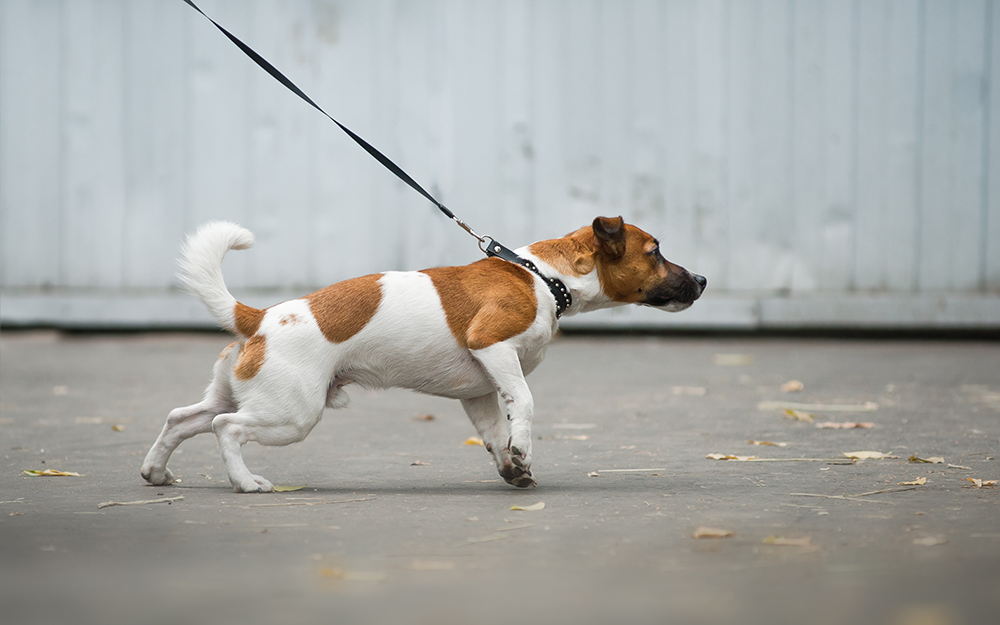
Loose-leash walking should be taught long before you need it, in calm, low-distraction environments where you can both succeed. photo: AdobeStock
You can tell a lot about a dog-and-handler team just by watching the leash. Is it loose and relaxed or pulled taut? In fact, the leash is a barometer. It tells you how the human and the dog are feeling in the moment.
Loose-leash skills matter for every dog. Walking a dog who constantly pulls is exhausting, but for reactive dogs, leash tension also reveals when stress is rising. When the leash is always tight, we lose our early warning system, those subtle shifts that show when your dog is starting to feel tense.
Keeping a loose leash isn’t just about preventing pulling. It’s about teaching you and your dog to move together without resistance. Loose-leash walking should be taught long before you need it, in calm, low-distraction environments where you can both succeed. Through repetition, both of you build muscle memory: your hands stay relaxed and your dog doesn’t become habituated to leash tension. That way, when something unexpected happens out in the world, the relaxed handling and slack leash are already second nature.
This applies no matter what kind of leash you’re using: short or long, 3’ or 15’. The length doesn’t matter - it’s the tension that’s important. You can keep slack in the line even when your dog is right beside you.
For many dogs, simply switching to a longer leash can dramatically reduce reactivity. The extra room lets them sniff, which lowers heart rate and promotes calm, and allows them to move freely and feel as if they have some agency. When dogs aren’t physically restrained, they’re less likely to feel trapped or frustrated. Leashes under six feet are often too limiting. It’s better to have a leash long enough to shorten when needed than one that doesn’t give your dog enough space.
Managing Your Own Body Language
When loose-leash walking is the baseline, changes in leash tension can signal how your dog feels about what’s happening. Watch your dog’s body language: are they leaning forward, pulling back, or freezing in place?
But remember that stress travels both ways and leash tension often starts with us. When you see something that might upset your dog and automatically shorten the leash and brace yourself, that subtle shift sends a message before the dog ever reacts: something is wrong.
That’s why managing your own body language matters. Keep your hands relaxed, your shoulders soft, and take a deep breath. If you need to shorten the leash for safety, walk your hands down the leash as you move toward your dog. They shouldn’t even notice their six-foot lead just became two feet long. Smooth adjustments keep the leash neutral and your dog’s emotional state stable.
It can be hard to break the habit of grabbing the leash when things feel unpredictable. It may seem counterintuitive to keep it loose, but that looseness is exactly what tells your dog there’s no reason to panic. The leash isn’t a tool for control. It’s a safety belt, not a steering wheel. Its job is to keep everyone safe, not to direct your dog’s every move.
Why Tight Leashes Can Trigger Big Emotions
A tight leash removes choice from your dog. When animals feel trapped, their natural flight response is gone, leaving only the options to fight or freeze. A dog who can’t move away from something scary - another dog, a weird stranger, a loud noise - may growl, bark, or lunge to push the threat back.
Restraint is a powerful trigger. Even neutral encounters can feel confrontational when the leash is tight. If your dog is already tense or nervous, leash pressure magnifies those feelings, much like someone grabbing your arm when you’re trying to leave a heated argument.
Dog owners often tighten the leash out of fear that their dog might make contact if they lunge. That fear is understandable. But if you feel the need to choke up on the leash, you’re already too close to the upsetting thing. The solution isn’t more restraint; it’s more distance.
A loose leash communicates calm. It says, You have options. You are safe. You can move away. Freedom of movement isn’t a luxury - it’s a basic emotional need. A loose leash lets your dog choose: to move away, sniff, disengage, or arc around something uncomfortable. Those choices lower stress and prevent outbursts.
Allowing choice also builds trust. Safety, for a dog, is knowing their human won’t drag them into situations they can’t handle.
Of course, pulling, barking, and lunging aren’t always about fear. Sometimes these behaviors are just about frustration. Social, energetic dogs often react because they want to get closer to play, sniff, or greet. The leash becomes a wall between intent and action, and that conflict builds energy that has to go somewhere. Whether the motivation is fear or frustration, the leash acts as a barrier. It prevents natural communication, removes options, and intensifies emotion.
The Art of the Arc
Dogs naturally use curves or arcs to avoid conflict. These movements communicate calm intent and respect for space. But some dogs need to learn that they can move this way, especially if leash pressure or past experiences have taught them to face things head-on.
Humans, on the other hand, tend to walk straight toward what’s ahead, not realizing how direct movement can feel confrontational in dog language. A tight leash prevents your dog from using this natural calming signal. A loose leash allows them to curve, create space, and avoid conflict gracefully.
It’s easy to practice the arc with your pup. Here’s how:
When you see another dog or person, make a wide curve.
Keep the leash slack so your dog can follow your movement.
Praise and reward your dog while you’re arcing away.
Allowing and encouraging arcing around a potential problem isn’t giving in. It’s telling your dog, I see the problem and I’m helping you handle it. With repetition, your dog will begin to offer these polite arcs on their own, a sign of self-regulation and confidence.
“Let’s Go”: Exit Without Pressure
When things get chaotic, most people’s instinct is to tighten the leash, yell “No,” or shout their dog’s name. But that just ratchets up the tension for your dog. Instead, every reactive dog team needs a reliable escape cue, a signal that means, We’re leaving, no questions asked. “Let’s Go” is a calm, practiced cue that tells your dog what to do next, providing an invitation to move together, not a panicked yank on the leash.
As with any cue, you’ll want to teach it long before you need it. It’s a fairly simple process: start in a calm setting, say “Let’s Go” in a cheerful tone, take a step in a new direction, and reward your dog for following. The important thing is to practice until it becomes muscle memory for both of you (think of it like pilot training; when the plane’s going down is not the time to learn what the switches do). With repetition, “Let’s Go” will become automatic for you and your dog.
When your dog isn’t worked up, you can also use a cue like Touch (hand targeting) by asking them to boop your hand with their nose to get a treat. This is a low-pressure way to guide movement and keep the leash loose. The Touch cue is a calm, cooperative skill that helps you move your dog without pulling on their leash.
What to Do When Your Dog Freaks Out
Sometimes the world is just too much. A skateboarder appears or a loose dog charges, and your dog loses it. It happens.
When your dog is barking, lunging, and straining at the end of the lead, your job is simple: create distance. Ideally, your dog will follow your “Let’s Go” cue without leash pressure because you’ve practiced it. But if they can’t, it’s okay to use leash pressure if needed to get out safely. You’re not punishing; you’re protecting. And yes, reward your dog for moving away. Distance is a win, not a loss.
If you live in or walk through environments with limited space (apartment hallways, elevators, narrow stairwells), it may be wise to muzzle-train your dog. A properly fitted basket muzzle keeps everyone safe and can reduce your own anxiety about potential incidents. That, in turn, helps you avoid over-tightening the leash out of fear. (Note: You can’t just put a muzzle on and hope for the best. Muzzle training takes gradual conditioning so your dog can wear it comfortably without pawing at it. A qualified trainer can help you introduce it step-by-step so your dog learns to feel relaxed wearing it.)
The Bigger Picture
Loose-leash handling is essential, but it addresses only part of the problem.. Reactivity can stem from fear, frustration, or overexcitement - all emotional responses that need to be addressed through systematic desensitization and counterconditioning. Working with a qualified, force-free trainer can help you get to the root of your dog’s behavior. The leash skills discussed here make that process more effective and humane.
Remember that reactive behavior isn’t about dominance or disobedience. It’s about fear, frustration, or overstimulation. Leash tension amplifies those emotions. But with awareness and practice, that same leash can become a tool for connection rather than conflict.
Most importantly, remember that your dog’s reactivity isn’t a moral failing. It’s communication. It’s your dog saying, This is too hard. A leash doesn’t have to be a symbol of restraint. When we stop pulling against our dogs and start moving with them, that’s when real change happens.