The Humboldt County Case
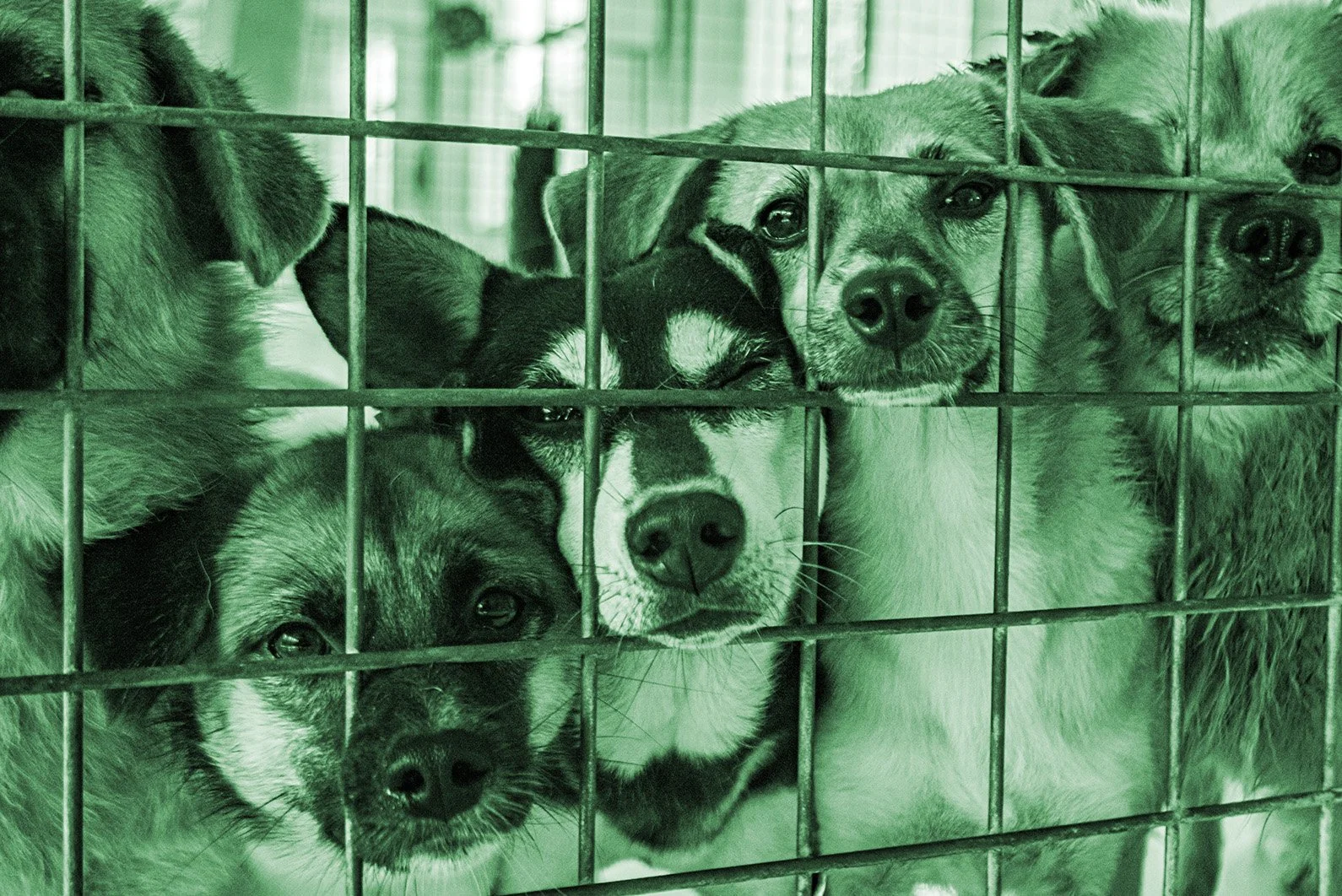
Dogs awaiting their fate. photo: AdobeStock
This case is about the alleged dog abuse and killings reportedly tied to significant financial fraud at Miranda’s Rescue in Humboldt County. The piece we’ve seen that best combines investigative journalism with storytelling skill comes from Redheaded Blackbelt, an online publication based in Humboldt near where Miranda’s Rescue is located. Author Lisa Music did a considerable amount of research in order to shine a light on the disturbing details of this case so far.
We wanted to share Music’s article because it delves deeply into the timeline and known facts of the story as of May 22 when it was first published. To do so, Bay Woof reached out to Redheaded Blackbelt publisher Kym Kemp who was kind enough to grant us permission to reprint Music’s piece. The complete article is available here and we’ve also included a link to the original piece on its home website.
While we appreciated Music’s well-written account and timeline, we didn’t agree with everything in the piece, in particular, the section that labels the types of dogs dumped at Miranda’s Rescue in exchange for payment as unadoptable or aggressive large breeds. In fact, we’ve seen photos of some of the surviving dogs who don’t match those descriptions at all.
In the time since Music’s article debuted, the official investigation into the alleged abuse and pending fraud allegations totalling millions of dollars has begun. More information will no doubt be forthcoming and Redheaded Blackbelt has vowed to continue providing updates as they develop. But Music’s May 22 article will give you a basic grounding in the story as it exists so far. Again, many thanks to publisher Kym Kemp and author Lisa Music for allowing us to share their work in Bay Woof.
EXCERPT:
“On the evening of April 26, Moore alleges the cameras captured Shannon Miranda returning to the same field and dumping eight more dead dogs into the hole — on top of the animals already buried there.”
Drowning in Dogs and the “No Kill” Myth
If you’ve ever read an issue of Bay Woof, you know that we strongly support rescue and adoption over the buying and selling of animals. We’ve staunchly advocated for the concept that all dogs deserve a loving home and good care. Most dog guardians would benefit from the availability of free spay and neuter programs for their dogs. And with enough kindness, empathy, good food, and positive reinforcement training - basically, love with dollar signs - we like to believe that almost any dog can be turned around. If only there were enough dollars, eh?
But while we still retain that fantasy of possibility, something else has happened since animal advocate Nathan Winograd and his groundbreaking work first sparked the “no kill” movement. And that is that we’re now drowning in dogs.
Across the country, shelters and rescues, both private and municipal, are overwhelmed with dogs. All kinds of dogs - adoptable dogs; cute puppy dogs; older, seasoned, well-mannered dogs; whacked out “unadoptable” dogs freaked out by the shelters; and so many more dogs. It’s not a tenable situation. All the free adoptions and clear-the-shelter events in the world cannot keep us from drowning in dogs.
So what do the shelters do with all these dogs? No, seriously, how do they manage them? Most municipal shelters are criminally underfunded, and the mandate to care for every animal that walks through the door without anything close to enough resources to do so is an impossible job at nowhere near enough pay. They simply cannot do it. So what do they do instead?
For well-funded rescue organizations - some with big-name balladeers singing their signature tunes on national TV ads - there’s no incentive for them to actually keep those floods of dogs themselves. So they move them out the back door. In reality, this often means shipping them to a shelter that will eventually put them down, allowing the first organization to keep touting their live release numbers with a “mission accomplished” banner year after year.
The donors do love that. But this kind of shell game does nothing to change the current reality, the one where we’re drowning in dogs. And even if the recipient “sanctuary” rescue is actually killing the dogs and lying about it, as is alleged in the current case, we’re still drowning in dogs. The question is, how are we going to stop this situation?
To be clear, most people who work in animal rescues care so much about animals that they take underpaid jobs to help these beasts transition from bad situations to ideally warm, safer, better situations - “forever homes” as they’re known. Most of these folks care more for those animals than anything else, and they do their very best. But barely treading water can’t last forever, especially when you’re weighed down by a pack of dogs in your arms.
In real life, this often means shipping off a van full of dogs to a “sanctuary rescue,” then immediately shifting focus to the two more vans of new dogs pouring in the door. Under these conditions, no one has time to think too much about the load that just left; their hands are too full with the new dogs arriving. Keeping everyone’s heads above water just isn’t possible.
And that van load that just left? If anyone does ask about the outcome, the reply from the “sanctuary” director (“Oh yeah, that dog was adopted right away to a great new home!”) when he actually (allegedly) shot it in the head and dumped it in a pit full of others…well, that’s a lie no one has time to follow up on.
A Hard Conversation
When people are trying to keep their heads above water, looking into a hunch about a creep takes a back seat to the overwhelming daily challenges of running a shelter. And that guy who’s accused of killing innocent dogs and then lying all the way to the bank? The evil it takes to intentionally dupe gullible, drowning rescue workers deserves its own special kind of hell.
But we can’t just make this all about that one dude in Humboldt. We have to talk about the flood. We have to talk about looking at it differently.
To start, we must accept the fact that we simply cannot save them all. We can save a lot of them; we can give a lot of dogs much better lives and certainly better deaths. But we cannot save them all until a massive culture shift happens that begins to truly value life for all beings.
If we humans don’t value our own lives or the lives of others, if we as a culture don’t prioritize love in the form of harm reduction - health care, food, and shelter for each other - how are we ever to understand the value of any life and therefore the value of a dignified death?
In 2012, a groundbreaking pilot program called WOOF (Wonderful Opportunities for Occupants and Fidos) was implemented in San Francisco by Bevan Dufty, then Mayor Ed Lee’s Director of Housing, Opportunity, Partnerships, and Engagement, and Rebecca Katz, former director of SF Animal Care and Control. This program allowed the city shelter to adopt out red-listed animals to people transitioning into permanent housing after a period of homelessness. Despite controversies - real and imagined - the program was hugely successful, both for the humans who retained their new home and thrived as they cared for another living being and for the animals who had the devoted attention of a person given a new lease on life.
Unfortunately, People for the Ethical Treatment of Animals (PETA) aggressively protested the program, arguing that allowing individuals battling severe poverty, addiction, or mental health issues to rehabilitate behaviorally challenged dogs was dangerous. Famously declaring, "You can't put dogs with people who are battling their own demons,” they failed to see that both lives were improved specifically because of the bond between dog and human. The program was subsequently cancelled by a politician who stirred the pot with his insistence that these animals received more oversight than other dogs who weren’t in the program.
That’s exactly why saving animals has to start with saving people. Having access to adequate housing, health care, food, intellectual stimulation - all these things can extend the life of any living being. But more so, we must start with the concept that life is important and has value to each and every one of us. And that a dignified, compassionate death has value, too.
We must continue these hard conversations as we search for solutions to address the flood of dogs. In the meantime, if death must come to a dog under human care, euthanasia should be done compassionately and painlessly, with dignity and honesty - not at the end of a rifle by someone pretending to rescue them.