Your Dog Has a Job Description - You Just Never Wrote It Down
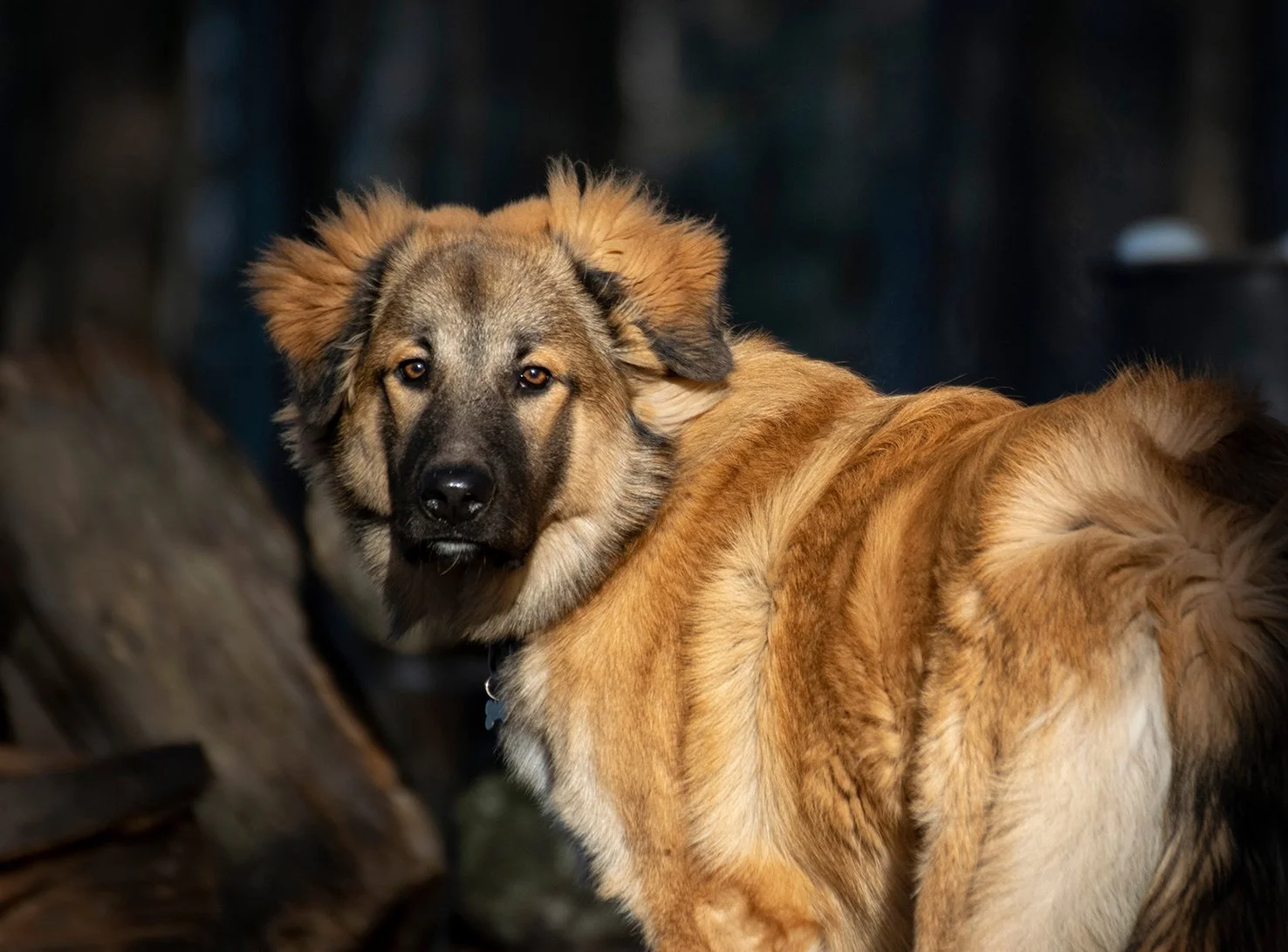
Not every Caucasian Shepherd is going to be out there patrolling the perimeter. photo: AdobeStock
Caucasian Shepherds are one of the oldest livestock guardian breeds in the world, originating in the mountains of the Caucasus region where they were bred to protect flocks from wolves and bears. These are not dogs that were designed to take orders; they were designed to think independently, assess threats, and act. They are massive, confident, and built for a job that most pet dogs will never be asked to do.
Three of them live on my partner's farm north of the Bay Area, where sheep and goats graze the land for fire safety. Every morning they go out with the flock — scanning, patrolling, doing exactly what 3,000 years of selective breeding designed them to do. Two of them are very good at this.
Then there's Corn Cob.
Corn Cob has the genetics. He has the lineage. He has 140 pounds of ancestral guardian energy just waiting to be deployed. He also doesn't bark. What he does instead is appoint himself nanny to every small animal on the property, solicit social play from the sheep and goats, and generally conduct himself like a very large, very gentle Eeyore. Last week I watched him play king of the mountain on the compost pile with a sheep and a ram. He lost. He did not seem to mind.
Genetics play a role, certainly. Breed can tell you something about what a dog might be drawn to, what might come easily, and what might be harder to extinguish. But Corn Cob is a pretty good reminder that breed is a starting point, not a guarantee. Not every Caucasian Shepherd is going to be out there patrolling the perimeter.
And not every dog without a job title is off the hook either. Your pet dog may not have a working dog's resume, but they have needs - real ones - and those needs don't disappear just because nobody wrote them down.
One of the most important things we can offer any dog, working or otherwise, is the opportunity to express species-appropriate behavior. This is actually baked into the Five Domains Model, the framework animal welfare scientists use to assess whether an animal's needs are being met. Domain four is behavioral interactions: the idea that animals need to be able to do things that are natural and meaningful to them, not just survive.
Claudia is one of the livestock guardian dogs on the farm, and she is very good at her job. Recently, during baby goat season, one of the newborns got separated from its mother. Claudia found it. She positioned herself behind the baby and slowly, carefully nudged it back in the direction of its mother. When the baby got playful and jumped at her mid-mission, she pivoted instantly into patient grandma mode, gently redirected it, and didn't stop until mother and baby were reunited. Then she walked back to her spot about 10 feet away, laid down, and resumed her survey of the field like nothing had happened.
That's a dog doing exactly what she was built to do. And it matters — not just for working dogs, but for your dog, too.
You don't have to have a working dog to think about what your dog was built for. Take the Labrador Retriever, bred to retrieve waterfowl for hunters. You're probably not running a duck blind out of your Oakland backyard, but you can take your Lab down to the bay and throw a ball into the water. That's not just exercise. That's your dog getting to be what they are.
Or consider the Dachshund, bred to go to ground after badgers — to dig, tunnel, and pursue prey into tight spaces. Most people think of them as little couch dogs with a Napoleon complex. But give that dog a digging pit, a game that requires them to use their nose and their persistence, and you will see a completely different animal. A more satisfied one.
Corn Cob is a good example of this. He has every genetic advantage a livestock guardian dog could ask for. And he has chosen to use those genetics to become the farm's most enthusiastic social director. He is not a failed working dog. He is just his own dog.
There's a saying in genetics: the genome loads the gun; the environment pulls the trigger. It's a useful frame for thinking about dogs. Breed gives you tendencies, drives, and predispositions. But how those are expressed in any individual animal depends on a thousand other factors: early experience, socialization, temperament, and frankly, whatever mysterious alchemy makes one dog out of a litter a natural and another a Corn Cob.
People who work seriously with dogs at the highest levels understand this intuitively. When someone is competing in dog sports or working with dogs professionally, they know that training is only half of the equation. The other half is finding the dog whose individual genetics are actually a match for the job. That process can take years and multiple dogs. That's not a comment on the dogs who didn't make the cut. It's just an acknowledgment that even within a breed, even within a litter, individual variation is enormous. We can't all be Michael Jordan, no matter how hard we train. The same goes for dogs.
Which means that when you're thinking about what your dog needs, the breed profile is a starting point, not a prescription. You have to look at the actual dog in front of you.
What Every Dog Needs
So what does every dog actually need, regardless of breed or job description?
Mental stimulation is the big piece that many people underestimate. This doesn't have to mean expensive puzzle toys, though those can be great. It can just be hide-and-seek with their dinner, learning a new trick, targeting exercises, sensory games, or a decompression walk — a slow, sniff-led outing where your dog gets to follow their nose and make their own choices rather than heel politely at your side. That kind of cognitive engagement is genuinely tiring in the best possible way.
Social connection matters, too. Dogs are social animals, and the connection they need can come from people, other dogs, or some combination of both. What that looks like will vary by dog - some need a lot, some need less - but the need for connection itself is pretty universal.
And then there's physical exercise. Generally self-explanatory but always worth saying: a tired dog is usually a happier dog.
Finally - and this is where it ties back to everything above - if your dog has a drive that's making your life difficult, it's worth asking what function that behavior is serving and whether you can channel it into something more workable.
Dachshunds dig. Give them a spot where digging is allowed. Terriers are built to chase and catch fast-moving prey — a flirt pole gives them that same thrill without the neighborhood squirrels filing a complaint. Dogs who were bred to chase birds can get a version of that fix by chasing a ball. The behavior isn't the problem. It's just a drive looking for an outlet.
Here's the thing about Corn Cob. By conventional working dog standards, he’s not doing his job. He doesn't patrol. He doesn't bark. He plays king of the mountain with livestock instead of protecting them. And yet he has a flock to watch over, animals to socialize with, space to roam, and a farm full of creatures who have accepted him as their large, dopey, beloved companion. His needs are being met. They just don't look like anyone expected. And that's the whole point.
You don't need a farm. You don't need a flock or a field or a job title for your dog. You just need to pay attention to the actual animal in front of you — what they're drawn to, what lights them up, what they were built for — and then find ways to give them a version of that within the life you actually have.
Working dogs don't have a monopoly on needs. They just have the benefit of a job description that takes those needs seriously.
Your dog deserves the same.