My Dog Won’t Listen: What’s Really Going On?
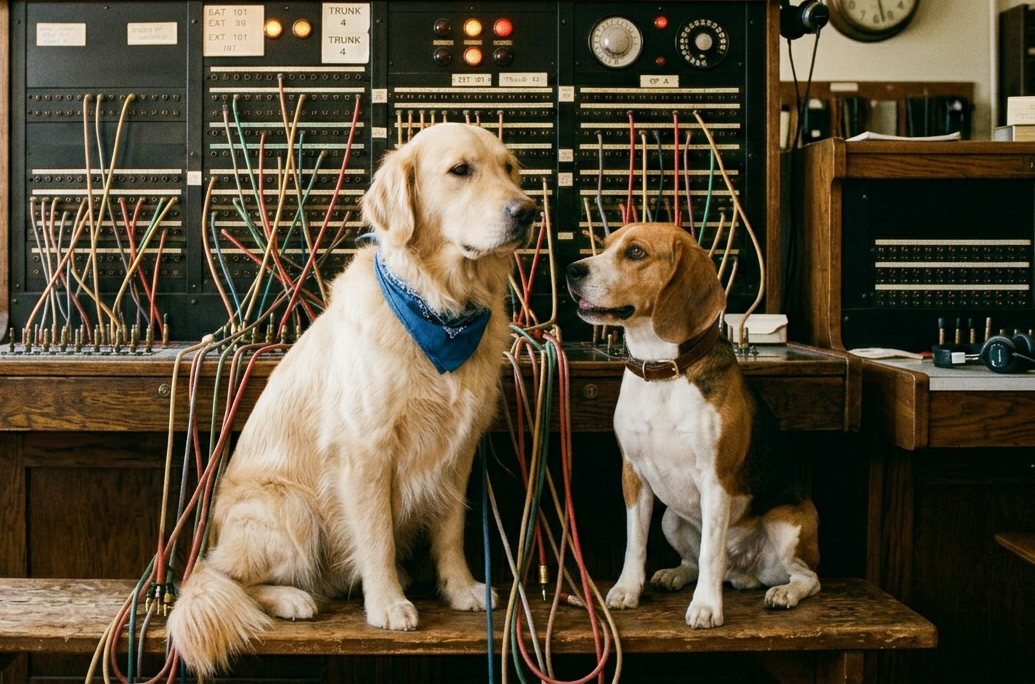
What’s really going on when your dog doesn’t listen to you? photo: Adobe Firefly
When I sit down with a new client for a consultation, I always ask the same question. What’s your goal?
Often, the answer is some version of this: “I want my dog to listen to me”. Or “My dog doesn’t listen when I need him to.”
It’s one of the most common things I hear from my clients, and honestly, I get it. At one time or another, most folks have experienced that frustrating, helpless feeling of standing in the middle of a sidewalk while your dog loses his mind over another dog. Or calling your dog’s name over and over and watching him completely ignore you. It feels like a listening problem. But is it?
Your Dog Is Already Listening
“My dog doesn’t listen” is actually one of the vaguest statements you can make about a dog. It doesn’t tell us what’s actually happening, where it’s happening, or why. And until we unpack it, it’s really hard to fix.
Most of the time, people don’t realize that their dog is already listening. Dogs hear everything. After all, this is the same animal who hears a bag crinkling from the other end of the house and appears instantly, as if teleported.
The issue isn’t their ears. It’s that we’re asking our dogs to understand what we want without ever really teaching them. “Listening” has become shorthand for something much more specific: I want my dog to know what I’m asking, and I want them to be able to respond to it. That’s not a listening problem. That’s a communication and teaching problem. And luckily, it’s a much more solvable one.
What’s a Cue, Anyway?
In dog training, a cue is simply a green light - a signal that tells your dog that a specific behavior is worth doing right now because reinforcement (some kind of reward) may be available for it.
A cue can be a word like “sit” or “come,” a hand signal, a sound, or even something in the environment. Touching a doorknob, opening the fridge, picking up a leash — your dog has learned that these things predict certain outcomes, and they respond accordingly (yes, your dog has pretty much memorized your entire pre-walk routine; in fact, he probably knows before you do).
Reinforcement for a cue can be anything that makes your dog more likely to repeat a behavior. And it’s not just treats. It’s whatever your dog finds valuable enough to work for: access to a certain smell, getting to greet another dog, a game of tug. If it matters to your dog, it can be used to reinforce behavior.
But a cue is only as useful as the teaching behind it. Think about listening to a conversation in a language you don’t speak. You’re hearing every single word (you’re not tuned out, not ignoring anyone), but you have absolutely no idea what any of it means.
Your dog is in that position more often than you realize. Saying “sit” to a dog who has never been taught what “sit” means is just noise. It’s not a cue yet, it’s only a random word in a foreign language. This is where a lot of people get stuck. We repeat words at our dogs — “sit, sit, SIT” — as if saying it louder or more times will somehow make it land differently. Spoiler: it won’t.
The Real Reasons Your Dog “Doesn’t Listen”
When people say their dog doesn’t listen, what’s actually going on? There are a few different possibilities that can appear identical from the outside but are really completely different problems.
The dog may not understand the cue yet. The association between the word and the behavior just hasn’t been built clearly enough to be reliable. This isn’t stubbornness. It’s an incomplete teaching process.
The cue may not be generalized. Your dog may respond to “sit” perfectly in your living room but have no idea what you’re asking when you say the same word on a busy street corner. That’s because learning doesn’t automatically transfer across environments. It has to be practiced in each one.
The dog may understand the cue, but there’s a competing motivator: the smell of another dog, a squirrel, a pile of something disgusting on the ground. If the reinforcement the environment is offering is more valuable than what you’re offering, the environment wins. That’s not defiance; it’s just a more logical choice.
And then there’s something that looks exactly like “not listening,” but it is actually something else entirely: a dog who is fearful, frustrated, or emotionally overwhelmed simply cannot respond. That part of their brain is not available to them in that moment. Asking a panicking dog to sit is like asking someone to perform long division during a fire evacuation. The capacity just isn’t there.
So while these may all feel like the same “listening” problem, they’re not. And treating them like they are is why so much training advice misses the mark.
What To Do About It
So where do you start? First, get specific about what you actually want. Not “I want my dog to listen,” but “I want my dog to sit when I walk in the door” or “I want my dog to lie down when I sit at the table,” or “I want my dog to come when called in the backyard.” The more specific you are, the more teachable it becomes.
Next, focus on teaching the behavior before you ever worry about the cue. This is a step most people skip entirely. There are lots of ways to get a behavior — shaping, luring, capturing — but the goal is the same: you want the dog doing the behavior repeatedly and without hesitation.
Once the behavior is happening consistently, then it’s time to attach a cue to it. If this part feels overwhelming, working with a positive reinforcement trainer can help you build that foundation and teach reliable cues that actually hold up in the real world.
Here’s a simple example with “sit.” Most dogs learn to sit when you take a treat, put it at their nose, and slowly move it up and back over their head. Their rear hits the floor. Great, now you have the behavior.
But how do you teach the dog that the word “sit” means to do that? You start by saying “sit,” pause a second or two, and then give the hand gesture. After enough repetitions, your dog starts connecting the word to what comes next and begins sitting on the verbal cue alone.
It’s a bit like learning a word in another language would be for you. If someone says a foreign word, pauses, and then translates it for you, eventually you stop needing the translation. You’re doing the same thing with your dog.
The Shift That Changes Everything
The next time you catch yourself thinking “my dog just doesn’t listen,” pause and ask a different question. Which kind of not-listening is this? Is the behavior not taught yet? Is the cue not generalized to this environment? Is something in the environment out-competing your reinforcement? Or is your dog too overwhelmed to respond at all?
That shift in your own thinking - from “my dog is ignoring me” to “what’s actually happening here?” - changes everything. It takes the frustration out of the situation and replaces it with something you can actually work with.
Your dog isn’t blowing you off. They’re just waiting for a green light they can understand, in a language they’ve been taught, at a moment when they’re calm enough to respond.
That’s why it’s important to figure out not just what you want your dog to do, but what’s getting in the way and how to address it.
Because once you know the problem you’re actually trying to solve, the path forward is a lot clearer.