When a New Dog Isn't the Right Fit: Why Love Isn't Always Enough
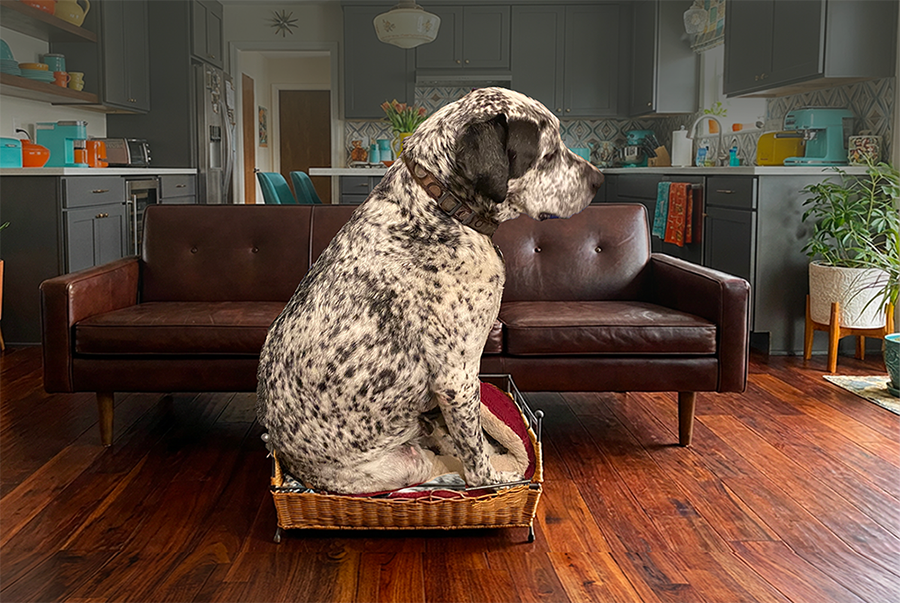
Trying to fit a round peg in a square hole creates a welfare issue for both the dog and the human. photo: Ren Volpe
We are told, correctly, that dogs are a lifetime commitment. What’s rarely addressed is what to do when a placement is unsafe or genuinely incompatible. Without an honest decision-making framework for those situations, guilt replaces clear thinking. People may stay stuck while an emotional attachment deepens until a serious incident forces a decision.
Most new dog owners frequently underestimate how much time a new dog needs to decompress. The early weeks can be messy, exhausting, and emotionally bumpy. House-training accidents, chewing, barking, leash-pulling, and general chaos are common during this phase. They are not signs that you got the wrong dog.
Living with a dog is real work. It takes patience, daily effort, and a willingness to change your routines. Once you sign adoption or purchase papers, you are making a serious commitment to that animal.
Regret, Mismatch, and Responsible Decisions
Most new dog challenges improve with time and guidance. A much smaller number involve safety risks, welfare concerns, or constraints that exceed what a household can realistically provide. It’s important to know how to recognize that difference.
As a trainer and behavior consultant, the vast majority of my work involves helping dogs stay in their homes. On rare occasions, I have advised a client that a placement may not be a good fit, but those conversations only happen after effort, training, and realistic options have already been explored.
Let’s take a look at that narrow but important category: situations in which someone acquired a dog thoughtfully, put in real effort, and discovered that the match itself was unsafe or unsustainable.
Choosing the Right Dog (Before Things Go Wrong)
Many mismatches occur before a dog ever arrives in their new home. Social media presents a curated, often unrealistic view of what life with a dog is like. But the reality of living with an animal is messier, harder, and more time-consuming than most people expect.
We see photos and clips of dogs doing precision obedience, bite work, parkour, or walking leashless down busy city streets. But those videos don't show the expert handling, controlled environments, daily hours of training, or owners whose entire lives center on their dogs. Wanting a dog because it looks impressive online is not the same as being prepared to live with that dog 24/7 (Belgian Malinois, anyone?).
Dogs aren't interchangeable just because they share a breed label, especially working-line dogs. Working-line dogs are bred for intensity, endurance, and drive - all traits that make them excellent at protection work, herding, or detection, but overwhelming in most homes. Even a well-bred working-line dog may struggle as a pet, and it's often not a training problem. It's simply that most households can't offer the kind of work these dogs were bred to do.
If you’re working with a breeder, ask what the puppies’ parents were selected for and where dogs from that line typically end up. Ethical breeders will answer plainly and will screen you just as carefully.
With breed-specific rescues, notes like “too intense,” “needs a job,” or “more than expected” are often literal. These are functional descriptions of what living with that dog has been like, not just some vague personality quirks.
Dogs from puppy mills or other irresponsible breeding operations like backyard breeders often arrive with unique challenges. These dogs may have been bred with little regard for temperament or health, raised in environments that limit normal socialization, or shipped long distances at very young ages. As a result, behavioral issues such as fearfulness, anxiety, or difficulty coping with everyday life are common. Unlike reputable breeders, puppy mills don't offer return policies or any support after you get your dog so when things go wrong, you're on your own (learn how to spot a puppy mill).
Shelters and rescues frequently don't know a dog's history. How they behave in a kennel doesn't reliably predict how a dog will act in a home, and problems like resource guarding, separation anxiety, or reactions to children may not surface until after adoption.
Modern city living introduces an additional layer of environmental mismatch. Dogs who weren’t raised or socialized in urban environments may struggle with the constant noise, crowds, traffic, and confined spaces. Apartments, elevators, and leash-only walks may make everyday situations harder to manage. For dogs with high arousal or sensitivity to stimuli, city life can turn manageable traits into serious welfare or safety concerns.
The Puppy Blues Are Real - But Usually Temporary
Before assuming things won’t work out, it's important to acknowledge one common and rarely discussed issue: the "puppy blues.” And though they’re more apt to occur with a young pup, they can happen with adult dogs, too.
When a new dog comes home, everything might feel off balance at first. It's common to question whether you made the right decision.
You might see your dog withdraw, refuse to eat much, sleep more than usual, have accidents in the house, or test boundaries. That's normal. Newly adopted dogs need time to settle into their new environment. This adjustment period can last anywhere from several days to several months but usually passes in a few weeks as you establish new routines and get to know your new dog.
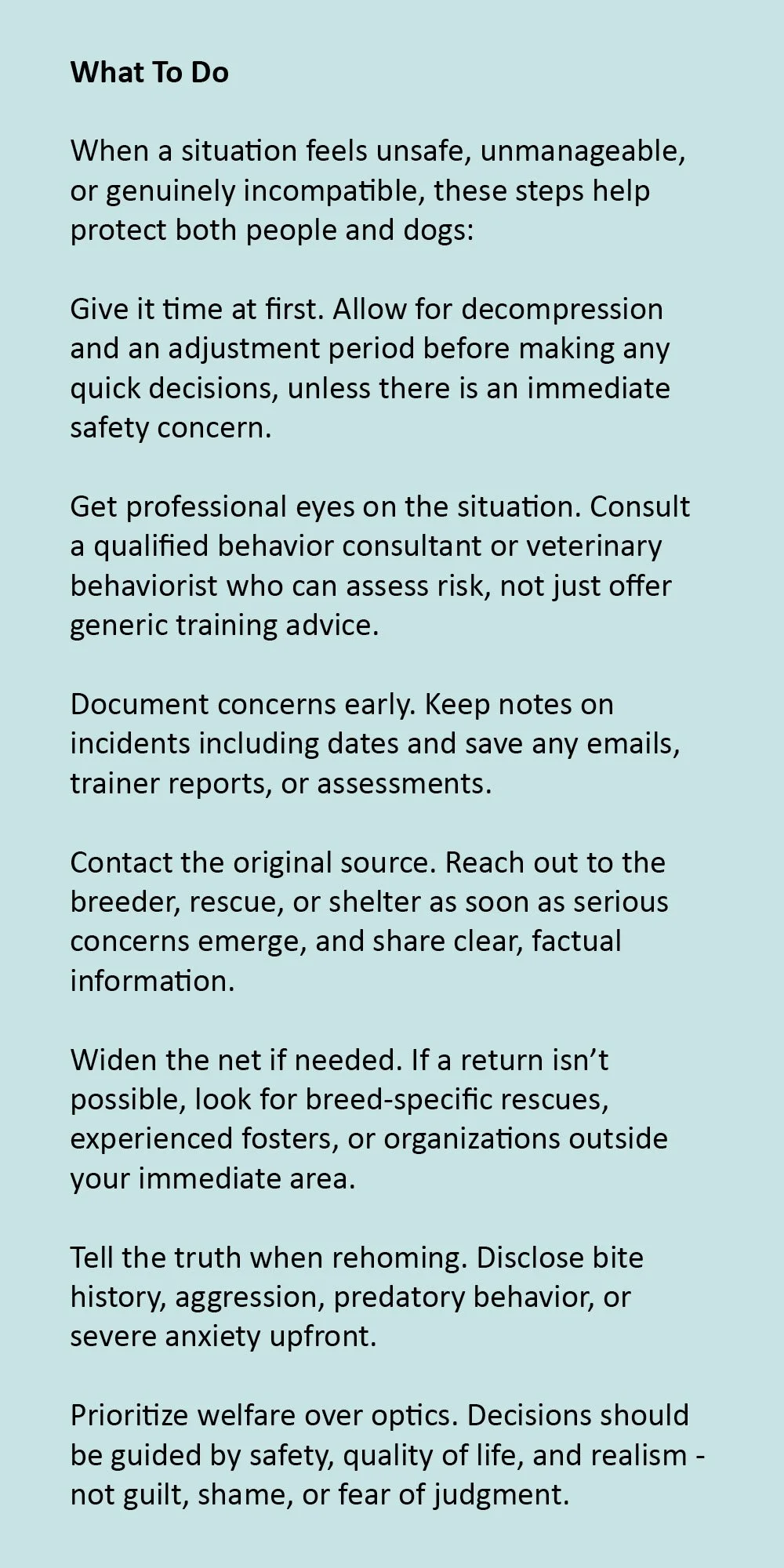
What's not normal is aggression that escalates, severe predatory or guarding behavior, or anxiety that gets worse even after routines stabilize. If that's what you're seeing, don't just wait it out. Waiting allows problems to get worse and makes them harder to fix.
When the Adjustment Period Becomes Something Else
Some problems can’t be solved with training alone because they stem from a mismatch between a dog’s needs and what a household can realistically manage. These include:
Physical handling limitations. A large, strong, or impulsive dog paired with someone who cannot safely physically handle them due to size, strength, injury, disability, or mobility limitations.
Energy and time mismatches. A young, high-energy dog left alone all day during long work hours, when hiring a dog walker or using daycare isn't financially or logistically possible.
Dogs and children. Children in the home when a dog shows fear, predatory behavior, or discomfort with noise and chaos. Management that relies on perfect vigilance and supervision is bound to fail.
Predatory behavior toward other pets. Serious predatory behavior toward other household animals, especially if safety depends on permanent confinement or never forgetting to close a door or gate.
Bite history. A growl or air snap is not the same as a puncture wound. Early bites at Level 3 or higher on the Dunbar Bite Scale signal a serious safety concern.
The Reality of the “Project Dog”
Dogs with severe fear, aggression, or anxiety often require ongoing professional training and are commonly referred to by trainers as “project dogs.” That’s because, as the name implies, these dogs are ongoing projects.
I’m a trainer and behavior consultant, and I also foster dogs with significant behavioral challenges. Some of these dogs have lived with me for more than a year before they were ready for adoption. Even with experience, consistent training, a household structured around their needs, and the opportunity to observe and learn from my own dogs, progress with these dogs can be slow and time-consuming.
Living with a project dog means you’ll need professional support and the emotional capacity to tolerate slow progress, setbacks, and management failures. Not every household has those resources, and recognizing that yours doesn’t isn’t a moral failure.
When a new dog truly isn't a good match, time alone won't fix it. Instead, guardians slowly reorganize their lives around the problem. Guests stop coming over, life gets smaller, and the dog spends long stretches in a crate or confined. The humans aren't happy, and the dog's welfare suffers. And remember, welfare doesn't just mean food, veterinary care, and a soft bed. It means the dog is able to move through the world safely and have some normal joy and engagement in daily life. A life of constant restriction and management isn't much of a life.
This is where what’s called the "sunk cost fallacy" takes hold. You've already invested time, money, training, and veterinary bills, and everyone is emotionally attached, even though the situation is unsafe or unsustainable. The more time passes, the harder it becomes to change course, which is why making decisions earlier is often better for both people and dogs.
Project dogs are not limited to those coming from rescues or shelters. Dogs from breeders can also develop serious behavioral challenges, even when they are carefully bred and thoughtfully raised. Genetics influence temperament, but with living beings, there are no guarantees. Paying more for a dog doesn’t eliminate risk or guarantee a good fit.
How You Acquired Your Dog and What That Means for Rehoming Options
How a dog came into your life affects the options available when things aren’t working out.
Ethical breeders require that their dogs be returned if a placement fails, reflecting lifelong responsibility for the dogs they produce. In California, the Polanco-Lockyer Pet Breeder Warranty Act (often called the “puppy lemon law”) reinforces this responsibility for health conditions present at the time of sale, though it does not apply to behavioral issues. Reputable rescues and shelters should have similar return policies.
But in reality, serious behavioral problems often don't surface in shelters or foster homes. Resource guarding, fear-based aggression, separation anxiety, and reactions to kids or visitors often don't appear until a dog is actually living with a family.
Most shelters and rescues are overcrowded and operating on shoestring budgets, which can create pressure to move dogs out quickly to save more lives. While many act in good faith, this pressure can lead to incomplete or overly optimistic descriptions of a dog's behavior. Behaviors may be downplayed or omitted entirely to find the dog a home.
Some rescues go further and knowingly adopt out dogs with severe behavioral issues, then refuse to take them back when problems arise. This transfers the burden onto adopters who lack the resources or experience to manage dangerous dogs. In the worst cases, it forces the adopter to consider behavioral euthanasia, a decision that should have been made by the organization itself. Rescues have a responsibility to provide the specialized care such dogs need, place them only with experienced handlers who understand the risks, or take responsibility for difficult decisions rather than passing that heartbreak on to someone else.
Sadly, this is an unintended consequence of the no-kill movement. In the past, dogs with severe behavioral issues were more likely to be euthanized. Today, pressure to avoid euthanasia can lead to placing marginal dogs into homes, which shifts responsibility onto adopters without the resources or experience to deal with them.
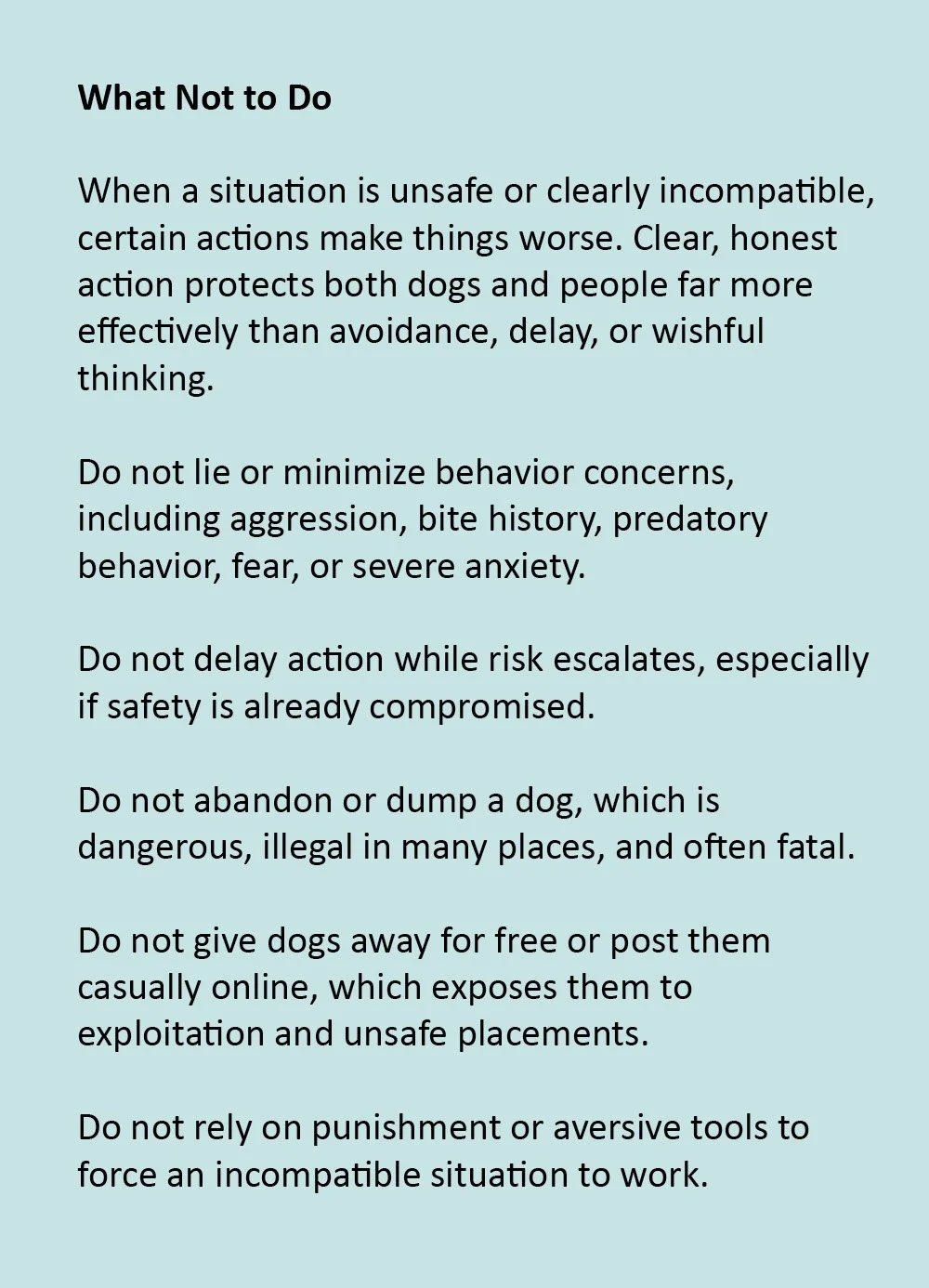
That’s why honest, detailed feedback is so important if you’re giving back a dog. Returning a dog with clear information doesn’t mean you failed or did something wrong. It’s often the most responsible way to help the dog find a better match and make sure the next person knows what they’re taking on.
When the Breeder, Rescue, or Shelter Won’t Take the Dog Back
Sometimes organizations refuse to take a dog back or drag their feet. Maybe they're full, or the behavior you're reporting makes the dog less adoptable. Either way, it doesn't matter: your unsafe or untenable situation doesn't magically become manageable because they won't help.
In these cases, it’s crucial to document everything: keep emails, write down incidents with dates, and save any trainer notes or assessments. If questions come up about what you knew or how you handled things, you'll need proof that you tried to do this the right way. Documentation also protects the next adopter. It's harder for the dog's problems to get swept under the rug when there's a paper trail.
If the original organization really won't take the dog back, keep looking. Contact other rescues, including breed-specific groups and rescues in neighboring counties. Ask around for a dog-savvy person who might foster the dog for a few weeks while you find a more permanent situation.
Many people hold onto the idea of a quiet farm, ranch, or sanctuary that takes dogs with severe behavioral issues and gives them a permanent, peaceful place to land. In reality, those places are rare. The few sanctuaries that exist are limited, selective, and usually at capacity.
When Private Rehoming Is the Only Option
Sometimes there's simply nowhere to return a dog. Maybe you found a stray, took in a dog after someone died or became ill, or acquired the dog informally without any organization involved. Private rehoming might be your only option.
You still must disclose the dog's issues, even if you're placing them with a friend or neighbor. Bite history, aggression, predatory behavior - be honest about all of it up front. Hiding those risks puts someone else in danger.
Try to find adopters with experience handling similar dogs. Social media can work, but stick to local groups you trust and never post "free to good home." Charge a rehoming fee, even if it’s a small amount. Free dogs attract people who shouldn't have them: impulsive adopters, flippers, hoarders, and worse.
When the Only Option Left Is a Municipal Shelter
Sometimes private rehoming doesn't work out, and you're left with taking the dog to a municipal shelter. It's not a good outcome. But when a dog is genuinely dangerous, and you've exhausted all other options, it may be the only choice left.
Most municipal shelters lack the resources that rescues and breeders have. Dogs with severe aggression or bite histories often get euthanized. That's hard to accept, but pretending it won't happen doesn't help anyone. And waiting until someone gets badly hurt usually means you've lost whatever options you had.
This isn't a decision anyone wants to face, but sometimes there just aren't any good solutions.
You can love a dog with all your heart and still not be the right home for them. Love doesn’t change genetics, erase trauma, or make an unworkable situation sustainable. Some of the hardest rehoming cases involve people who cared deeply and tried everything they could. The problem wasn’t a lack of commitment, but a fundamental mismatch.
Sometimes the most responsible choice is acknowledging that the right home for a dog isn’t the one they’re in. That decision can be heartbreaking and still be an act of love. If you’re experiencing that heartbreak, it may feel like a personal failure. But a mismatch doesn’t mean you failed or you’re not good with dogs. The right dog for you is still waiting.