Beyond the Velcro® Dog: Why Clinginess Isn't Always Cute
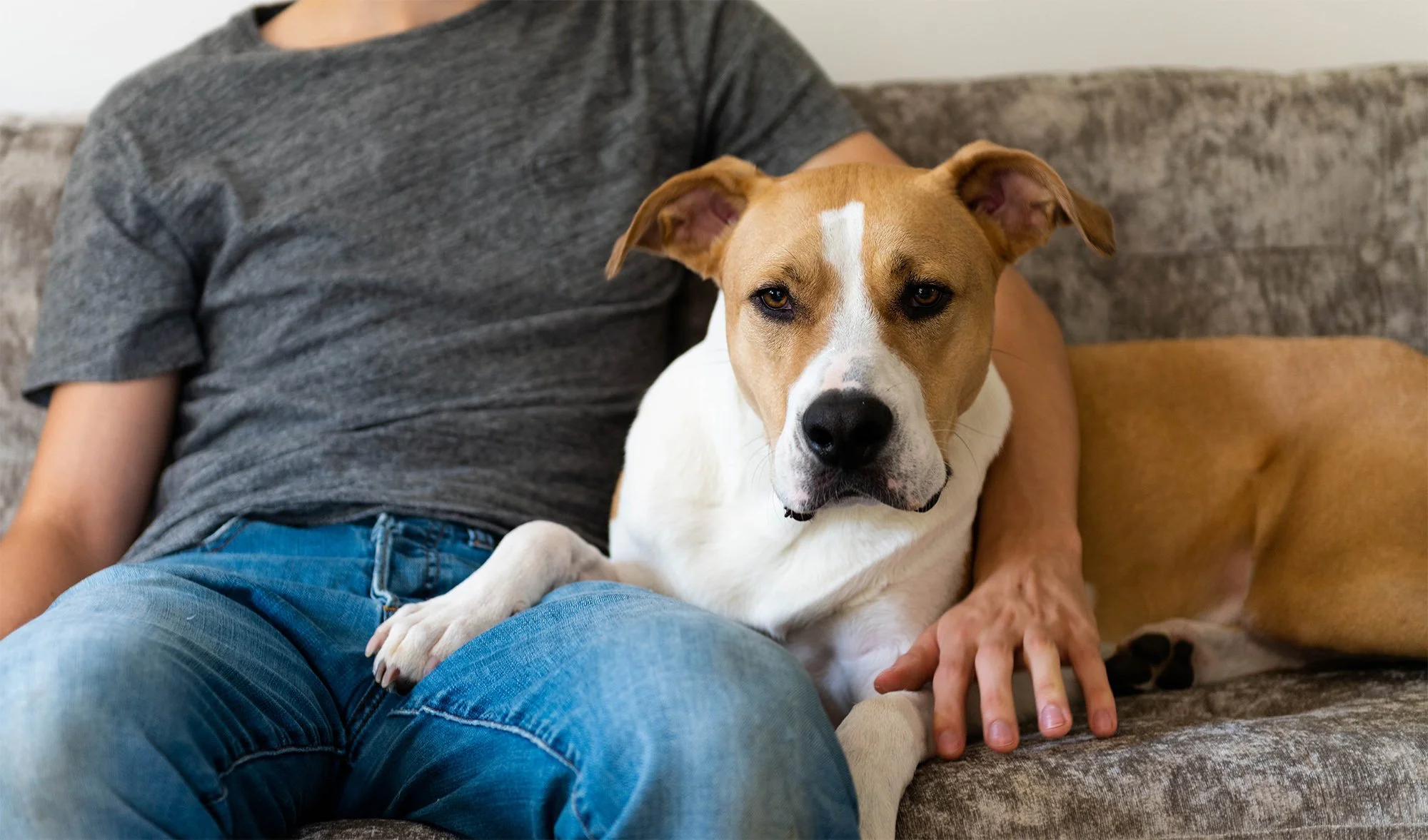
Hyperattachment can be a problem in some households. photo: AdobeStock
You've probably heard the term Velcro® dog - the pup who insists on being glued to your side, or even touching you, every waking minute. It can be cute; sometimes even flattering. Dig a little deeper, though, and you’ll find it isn't devotion at all.
When you step behind a baby gate to cook, the whining starts. Shut the bathroom door, and there's scratching on the other side. Sit down to work, and your dog paces and protests from across the room, even though you are 15 feet away and in plain sight. It’s hard on you both.
It’s Not Always Separation Anxiety
Velcro® dogs do not always have separation anxiety. While there's often overlap, plenty of so-called Velcro® dogs have no trouble being home alone. And many dogs with real separation anxiety aren't clingy at all when their human is home.
Sometimes this clingy behavior is called "hyperattachment," and for years it was assumed that excessive attachment was the cause of separation anxiety. But when researchers actually measured it, dogs with separation anxiety didn't seek any more closeness to their owners than dogs without it (Parthasarathy and Crowell-Davis, 2006). A 2021 review in the Journal of the American Veterinary Medical Association went even further, calling the theory that hyperattachment causes anxiety a now-recognized erroneous assumption.
It’s Harder on Your Dog
A dog who can't tolerate being separated from you isn't simply inconvenient to live with. Dogs who come apart every time they are denied proximity to their owner are carrying around a lot of low-grade misery. And none of it is necessary.
Separation is going to happen no matter what. You have to shower, answer the door, take a work call, or sweep up broken glass on the floor. There's no version of life in which you are going to be physically available to your dog every second of every day.
The clingy problems happen outside the house, too, and it's a common issue for many of the clients I work with. You hand your dog's leash to a friend for two minutes while you duck in for a coffee, and your dog comes undone. Barking, lunging toward the door, spinning at the end of the leash, ignoring the perfectly nice person standing right there holding it.
Dogs who obsessively shadow their person aren't being devoted, and it isn't a charming quirk. The pattern is maladaptive, meaning it interferes with the ability to function comfortably in everyday life. Being able to relax isn't a luxury: it's a welfare issue, in the same category as food, water, exercise, and veterinary care. A dog who can relax without constantly tracking their person's every move is better equipped for everyday life.
Why Dogs Need the Skill of Settling
Learning how to settle is an important skill for any dog, but it’s especially important for the clingy ones. Here are some common situations where the ability to settle is crucial:
Around Kids. I've worked with many clients who had a dog before they had children. After the first baby arrives, often the dog is just fine with the infant. But by the time that child starts crawling, walking, and running, the need to separate dog and kid becomes obvious. A shrieking, unpredictable toddler often needs to be kept apart from a dog for safety. I would never leave the two of them together unsupervised, and you shouldn’t either.
That’s why it’s important to teach your dog to settle behind a gate before the baby arrives. Beginning training once your toddler is already walking is a lot harder - not impossible, just harder - and you'll be doing it under the worst possible conditions.
With Guests at the Door. For dogs who get anxious or over-excited when new people come into the home, being comfortable behind a barrier is critical. A gate lets your dog watch the arrival without feeling like they have to manage it, which is what you want for a dog who might otherwise stress-bark or jump on your guests. This is the idea behind the Off-Duty Hack: you relieve your dog of door duty and hand them something better to do instead.
For Puppies. Settling is a skill puppies need to learn right away because a puppy given the run of the whole house is much harder to house train. Puppy proofing an entire house isn't practical, and puppies will chew whatever they can find.
In Multi-dog Households. Do you have a bouncy adolescent who won't quit pestering a tired senior, two dogs who play so hard they don't know when to stop, or dogs who do better eating their meals or chewing a bone in their own space? A gate lets you give any or all of them what they need without being shut away in a separate room.
For Rest. Dogs who shadow their people every waking minute often aren't getting the rest they need. A dog tracking your movements from room to room is a dog on duty, and a dog on duty isn’t relaxed. Like a toddler who badly needs a nap but wants to keep playing, if left to decide for themselves, they won't choose sleep. They need someone to provide structure, offer the nap, and ride out a little protest. Soon enough, they’ll settle and wake up happier for it. Just like an active kid, your dog needs downtime, too. Gently helping them get there isn't punishment.
Meeting Needs Comes First
Asking a dog to settle behind a barrier while their exercise, enrichment, and need for connection go unmet is downright cruel. If a dog gets two short walks around the block, sits home alone all day, and has no chance to sniff, play, or use their brain, then expecting that dog to relax behind a gate calmly isn't fair.
Boundaries are only humane when a dog's physical, mental, and social needs are already being met. The average pet dog is under-exercised, under-stimulated, and largely blocked from doing the things dogs evolved to do: sniff, run, dig, scavenge, and roam. So make sure you’re giving your dog adequate exercise and enrichment before you expect them to learn how to settle.
Humane Separation
Separation does not have to mean isolation. Nobody needs to be shut behind a closed door or locked in a cage. Your dog and your toddler, your dog and your new kitten, your dog and your houseguests can all be in the same room, see each other, and potentially even interact safely, as long as there’s a barrier between them.
There are a few different ways to give your dog their own space humanely. Baby gates are the gold standard because your dog can have a whole room, half the house, or even half the living room. An exercise pen does the same job if there's no doorway that can be gated off.
When teaching a dog to feel okay behind a barrier, start by making the space behind the barrier as large as your home can accommodate. If you have an adult dog who can't stand being separated from you by a barrier, confining yourself to a small area and giving the dog the rest of the house is a good place to begin.
Give your dog a real area with their bed, some cool hardwood floor or linoleum for when they get warm, their water bowl, chews and toys, and room to move. Ideally, they should be able to see you through the barrier, meaning they're not shut away in a far off part of the house.
For open floor plans where a gate has nothing to anchor to, a back tie is an alternative. This means tethering your dog by a leash clipped to the back of their harness (never their collar) and secured to something heavy like a table leg. This arrangement needs more supervision than a gate does, since a dog can wrap the line around a chair leg or get tangled, so it’s important to save it for times when you're nearby and able to pay attention.
You'll notice I haven't mentioned crates. Crate training is a legitimate life skill for vet stays, travel, recovery from surgery, evacuations, etc. But a crate is a small cage, and what we're aiming for instead is a dog who can power down elsewhere in your home.
I also frequently see a negative pattern in dogs who spend most of their indoor hours crated: they learn to settle in the crate and nowhere else. The crate becomes the only place where they know how to switch off, so when that crate door opens, it's FAFO time - not what you had in mind if you were imagining your dog lounging on the kitchen floor while you have a cup of tea or chilling on their dog bed while you're folding laundry.
How to Teach Settling
Teaching a dog to settle isn't the same as training a formal down-stay. A dog in a down-stay position is working. What we're after is a dog who’s off duty; one who has chosen to relax on their own.
To teach this, start by giving your dog positive reinforcement when they choose to settle, rather than simply putting them behind a gate and hoping they adjust. This means you’re capturing behavior, rather than drilling your dog. In capturing behavior, you wait for your dog to do something on their own and immediately reward it. You aren't cueing anything or luring them into a position; you're just noticing and rewarding the moment your dog chooses to lie down and settle. Emily Larlham, aka Kikopup, has a short video on teaching a Calm Settle that is worth watching.
Begin with the barrier open and spend some quiet time with your dog in the space where you eventually want them to relax. Read a book, answer a few emails, or just hang out. Be patient. Eventually, your dog will choose to lie down. Quietly place a treat on the floor between their front paws. Placing the treat on the floor helps prevent your dog from popping up every time they think a treat might be coming. You're building a simple association: lying here calmly makes good things happen. Behavior that is reinforced will be repeated.
Next, try sitting down on your side of the barrier with your dog on their side. It's less intimidating than hovering over the top of it, and it turns training time into couch-adjacent downtime.
Once your dog can chill out with you right next to them on the other side of the barrier, start gradually moving away. Stand up and sit down again. Take one step back, return, and give a treat. Build distance slowly, walking back and forth in front of the gate and drifting a step or two further each time.
As you’re teaching this, be careful to work on time and distance separately. Adding duration means sitting right beside your dog while the seconds and minutes add up. Adding distance means walking away and getting back before that distance turns into a long wait. Pick one or the other for each training session. Asking for more of both at the same time makes it too hard.
Finally, start disappearing for a second, stepping around a corner and popping right back before your dog has time to worry. For a lot of dogs, watching you disappear into the next room while they stay put is actually harder than watching you leave the house entirely. But it’s an important thing for them to get used to.
As for how long this takes, there's no specific time frame. Some dogs pick it up in a few days. Others, especially anxious dogs, may need many weeks of short, easy sessions. Just remember that slower isn't worse. In fact, the dogs who take the longest to learn how to settle are often the ones who need this skill the most.
A More Structured Approach
If you’re looking for a training method that’s more structured than capturing, you may want to try Karen Overall's Protocol for Relaxation (free to download). This provides 15 days of short exercises that build your dog's tolerance as you move around, walk away, clap, or head for the door.
Overall’s task list looks daunting on paper - people often take one look and never start - but if you treat the 15 days as a rough map rather than a schedule, you may find it more doable. Her method is built on a cued stay rather than a captured settle so it's a different approach from what I've described here. But plenty of dogs benefit from both.
Avoid Teaching a Behavior Chain
Almost every time someone tells me their efforts to teach settling aren't working, the same thing is happening. Their dog fusses at the gate so they walk over, ask for a down, and drop a treat. It doesn't take a dog long to connect those dots: make noise, lie down, get paid. You haven't taught your dog to settle. You've taught them a trick they'll keep doing because it works.
I'm not suggesting you ignore whining or barking. Being straight-up ignored is frustrating for the dog, maddening for the humans, and it doesn't teach your dog what to do instead. The goal is to catch and reward any moment of settling or relaxing behind the gate before vocalization, pacing, or agitation starts. In fact, you’re waiting for them to do anything at all other than staring at you, whining, or pushing on the gate.
As with any training, it’s important to set your dog up to succeed. That means you should be training in short stints, ideally right after a walk and a meal, and be ready to reward any relaxed behavior - sitting, lying down, sniffing, chewing. Never wait until your dog is fussing to start training. An upset or frantic dog isn't a stubborn dog; they simply can’t learn in that mindset.
Independence Is a Life Skill
Whether you have a crawling toddler who needs a safe space away from the dog, a puppy who would otherwise redecorate your baseboards, or simply a dog who never learned to lie down and relax without trailing you from room to room, it all comes down to the same skill. Being able to rest away from you, stay calm behind a barrier, or relax while you move around the house is less about obedience and more about emotional resilience. Some dogs develop this independence on their own. Others need to be taught it. But it’s an important life skill for all dogs.
Routines, boundaries, and a few well-placed barriers are not things we inflict on our dogs. They're part of what makes living together work. In fact, most dogs are actually happier in a life with some predictable shape.
A dog who has learned to settle anywhere is a dog with more freedom, not less. And that’s a gift to both of you.