Giving Back: The Working Lives of Shelter Dogs
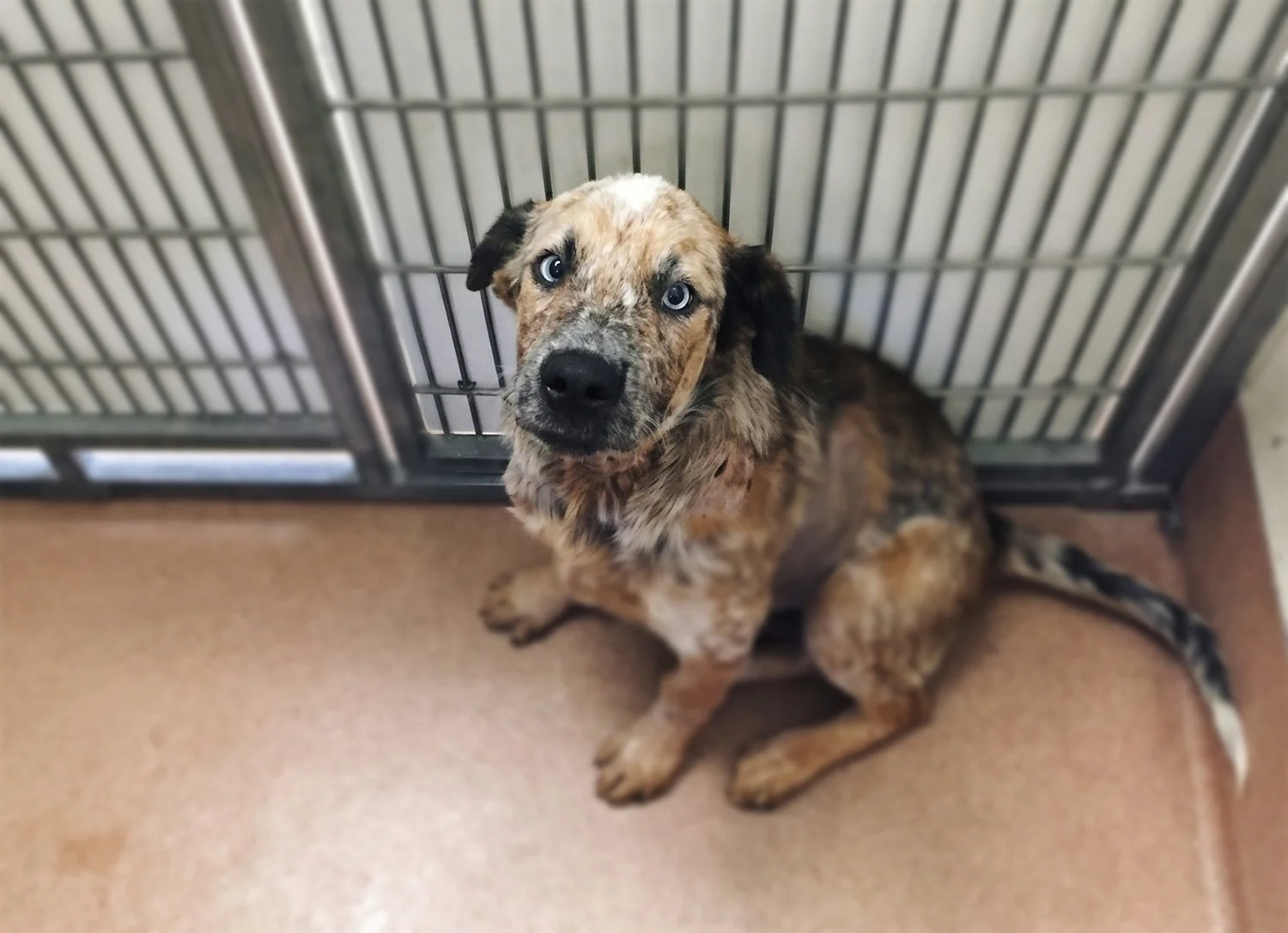
Apache before he was pulled from the shelter. photo: Shelby Hinte
It’s been nearly 10 years since Apache, an Australian Shepherd mix, was pulled from a makeshift medical trailer in the parking lot of a condemned morgue in the Central Valley after being attacked by a coyote. From such a gruesome start, no one would have ever guessed that he’d go on to live a life of service. But Apache would soon prove them wrong.
In the shelter world, rescue dogs are often viewed as damaged or difficult to train. But with patience and opportunity, many become not only well-adjusted companions but skilled working dogs.
Such was the case with Apache. He was just three months old when he arrived at the Fresno Humane Society. The coyote attack had left him with wounds across his body, several cracked ribs, and a life-threatening hemothorax or bleed in the chest. To say his future looked uncertain was putting it mildly.
The team in Fresno got Apache stabilized and then transferred him to Compassion Without Borders where staff members developed a long-term treatment plan for his various wounds. Founded by veterinarian Dr. Christi Camblor, this nonprofit organization rescues dogs in Mexico and throughout California, specializing in medical cases that other shelters simply don’t have the resources to provide care for.
When longtime CWOB volunteer Pam Frank met Apache, she decided this poor pup had already been through enough trauma and decided to bring him home as a foster. Naturally, it wasn’t long before she fell in love and officially adopted him. For many dogs, that might have been the end of the story. But not for Apache.
At the age of four and now fully healed, Apache began a new career in service work, first becoming certified as a Social, Therapy, and Reading Dog. From there, he went on to earn his certification as a Comfort Dog, which meant he had to learn to tolerate sirens, police cars, helicopters, and other loud or scary sounds.
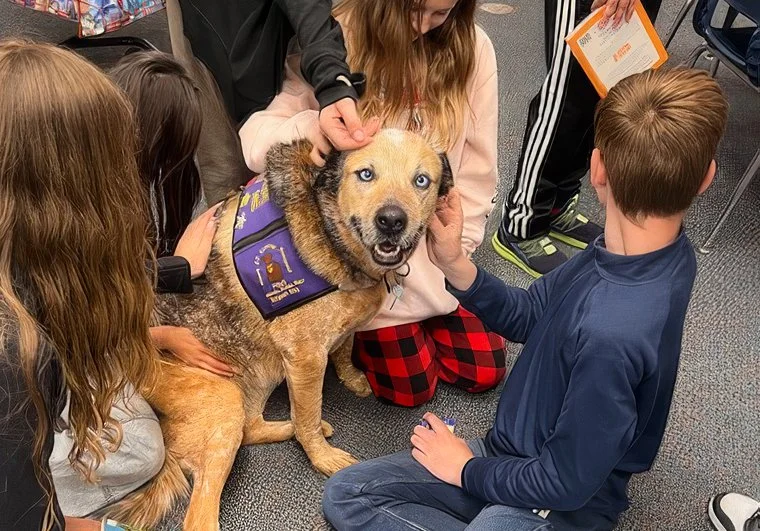
Apache is living the good life as a hard-working dog. photo: Shelby Hinte
As an official Comfort Dog, Apache has visited schools and community spaces after a variety of traumatic events. Following a fatal car accident involving Rancho Cotati students, he spent a week on campus comforting grieving kids and staff. His regular day job includes visits to the Santa Rosa Junior College Library and the Montgomery High School Wellness Center, and he recently attended a Fentanyl Awareness event. He is also on-call for emergency visits whenever a traumatic incident occurs in the community.
Overcoming his own daunting beginnings, Apache has gone on to touch countless lives in times of need. He has comforted the young, the old, the sick, the grieving, those who serve the community, and those who just need a little love to get through their days. Nearly 10 years after arriving at the shelter with crushed ribs and a chest full of blood, Apache now spends his days bringing peace and hope to people throughout Sonoma County.
Another Way to Serve
Apache is not the only shelter dog who has gone on to serve his community. More recently at Compassion Without Borders, shelter dogs have played a key role in a new training program to find lost and missing pets.
Dog walker, trainer, and CWOB volunteer Kelly Townsend became interested in the work known as scenting after seeing shelter dogs go missing, having run away from newly adopted homes or from foster situations. “I wondered why there wasn’t anyone training dogs to find these missing dogs when we already train dogs to sniff out bombs, drugs, and people,” recalls Kelly. So she started a training program for her own dog, Henry, with CWOB dogs playing a crucial role.
First, Kelly had a handler wipe down a CWOB “target dog” with a piece of gauze before walking the dog away on a nearby trail. After some time elapsed, Henry was given the gauze to sniff and asked to follow the target dog by scent. The key element was having access to numerous dogs to train with so that Henry was never following the same scent twice. The CWOB dogs got extra walks and exercise while Henry learned a skill to find other lost dogs - a win/win.
“The shelter dogs were huge in his training as we always had to have a dog for him to follow. We could use many different dogs so he got lots of practice with different scents. I’ve seen other people struggle to get their training done because they didn’t have access to many dogs," Kelly says.
Henry still has much to learn, but he’s become skilled at scenting. The next time someone in the community has a dog go missing, he’ll be ready to help reunite them - all thanks to the CWOB dogs who helped him train while waiting for loving forever homes of their own.
As it turns out, shelter dogs and working dogs are not so very different from each other. Though shelter dogs may not come from traditional working dog backgrounds, they still have the opportunity to make the world a better place. All it takes is a shift in perspective and the patience and willingness to try.