Hunger Strike: When Your Dog Won’t Take Training Treats
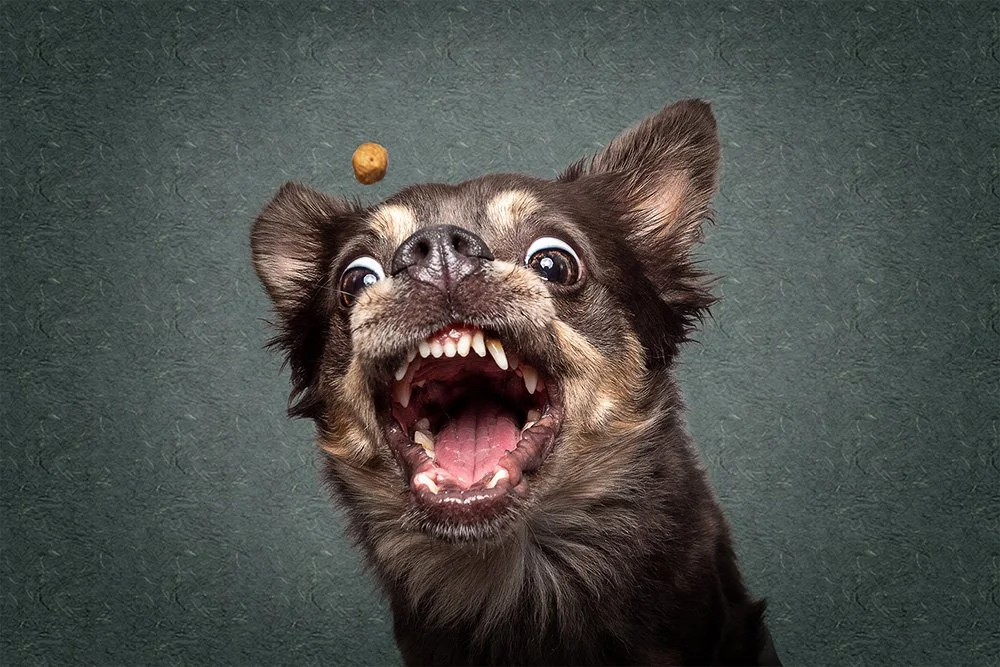
The value of a treat or any other reinforcer is not static. photo: AdobeStock
Most dog lovers know that food is an effective way to train a dog. Small treats delivered quickly let you tell your dog, over and over, exactly what they just did that you liked. The more often you provide treats, the faster the behavior takes hold. Food is also a great way to change how your dog feels, and how a dog feels shapes what a dog does.
But what happens when your dog won’t take treats during training?
Check the Context
The first thing to do when your dog won’t take food is to look at the context. This means noticing what’s happening right now and what happened earlier in the day.
Perhaps your dog was particularly nervous because it was garbage day and there were loud rumbles outside the condo window. Then your partner, whom your dog loves, left for work. Now it’s raining, and when you take your dog outside, they won’t take treats. But yesterday, the garbage truck didn’t come by, the sun was out, and you and your partner walked the dog together. That same dog took treats easily.
The environment plays a significant role in how your dog feels and whether food will be an effective reinforcer. That’s why it’s important to pay attention to what conditions make it easier or harder for your dog to eat.
A Treat’s Value Isn’t Fixed
The value of a treat or any other reinforcer is not static. The term “motivating operations” refers to the way the circumstances surrounding a behavior can change how valuable a particular reinforcer is in that moment.
Imagine that you’ve just finished a run on a hot summer day. A glass of ice water would be particularly reinforcing to you at that moment. But now imagine it’s December, you’re already hydrated, and you’ve been sitting on the couch in a cold house with a broken thermostat. It’s the exact same ice water, but its value to you would be very different.
The same thing happens with dogs. A piece of cheese may be highly reinforcing when your dog is training with you in the living room. But outside, just after a squirrel has run across the sidewalk, sniffing and investigating where the squirrel went may be far more valuable to your dog than eating that same piece of cheese. The cheese hasn’t changed, but the situation has changed its value as a reinforcer.
Your Dog’s Eating Threshold
Think of your dog’s appetite on a scale from 1 to 10, with 1 meaning they really want the treat and 10 meaning they won’t eat it at all. Somewhere along that scale, your dog may begin taking treats more slowly or accepting them and then spitting them out. Eventually, they may stop taking treats altogether.
There is a threshold at which your dog’s appetite disappears, and different things can affect it. Let’s take a look at some of these factors.
Arousal and Stress Responses
When your dog isn’t interested in treats, they may be experiencing a stress response in their body. This can happen for many reasons. Your dog may be preparing to chase a bird, getting ready to bark at an approaching dog who makes them uncomfortable, or responding anxiously to something in the environment.
During a stress response in dogs, chemicals such as adrenaline and cortisol flood the brain and body, preparing the dog to take action through the fight, flight, or freeze response. Because the body is prioritizing action, it deprioritizes eating, and the dog’s appetite can disappear.
If your dog is over their eating threshold because of a stress response, a higher value treat is not the answer. Instead, you’ll need to change what is causing the response, whether that means increasing the distance from the trigger, choosing a quieter time of day, or simply ending the training session.
Physical Discomfort
Your dog may also stop taking food because they are physically uncomfortable or not feeling well. As with humans, pain, illness, nausea, or digestive discomfort can all affect a dog’s appetite.
If your dog’s willingness to eat has changed across different contexts, not only during a particular training setup, consider whether a physical issue could be responsible. If that’s the case, start with your veterinarian rather than your training plan. A sudden change in appetite is one of the clearest signals a dog can give us that something is not right.
When Refusing Food Has Been Reinforced
Imagine that you put down Tinkerbell’s bowl of kibble and she doesn’t eat it. You pick up the bowl, add chicken broth and cheese, and put it down again. Now she eats. If this happens repeatedly, Tinkerbell may begin refusing her plain kibble more often because waiting has resulted in something better.
The same thing happens in training. You ask for a sit, your dog gives it, and you offer a biscuit. Your dog looks at the biscuit, looks at you, and waits. You dig into the other pocket for the string cheese.
Do that a few times and your dog has learned something perfectly reasonable: holding out gets a better offer. Nothing is wrong with your dog’s appetite. You’ve just created a more skilled negotiator.
When Food Becomes a Poisoned Cue
Finally, food itself may have become a poisoned cue. A poisoned cue develops when something we present to our dog becomes associated with something unpleasant.
For example, imagine that you bring out food whenever you want your nervous dog to move forward through a scary situation. Over time, your dog may learn that the appearance of food predicts that they will be asked to enter a scary situation. Eventually, the food itself may make your dog nervous because it has come to predict fear.
If food has become a poisoned cue, work with a positive reinforcement-based trainer who can help you untangle the association.
What Your Dog’s Refusal Can Tell You
When your dog won’t eat something they’d ordinarily love, treat it as data rather than defiance. Look at the immediate environment. Look at what the day has already asked of them. Look at whether this is new.
The instinct is almost always to reach for something better: the hot dogs, the leftover chicken. Sometimes that works. But if your dog is over their eating threshold, a better treat is a workaround, not an answer. Find out what pushed them over, and change that instead.
A healthy dog generally only refuses treats for a reason. Once you understand what’s driving their refusal, you’ll both be back on the path to more effective training in no time.