Fall’s Super Food: For a Healthy Treat, Try Pup-kin Spice
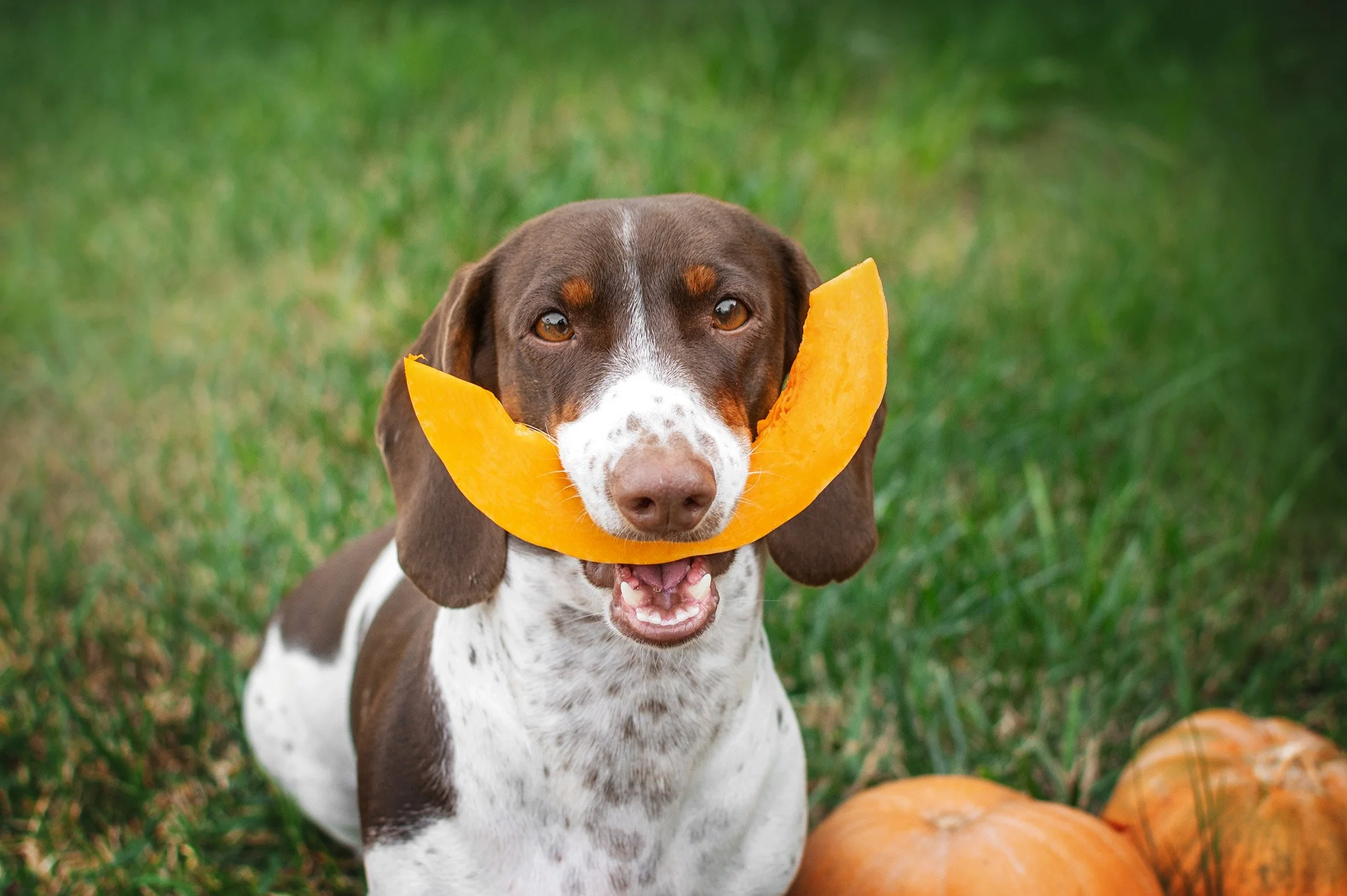
Pumpkin is frequently recommended by veterinarians for easy-to-digest and tasty treats. photo: AdobeStock
Bay Area autumns may not have vivid fall colors or a cozy chill in the air, but one thing is guaranteed: pumpkins will be everywhere. From the iconic pumpkin spice latte to the jack-o’-lanterns on your doorstep, there are countless ways to enjoy everyone’s favorite festive gourd. And there’s no reason why your dog can’t get in on the fall fun, too.
Pumpkin: The Ultimate Fiber-Filled Treat For Dogs
For dogs, pumpkin is more than a seasonal flavor. It’s a nutritious, gut-healthy superfood that can star in its own dish or pair with almost anything.
Pumpkin gets its bright orange color from a type of vitamin A called carotenoids, though it’s also a great source of vitamins C, E, and K, as well as magnesium, potassium, and even calcium. The high moisture content of this fruit (yes, pumpkin is a fruit) helps increase a dog’s water intake, while its low calorie count makes it a harmless dietary inclusion even for pups who are watching their weight.
But when it comes to dogs and pumpkins, fiber is the real star of the show. The fruit’s flesh contains both soluble and insoluble fiber, which can help regulate canine digestive systems and relieve symptoms of diarrhea and constipation. That said, a little fiber can go a long way so if your pup is new to pumpkin, it’s best to start slow and feed only a small amount to begin with.
What’s the Right Serving Size?
How much pumpkin should your dog eat? Here’s a helpful guide, courtesy of Longwood Veterinary Center, based on your pup’s weight.
< 20 lbs = 1-2 teaspoons
21-50 lbs = 1-2 tablespoons
51-90 lbs = 2-4 tablespoons
> 90 lbs = up to ¼ cup
Dog-Friendly Ways to Serve Pumpkin
Making your own pumpkin puree for your dog is easier than you might think. Just preheat the oven to 350 degrees, then wash a small pumpkin (sugar pumpkins are best) and cut it in halves or quarters. Scoop out all seeds and insides, leaving just the flesh. Line a baking sheet with parchment paper, place the pumpkins on the sheet, and roast them until they are tender enough to poke with a fork, about 30-60 minutes. Once cooled, scoop out the flesh and place it in a food processor or blender. Blend until you reach a puree consistency and then strain with cheesecloth or a strainer if the mixture is too thin.
Of course, to make it even easier, you can simply buy pure canned pumpkin at the store. Just make sure to read the ingredients. You don’t want to feed your dog sweetened pumpkin pie filling or anything with sugar or additives.
But whether it’s store-bought or homemade, pureed or canned pumpkin can be used in many different ways. You can add it to your dog’s kibble or wet food, make it an ingredient in your favorite dog biscuit recipe, or offer it to your pup straight off the spoon. Most dogs will find it delicious.
Make Your Own Pup-kin Spice Latte
Dogs can’t have coffee, but your pup may still love its own homemade version of this seasonal drink. Luckily, all you need to make it are a few ingredients that might already be in your pantry and fridge. My favorite version of the Pup-kin Spice Latte comes from Chewy’s recipe, which only requires a cocktail shaker, measuring cups, and about 15 minutes of your time.
The best part about this recipe is its simplicity. Just combine a ½ cup of pumpkin puree with a 1/4 cup chicken broth and a few ice cubes in a cocktail shaker. Then add a ¼ cup plus 1 tablespoon of plain yogurt before shaking again. Add a dash of cinnamon, a dog-safe spice that brings autumnal and anti-inflammatory vibes, and serve!
Now that you know just how wonderful pumpkin can be for dogs, your furry friend won’t have to feel left out this fall. With this nutritious, diverse ingredient in your kitchen toolbelt, you can easily whip up healthy, festive treats to keep your dog’s tail wagging all season long.