United for Good: Animal Welfare Leaders Call for State Bureau to Protect Companion Animals
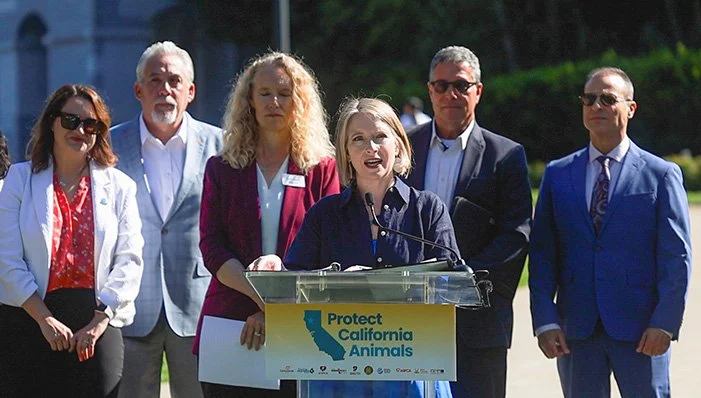
Californians should have a clear place to raise concerns when they believe animals may be at risk within the sheltering and rescue system. photo: Valley Humane Society
On Monday, August 24, 2026, animal welfare leaders, local government officials, law enforcement representatives, and community advocates gathered at the California State Capitol in Sacramento to improve the health and safety of companion animals throughout California. In a public press conference, this diverse group called on the California Legislature and the next governor to establish a Bureau of Companion Animal Welfare within the California Department of Food and Agriculture.
The group’s press conference marked an important step in an effort that has united organizations and individuals from across the state around a shared concern: California has strong animal protection laws governing the care, sale, transfer, sheltering, rescue, boarding, and breeding of companion animals - but no single state entity is responsible for making those laws work as a coherent system.
Valley Humane Society President and CEO Melanie Sadek moderated the press conference, which brought together experts in animal welfare who shared their own perspectives on the challenges of navigating the current system. Speakers at the Capitol event included Sadek; Jill Tucker, CEO of CalAnimals; Dr. Gary Weitzman, President and CEO of the San Diego Humane Society; Joe DeVries, Director of Oakland Animal Services; Jace Huggins, Vice President and Chief of Humane Law Enforcement at the San Diego Humane Society; and Brittany Benesi, Senior Legislative Director for the ASPCA’s Western Division.
A Shared Call for Greater Coordination
California is home to hundreds of animal shelters and thousands of rescue organizations, along with countless businesses and other organizations responsible for the care, sheltering, transfer, boarding, and breeding of companion animals. While state laws govern many of these activities, responsibility for oversight and enforcement is currently spread across multiple state agencies and local jurisdictions. That fragmentation has made it difficult to establish consistent standards, identify gaps, and coordinate responses when problems arise.
“Californians should have a clear place to raise concerns when they believe animals may be at risk within the sheltering and rescue system,” said Melanie Sadek. “A bureau would give the public a clear place to ask questions and report concerns, while supporting responsible organizations with consistent guidance. That combination, an accessible front door for the public and a dependable partner for animal care providers, is the statewide infrastructure California is missing.”
Speakers brought different experiences to the conversation, but the message was consistent: California needs a more coordinated approach to companion animal welfare. The proposed Bureau of Companion Animal Welfare would create a dedicated entity within the California Department of Food and Agriculture focused on the organizations and businesses responsible for companion animals. The goal is not simply to create another layer of government. It is to build a structure that can provide greater consistency, coordination, and accountability across a complex statewide system.
Why Valley Humane Supports a Statewide Bureau
The Valley Humane Society didn't decide to support this effort from the sidelines. The organization has been involved in helping shape it from the beginning. Melanie Sadek, Valley Humane’s CEO, also serves as chair of the California Animal Welfare Association's Legislative Committee and sat on the committee that studied how other states oversee companion animal organizations and businesses and what California could learn from those systems.
That work required looking closely at both the strengths of California's animal welfare community and the gaps that exist today. Across the state, shelters, rescues, veterinary professionals, law enforcement agencies, volunteers, and advocates work every day to improve the lives of animals. A statewide bureau would not replace that work. Instead, it could provide infrastructure to better support it, while creating clearer expectations and greater accountability for those responsible for animal care.
For Valley Humane, supporting the creation of a bureau reflects something the group’s staff and volunteers see in their own work: meaningful change for animals doesn't happen through one organization or one approach. It takes collaboration among animal welfare organizations, government agencies, community partners, and the people who care about animals.
What Happens Next?
The August gathering at the State Capitol helped bring greater visibility to the need for statewide coordination, but a press conference alone doesn't create change.
The effort now continues with a search for the right legislator to author the bill and move it through California's legislative process. As the proposal moves forward, coalition members will continue talking with policymakers, animal welfare organizations, and communities across California about what a bureau could accomplish and why statewide coordination matters.
How Can You Help?
Public awareness and participation will be crucial to the success of this proposal. Here’s what you can do to support the effort.
Start by learning more about why Valley Humane supports the creation of a Bureau of Companion Animal Welfare and what the proposal could mean for animals and communities across California.
Watch the August 24 press conference to hear directly from the animal welfare leaders, law enforcement representatives, and advocates involved in the effort.
Share information about the proposal with friends, family, and fellow animal advocates.
Follow Valley Humane for updates and opportunities to make your voice heard as the legislation moves forward.
California's animal welfare system is large and complex. Creating stronger coordination won't happen overnight. But bringing people together around a shared vision for greater consistency, accountability, and collaboration is an important place to start.