Sky’s Smile: How a Shelter Pup Found His Purpose
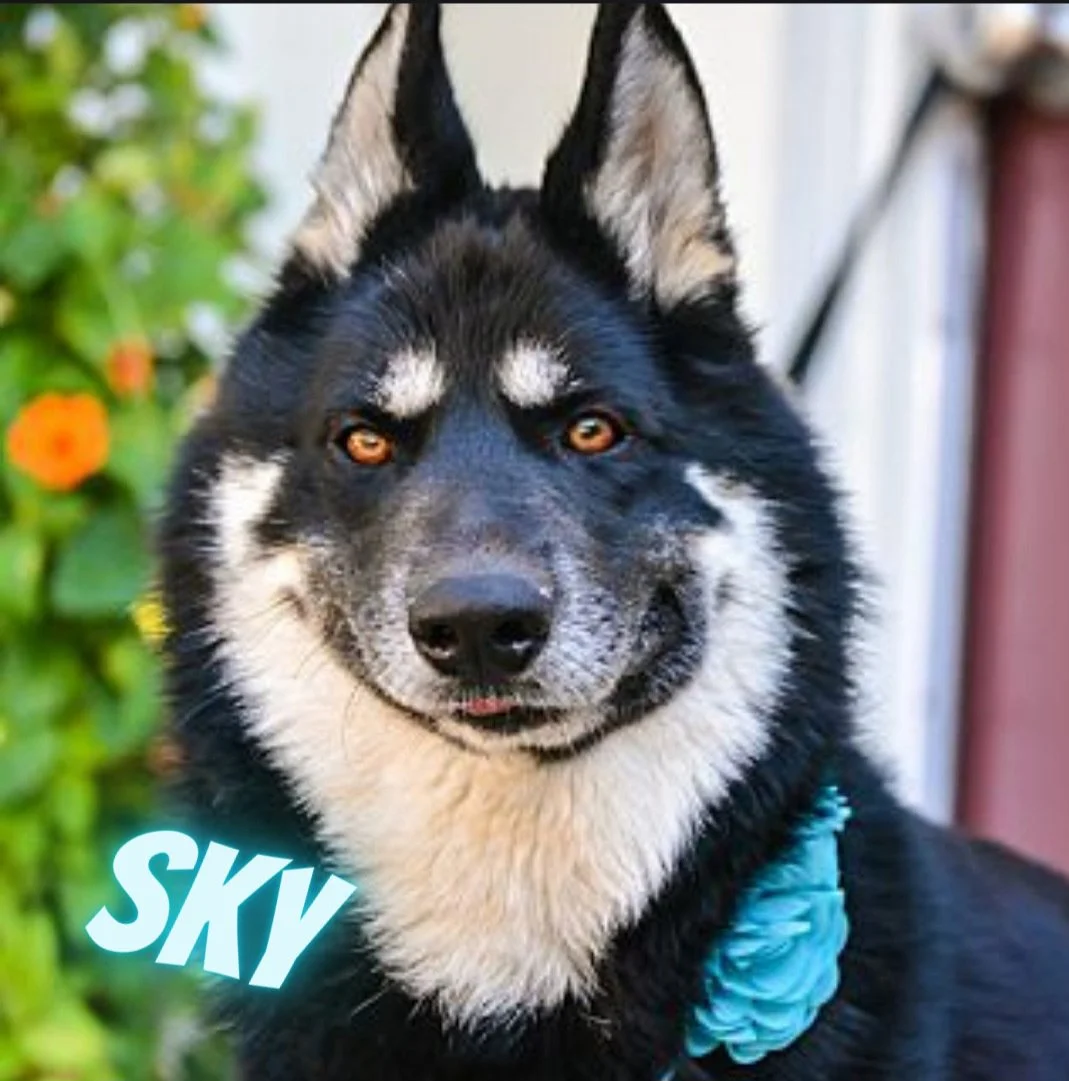
Sky has a smile few humans (and no dentists) could resist. photo: HSNB
People usually notice Sky's smile before they notice anything else. Some smile back. Some ask questions. Others simply kneel to pet the handsome black-and-tan dog standing quietly beside me. He’s the dog who changed my life.
It was May 2023 when I became a dog-walking volunteer at the Humane Society of the North Bay (HSNB) in Vallejo. After fostering puppies during the pandemic and losing my beloved Siberian Husky, Akira, to cancer, I wanted to give something back to the shelter that had brought Akira to me. I had no idea that a quiet, overlooked dog named Sky was there waiting to be found.
Shortly after Akira passed away, we had also lost another dog. This meant our household was down to Harvey, a 7-year-old Beagle mix who had come to us from Adopt-a-Pet in 2020. Harvey was lonely and needed a buddy. That’s when I reached out to Jem, HSNB’s adoption coordinator, for her expertise in finding the right foster dog to bring into our family.
For some reason, I was curious about Sky, a dog with an unusual smile who had been at the shelter for nearly two years. We began fostering him in August 2023, and once he proved a good fit for our home, we adopted him on Veterans Day.
But before we officially adopted Sky, I wanted to make sure I understood exactly what I was taking on. His unusual smile wasn't just cosmetic so I scheduled a dental examination to have his teeth evaluated and find out whether they could even be cleaned safely. But what we expected to be a straightforward evaluation became the beginning of a much larger medical mystery.
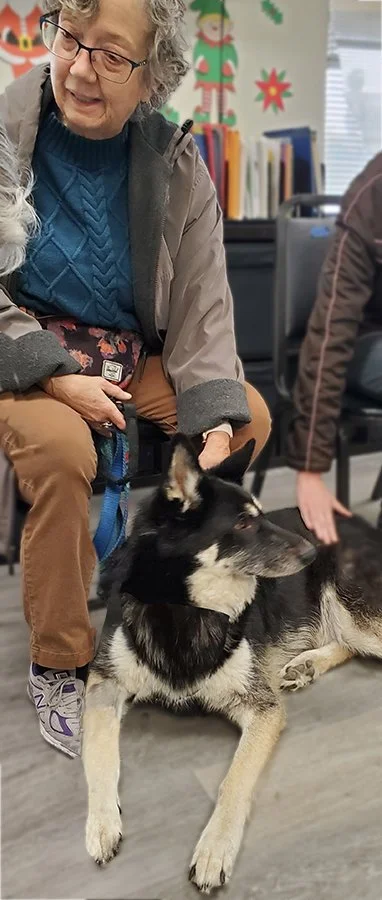
Work isn’t hard when you’re employed by the Cuddle Club.
photo: HSNB
Although the veterinarian could only open Sky's mouth partway, it was enough to reveal severe overcrowding of his lower molars. Still, there was something about Sky's smile that drew me in. Though I couldn't explain it at the time, I later wondered if part of that connection came from having grown up with an overbite myself and spending years in braces. Sky’s smile wasn't perfect, but to me it was unforgettable.
We’d also changed veterinarians at that time and during Sky's first dental examination, our new veterinarian noticed something unusual. Sky was unable to open his mouth normally because many of the muscles used for chewing had completely wasted away. At first, the vet suspected a rare autoimmune disease called Masticatory Muscle Myositis (MMM), but further testing ruled that out. We’re still not exactly sure what the story is with his mouth.
As luck would have it, later that summer, I became a volunteer with HSNB’s Cuddle Club. This is a group of volunteers who take dogs to visit facilities such as memory care homes and libraries. But it wasn’t until members of the group began taking their own “ambassador dogs” to these facilities that I began to think Sky might have a lot to offer in that role. After all, he doesn’t slobber, kiss, or bite people. He just smiles his unique smile.
Now for the last two years, Sky has been my trusted companion on many visits, even though his only trick is sitting for a treat. He’s occasionally drummed on by some of the more enthusiastic residents, but he takes it in stride. After all, he has an important job to do. And so do I. Volunteering with Sky and Cuddle Club has enriched my own life in ways I never could have predicted.
Looking back at our journey from fostering to adoption to Cuddle Club, I can’t help but be reminded that sometimes the dogs we rescue end up rescuing us. Today, when people notice Sky and his smile, they see a calm, gentle therapy dog. But I see something more: a once-overlooked shelter dog who found his purpose, and in the process, helped me find mine.