Ugliest/Cutest Canine Contests, Bear Dogs on the Job, Service Pups Seek Federal Funding, and More!

Smelling like a rose, Petunia strolls the red carpet at the contest in Santa Rosa, CA. photo: © Bay City News
Who You Calling Ugly?
Not This Dog!
Here at Bay Woof, we think all dogs are beautiful so it's with mixed feelings that we announce this year's winner of the World's Ugliest Dog Contest. Meet Petunia, a small hairless English/French Bulldog mix whose multiple folds of pinkish flesh are either creepy or captivating depending on your view.
In fact, the Ugliest Dog Contest exists not to heap scorn on dogs who look different but to promote the adoption of dogs who may not meet the standard definition of beauty (whatever that is). It's also a pointed reminder to us superficial humans that pedigree has nothing to do with the amount of love a pup can give.
Petunia's story started in Las Vegas amid the squalor of a backyard breeding/hoarding situation. Oregon's Luvable Dog Rescue brought her north where she received badly needed medical care to correct an elongated palate that had caused pain with every breath. Once in Oregon, she healed, snuggled, and found a forever home with Shannon Nyman, who ultimately entered her in the World's Ugliest Dog Contest to bring awareness to the joys of life with a less-than-traditionally-perfect pet.
Now that Petunia has been dubbed the World's Ugliest Dog, her likeness will grace limited-edition cans of MUG Root Beer, a contest sponsor. She'll also make an appearance on NBC's Today show. And did we mention that she just happened to earn her human a check for a cool five grand? Way to bring home the bacon, girl.
Despite a rough start, Petunia now knows that humans can be kind and gentle. She adores other dogs, cats, and people and lives a life surrounded by love. More importantly, she's become an ambassador for other funny-looking dogs searching for forever homes.
And if that's not beautiful, we don't know what is.
Source: nytimes.com
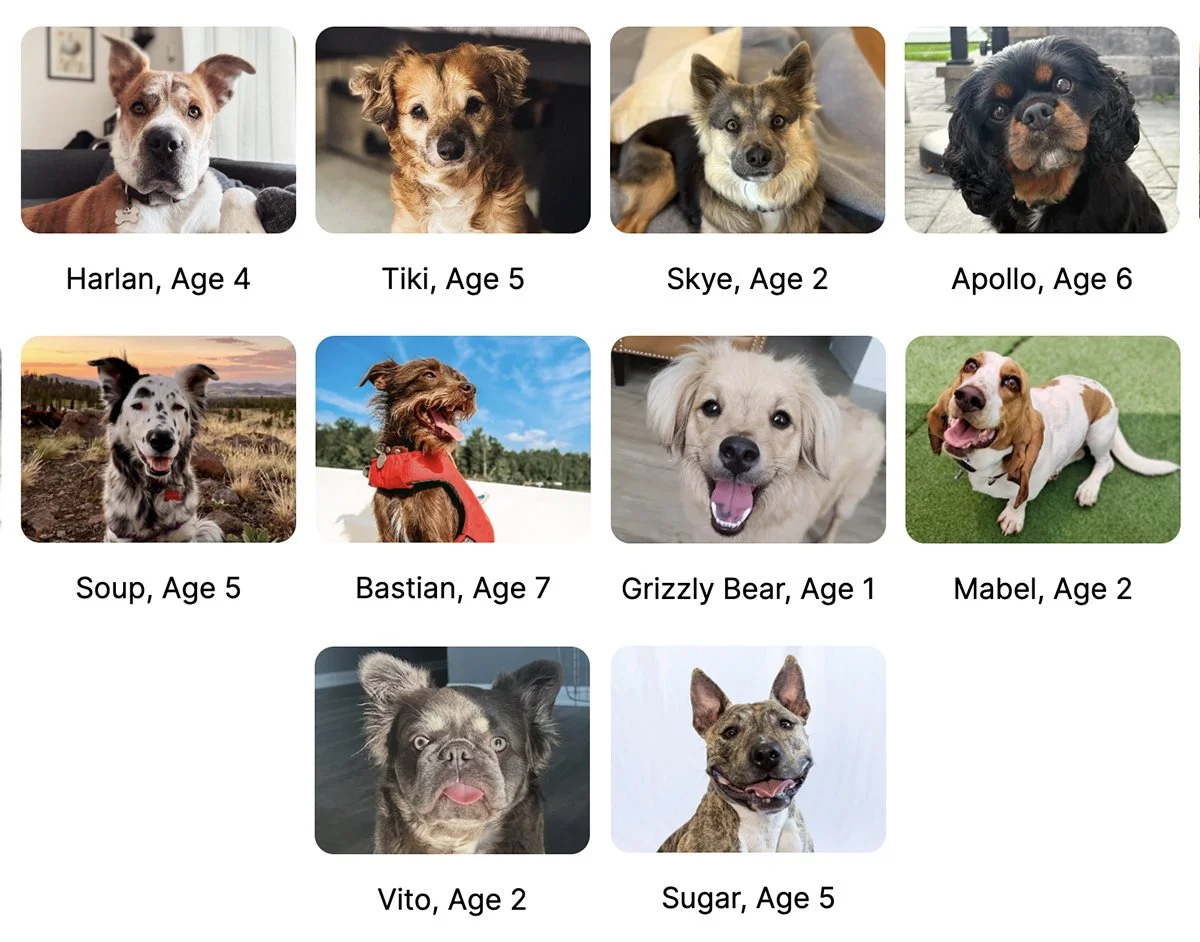
Who is your favorite cutie patootie? photo: people.com
Who's the Cutest Rescue Dog?
Vote by September 15!
Still in the looks department, voting is already underway in the World's Cutest Rescue Dog Contest. After sorting through thousands of entries, contest sponsors have narrowed it down to 10 fetching finalists adopted from shelters and rescue groups throughout the U.S.
The public (that's you) can vote on these pups through September 15, after which the top three vote getters will strut their stuff for a panel of celebrity judges to determine the ultimate winner.
Learn more about the furry finalists and cast your vote here.
P.S. We voted for Soup with his spotty grin, but we almost went with Mabel. After all, who can resist a dog whose favorite habits are snacking and sunbathing?
Source: people.com

Astra is the perfect bear security guard for her appreciative family. photo: John Stember, The New York Times
Back Off, Bears:
These Dogs Keep Grizzlies at Bay
Meanwhile, some dogs have too much going on in their professional lives to worry about beauty contests. We're talking about the bear dogs whose job it is to ward off marauding grizzlies that have become a growing problem for Montana's ranchers and farmers.
Once almost eradicated in the lower 48 states, grizzly bears have made a comeback thanks to their protected status under the federal Endangered Species Act. But their resurgence hasn't been without problems. Lured by grain bins, apple orchards, livestock, and other tasty treats on Montana's farms and ranches, the bears now pose a threat to the humans who live and work there.
Enter the bear dogs, specifically three large breeds of Turkish Shepherds: the Kangal, the Boz, and the Anatolian. Introduced as part of a study between Montana's wildlife agency and the University of Utah, these gentle giants have proven an effective deterrent against grizzlies that stray too close to human habitats.
As scary as grizzlies can be, they'd generally rather avoid conflict in the search for their next meal. "They're just like, 'OK, never mind, you're barking at me, I'll leave," says Dr. Julie Young, an ecology professor at Utah State.
One of the first dogs in the study was Billy, a 180-pound Kangal so large he arrived in a horse trailer. Billy stays outside on his nightly bear patrol, but he loves to hang out in the house with the family when he's off duty. And while he's kept the bears safely at bay, he's sweet as pie with the farmer’s grandchildren. "He wants to be a lap dog," reports Julie Ahrens, who, with her husband Steve, has farmed wheat, barley, and chickpeas outside Shelby, Montana, for over 40 years.
Does the dog deterrent work? The research says yes. During the study, farms that received bear dogs saw an almost 90 percent drop in CPS detections of collared bears within 1,000 feet of their farmsteads. Researchers also found a 58-fold reduction in camera-trap detection of bears compared with nearby farms that did not get dogs. All of which helps reduce risks to humans and, in turn, the need to euthanize bears who, after all, are just being bears.
"We're trying to save the bears and save ourselves," said one farmer. Thanks to these vigilant bear dogs, that goal is closer than ever.
Source: nytimes.com
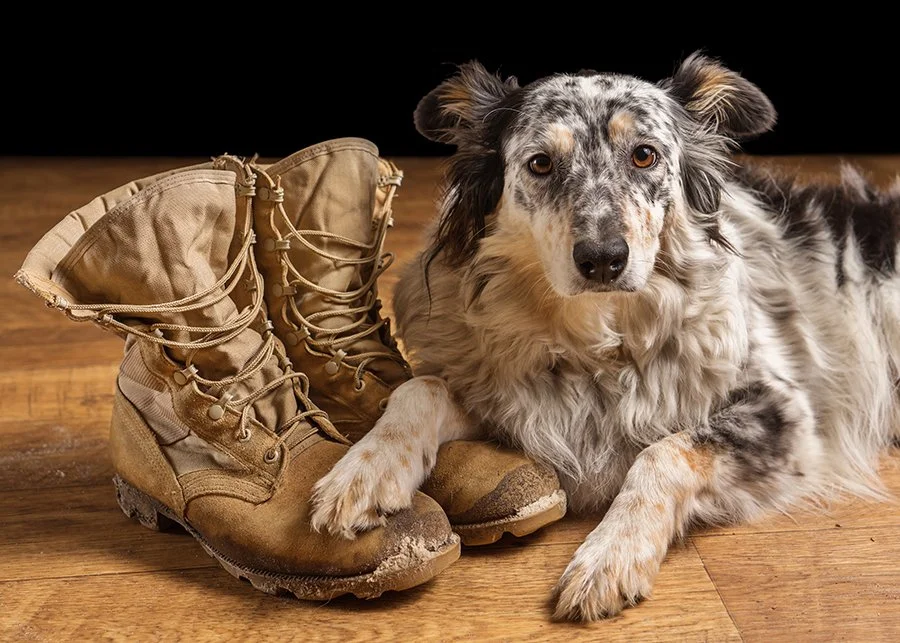
Service dogs for disabled veterans may soon receive reliable funding if the bill passes in Congress. photo: AdobeStock
More Service Dogs for Disabled Vets?
Contact Congress Now
A bill currently pending in the U.S. Congress would award $10 million in annual funding to meet a growing demand for service dogs for disabled veterans. If passed, the Service Dogs Assisting Veterans Act (or SAVES Act for short) would authorize the Department of Veteran Affairs to award grants to nonprofit organizations to train and place service dogs at no cost to disabled veterans.
Currently, these nonprofits rely largely on donations to cover the costs of breeding and training service dogs, which can approach $50,000 per dog. But the lack of a reliable funding stream means many disabled vets face long waits for a service dog if they're lucky enough to get one at all.
The bill has already cleared both the House and Senate Committees on Veterans' Affairs, and supporters hope it will advance to a final vote when congress reconvenes this month. "This is about giving our heroes the tools they need to thrive, not just survive, when they come home," said one house sponsor who is also a Navy veteran.
If you'd like to support the SAVES Act, now's the time to let your congressional reps and senators know. Not sure who they are or how to reach them? Find out here.
Source: stripes.com
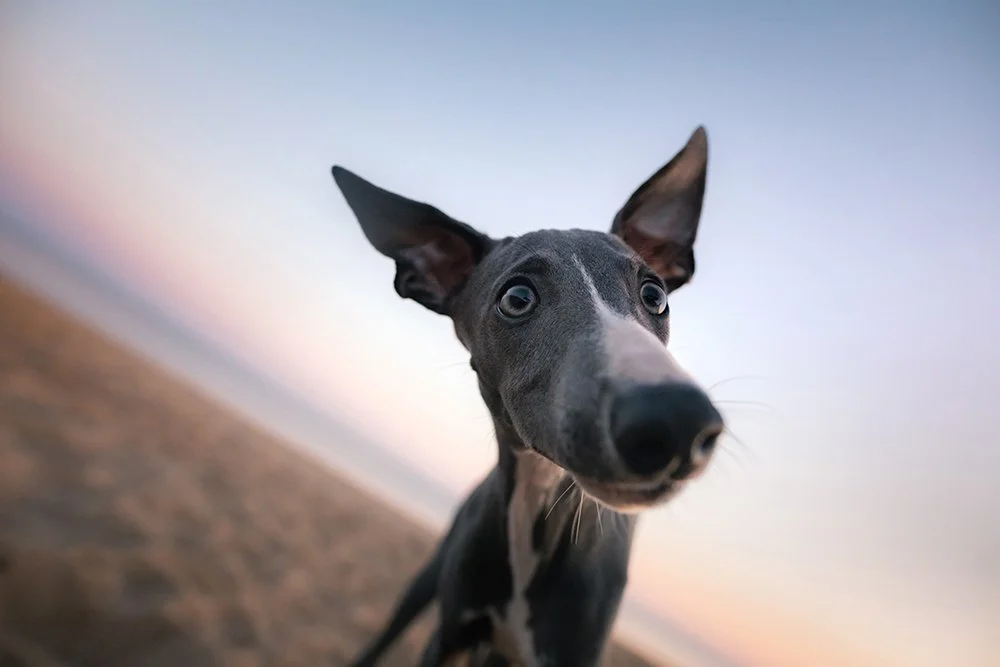
From where did the word “dog” originate? photo: AdobeStock
A Pup By Any Other Name...
When Did Dogs Become Dogs?
The word "dog" seems like it's been around forever. But in fact, it's only become the standard term for our favorite canines in the last 500 years or so. Moreover, linguists still don't know how this word came to be. Its origins remain a linguistic mystery.
Centuries ago, all dogs were commonly called hounds, derived from the Old English word "hund," a term that now applies to specific breeds of dogs. One theory is that the term "dog" emerged from the Old English "dugan" meaning to be good or of use or strong. Another holds that it came from the Old English word 'dox,' which was a term to describe a color, although given the variety of colors among canines that seems like a bit of a stretch.
While the word "dog" did appear occasionally in older documents, from 1100 to 1450 the term was more commonly used as an insult for people. "The use of terms for dog to insult people are pretty common historically and across cultures and we see it all over the place," says Colin Gorrie, a linguist who has written about the origin of the word. "So it's not just in the history of English but in related languages of Europe and Asia."
But it appears that over time the positive feelings people had for their four-legged friends surmounted some of the word's negative connotations. That change was noticeable by the 1500s when "dog" replaced "hound" as the standard term for the pups we love today.
"It's very possible that the same word that you use as an insult, you can repurpose as a term of affection," says Gorrie. "Almost as if they're reclaiming that word or using it ironically to show just how strong the affection is."
Source: npr.org