Dog Aging Project Needs Help, Oldest Dog Title Questioned, Meet the Smallest Big Loser, and More!

The Dog Aging Project includes 47,000 canines and counting, and the data are starting to stream in. But its funding, provided almost entirely by the National Institute on Aging, will expire in a few months. photo: The New York Times
Keep DAP Alive: The Dog Aging Project Needs Your Help
We’ve written before about the Dog Aging Project (DAP), an ambitious long-term study with over 47,000 canines currently enrolled. Now in its fifth year, the study uses data from thousands of furry participants to help identify biological and environmental factors that seem to keep some dogs healthy well into their senior years. Because dogs are prone to many of the same age-related conditions as people, the study could also provide insights into human longevity but with quicker results due to dogs’ shorter life spans.
The vast majority of the project’s funding comes from the National Institute on Aging (NIA). But now DAP’s initial grant is running out and researchers have been told informally that the institute is not likely to support a five-year renewal. Absent other support or a change of heart on the NIA’s part, the project will have to pause or dramatically scale back its work, which the head of the American Federation for Aging Research has characterized as “one of the most important projects in the field right now.”
“It’s just the worst possible time to be slowing things down, because now is the time when the really exciting stuff is just starting to happen,” says DAP co-founder Dr. Daniel Promislow, a biogerontologist at the University of Washington. “There will always be new questions to ask. We want to always have dogs of all ages participating.”
If you want to keep DAP alive, there are two ways you can help.
Sign and share the petition to support the continuation of the Dog Aging Project here.
Consider a personal donation to the Dog Aging Institute, a new nonprofit especially created to support the work of the Dog Aging Project and related research.
As they await a formal decision from the NIA, researchers are just trying to raise enough money to keep the lights on. “We haven’t yet identified a dog-loving billionaire interested in supporting aging research,” says Dr. Promislow. “But we’re certainly going to try.”
Source: nytimes.com
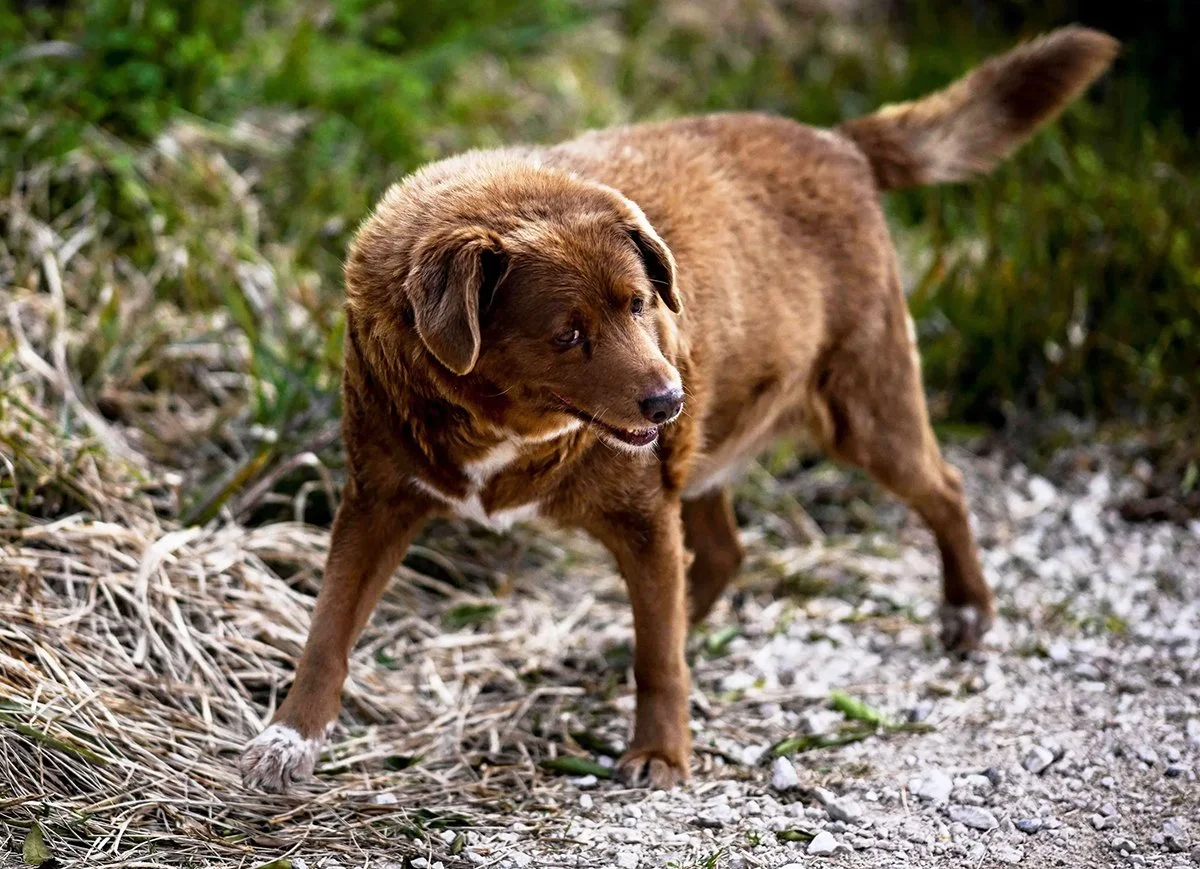
A scandal is tearing the world of record-breaking dogs apart. photo: Getty Images
Say It Ain’t So! Was Bobi Really the World’s Oldest Dog?
Elsewhere on the aging beat, the late Bobi is back in the news. The Portuguese Rafeiro do Alentejo was the Guinness World Records title holder for world’s oldest dog when he died last fall at the astonishing age of 31. But since his death, experts have questioned Bobi’s true age, which would have been an admittedly improbable 200+ in human years.
Now an investigation by Wired magazine has revealed that the government agency that vouched for Bobi’s age didn’t actually have evidence that he was born in 1992, as previously claimed. As a result, Guinness has hit the pause button on two categories – world’s oldest living dog and world’s oldest dog ever – both titles that had been held by Bobi.
Meanwhile, the owner of Spike the Chihuahua, a previous title holder now pushing 24, has written to Guinness seeking to regain Spike’s crown. After asking for a photo of the dog with a dated newspaper to prove he was still alive, the Guinness folks apparently got cold feet and are now requesting further proof of the little guy’s age, even though they’d previously awarded him the oldest dog title.
Guinness says it’s reviewing its verification policies after receiving correspondence from a number of veterinarians skeptical about Bobi’s alleged age. To quote Danny Chambers, a British vet and council member of the Royal College of Veterinary Surgeons, “…not a single one of my veterinary colleagues believe Bobi was actually 31 years old.”
All we know for sure at this point is that none of this is Bobi’s fault. After all, he never claimed to be anything but a very good boy.
Sources: wired.com, theguardian.com

The "giant potato” chihuahua at San Francisco's Muttville Dog Rescue lost an astounding two-thirds of her body weight. photo: ABC7news
The Smallest Big Loser: Tiny Pup Sheds Pounds, Regains Life
When Sox, a seven-year-old Chihuahua mix, first arrived at San Francisco’s Muttville Dog Rescue, she was dangerously overweight. The tiny dog tipped the scales at 30 pounds, could barely walk, and was used to being carted around in a stroller. “She was a very, we say, a ‘potato-y’ dog – big and chunky!” recalled Mutt Manager Jen Coudron. Another staffer suggested she might be in the running for “most obese dog ever.”
Before coming to the shelter, Sox had lived on a diet of bacon and eggs, fed to her by a senior owner who fell ill and was no longer able to care for her. Muttville staff and Sox’s foster caregiver immediately started her on a weight loss regime that included sensible meals and walking on a treadmill. After about three months, the petite pup had dropped to a healthy 10 pounds, a mere third of her original body weight, and was bursting with renewed energy. Her caregivers knew Sox had made it the day she was finally able to leap up onto a couch.
Now happily ensconced in a forever home with doting human Amanda Tull, Sox no longer needs a stroller to get around. “Now she can jump and chase the cats and all kinds of things,” Tull reports. “Her life has been given back.”
Source: abc7news.com
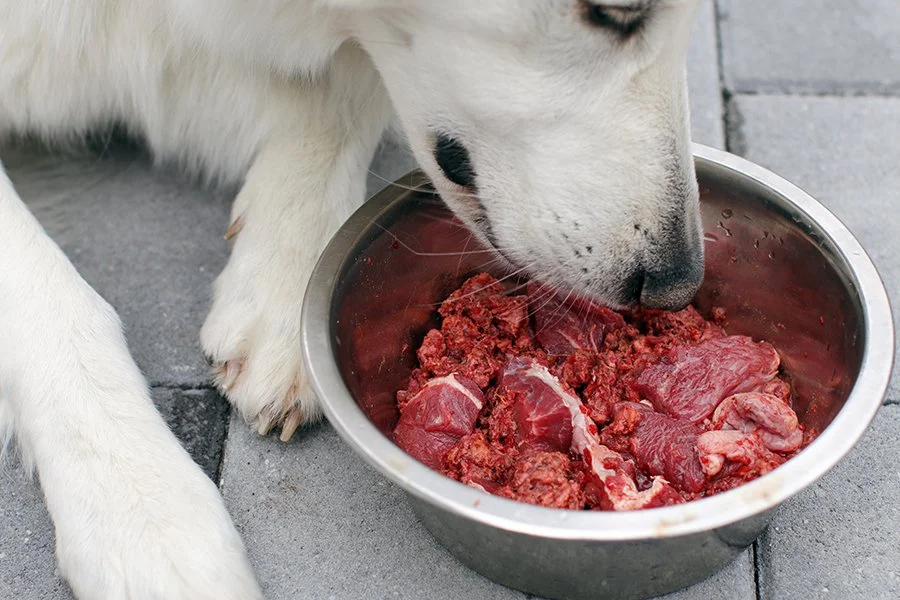
Know the risks - feeding dogs raw meat increases the risk of antibiotic-resistant E. coli. photo: AdobeStock
Cook First! Study Shows Dangers of Raw Meat for Dogs
If you’re in the habit of feeding your dog raw meat, you might want to think again.
A recent study by the UK’s University of Bristol found that feeding dogs uncooked meat increases their risk of excreting a drug resistant strain of E. coli that cannot be killed by ciprofloxacin, an antibiotic widely used to treat a range of bacterial infections in humans and animals. E. coli can cause food poisoning and infections of the urinary tract and bloodstream, and it may be fatal.
The study, which involved 600 healthy pet dogs, looked for ciprofloxacin-resistant E. coli in the dogs’ intestines and then asked owners to complete a survey about their dog’s diet, environment, and whether the dog had been treated with antibiotics. A statistical analysis found that feeding uncooked meat to dogs was the only significant risk factor associated with the excretion of these drug-resistant bacteria.
Researchers emphasized that cooking raw meat, whether for dog or human consumption, safely kills the E. coli bacteria, and that thorough handwashing is a must for anyone handling raw meat for any reason. According to the study’s leader, “Choosing to feed a dog raw meat means a person almost certainly has to handle the raw meat, and our research is clear that raw feeding also means pet owners are likely to be interacting with a pet that is excreting resistant E. coli.”
Source: sciencedaily.com

Bleu the dog waiting for "gourmet" touches to be added to his food. photo Daniel McAfee
Mind Over Matter: Faking Out Sophisticated Pup Palates
Finally, in happier food news, the internet has been crushing on a couple of picky eater pups who won’t touch their kibble until their owners perform elaborate – and totally fake – “gourmet” routines over their bowls.
Zoey, a 14-year-old Goldendoodle, demands that a closed bottle of ranch dressing be waved over her food before she’ll deign to touch it, an act that’s already grabbed over 1.5 million views on TikTok.
Meanwhile, Storyful viewers are cracking up over Bleu the Weimaraner who requires even fancier food prep. After announcing “Time for a gourmet meal,” his owners pretend to heat his bowl on a cold stove top, pantomime squeezing lime juice over the bowl, and fake adding Silk oat milk (“Then we’ll pour absolutely none of this in here”). The final touch? Opening and closing the microwave while announcing “Voila!”
Do these pups really have sophisticated palates? Maybe. A shrewd grasp on reality? Not so much.
Source: people.com