Calling All B.A.R.K. Rangers, Tiny Pups With Twice the Bite, The Nation’s Fat Dog Capital Revealed, and More!
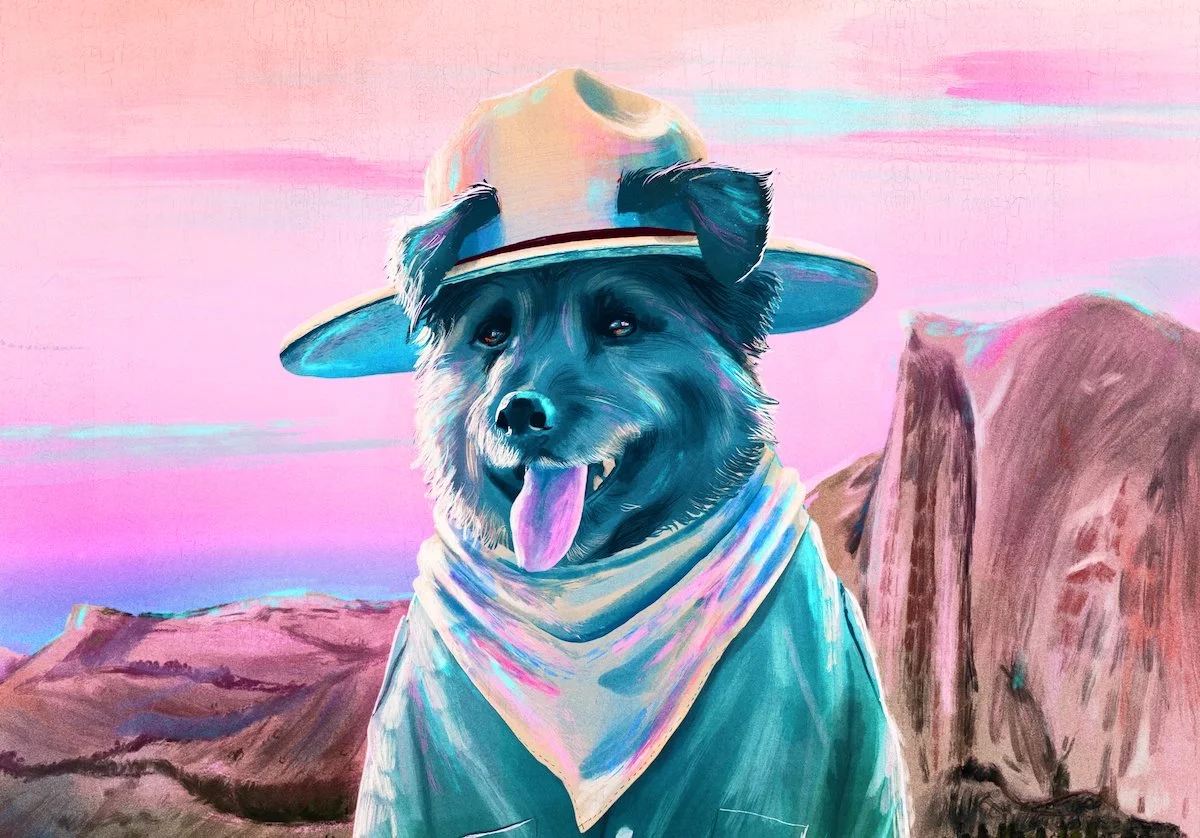
National Park Service’s B.A.R.K. Ranger Program can give you and your dog pal access to dozens of participating national parks. Illustration: Katty Huertas
Calling all B.A.R.K. Rangers!
Spring is in the air and the great outdoors is calling you and your pup. That means it’s the perfect time to learn about the National Park Service’s B.A.R.K. Ranger Program, which can give you and your very good boy or girl access to dozens of participating national parks throughout the U.S.
B.A.R.K. is actually an acronym for the principles any responsible human should follow when exploring the wild with a dog in tow.
Bag your pet’s waste.
Always leash your pet (no longer than six feet).
Respect wildlife.
Know where you can go.
Each participating park has its own unique Bark Ranger program and some are stricter than others. At some parks, you may be required to take a pledge with your pet or to complete a program booklet, while others simply put you on an honor system to follow the B.A.R.K. principles. At certain parks, your pup can even earn a snazzy B.A.R.K. Ranger leash tag, giving you priceless bragging rights when you’re out together on your next neighborhood stroll.
Here’s the specifics for becoming a Yosemite Bark Ranger. For more information and a list of participating parks, visit: nps.gov. Then get ready for some fresh air and adventures with your favorite pal!
Source: wapo.st

One expert suggests that very short-nosed dogs were nearly three times as likely to have shark teeth as those with average nose lengths. photo: wionews.com
Double Dentition: Diminutive Dogs May Pack Twice the Bite
Does your tiny dog have shark teeth?
New research shows that toy breeds are far more likely to have persistent deciduous teeth – a.k.a. shark teeth - similar to the doubled-up teeth seen in sharks’ mouths. The condition occurs when a dog’s baby teeth remain in the jaw instead of falling out, creating a second row of teeth next to the adult teeth.
After reviewing records from 2.8 million U.S. dogs, a British research team found shark teeth in about 15 percent of dogs weighing less than 15 pounds, compared to less than 1 percent in dogs weighing over 33 pounds.
Yorkshire Terriers led the pack with 25 percent of the little guys sporting shark teeth, followed by Toy Poodles, Maltese, and Chihuahuas. By comparison, Greyhounds had the lowest incidence, with just 0.1 percent showing double dentition.
Researchers theorized that the prevalence of shark teeth in smaller dogs is due to their smaller mouths, noting that very short-nosed dogs were nearly three times as likely to have shark teeth as those with average length snouts.
Or could it be that petite pups are just growing their own defense weapons? After all, when you’re surrounded by giants, packing twice the bite might not be a bad strategy.
Source: wionews.com

Ralphie has lost about 10 pounds and credits his success to healthy treats like carrots. photo: Charles Fox
Is It the Cheese Steaks? Pennsylvania Pups Snag Dubious Honor
Guess which U.S. state has the fattest dogs? If you said Pennsylvania, you win a virtual trip to the Hershey factory!
A recent survey by Veterinarians.org found that Keystone State pups are hauling around an extra 18 pounds on average. By comparison, their neighboring New Jersey dogs were just 11.43 pounds overweight, slightly under the national average of 11.83 excess pounds.
To be fair, the porkiest pooches generally had less height to absorb all that avoirdupois. Most of the plumpest breeds tended to be on the short side, including Bulldogs, Beagles, Pugs, Chihuahuas, Pomeranians, Maltese, and Yorkies.
And of course, it’s not just Pennsylvania. Nationally, pet obesity has climbed over the last two decades, bringing with it a host of health problems, including diabetes, heart disease, and high blood pressure, to name a few.
Still, is it really any wonder that the state that proudly dubs itself “The Snack Food Capital of the World” turns out to be the fattest dogs capital, too?
Source: inquirer.com.
Size Matters – And So Do Snouts
It’s always nice when science confirms what we already see with our own two eyes.
Now from the Tell-Us-Something-We-Don’t-Know Department, a new British study finds smaller dogs and those with elongated snouts live longer on average than large breeds or those with flattened faces. Nearly all of 585,000 dogs included in the study were purebred, representing 155 different breeds overall.
Most long-lived were the petite Lancashire Heelers with an average lifespan of 15.4 years, while the shortest average lifespans were generally found in the larger breeds including the massive Caucasian Shepherds, who only lived a heartbreaking 5.4 years on average, according to this study. These findings mirrored prior studies on dogs and other mammals, which have found that smaller individuals typically outlive larger ones within a given species.
French Bulldogs also fell among the ranks of the short-lived, not surprising given their well-documented health problems related to overbreeding for problem characteristics. Flat-faced breeds on average had shorter lifespans than their longer-snouted brethren. Female dogs also lived slightly longer than males.
“Now that we have identified these populations that are at risk of early death, we can start looking into why that is,” said Kirsten McMillan, data manager for Dogs Trust, which led the research. “This provides an opportunity for us to improve the lives of our dogs.”
Let’s hope that actually happens.
Source: nytimes.com
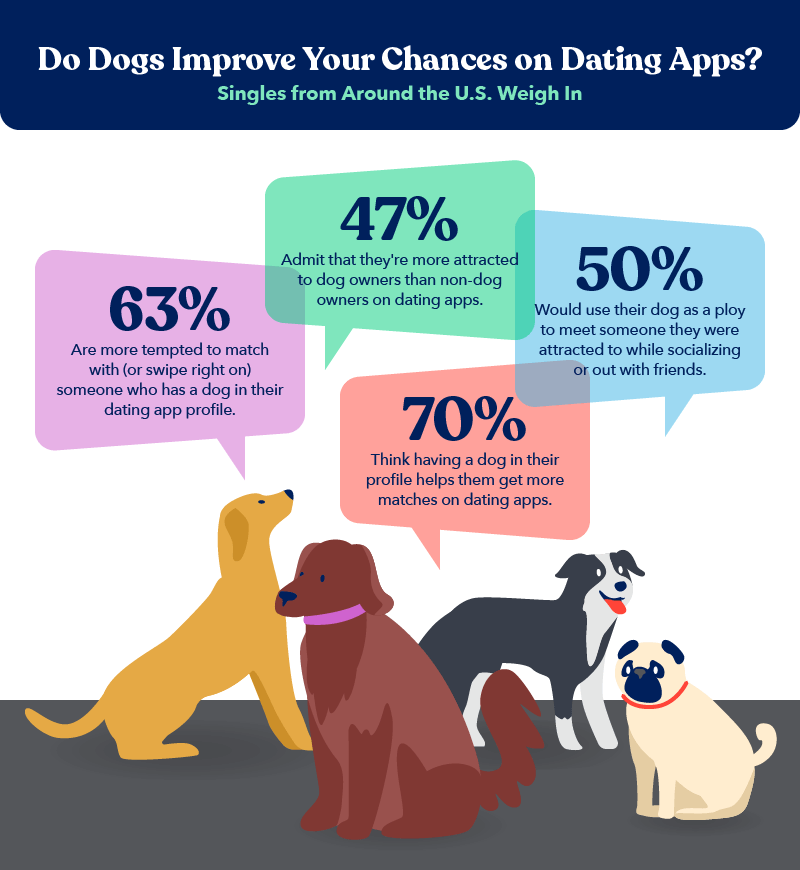
A new survey of dating app users finds that including a dog in your dating profile definitely boosts your swipe appeal. image: veterinatians.org
Dating Apps Going to the Dogs
“In spring a young man’s fancy lightly turns to thoughts of love” – or so Alfred, Lord Tennyson believed. Of course, the 19th century poet didn’t live long enough to witness the advent of dating apps, when everyone’s fancies – young, old, male, female, nonbinary – are on display, all competing to present the most attractive version of themselves.
Now a new survey of dating app users finds that including a dog in your dating profile definitely boosts your swipe appeal. In fact, 63 percent of respondents said they’d be more tempted to match with someone who had a dog in their profile photo, and fully 70 percent believed showing a dog helped them get more matches. Almost half of those surveyed said they’re more attracted to dog owners than non-dog owners, and that they might change their minds about someone they would have passed on otherwise after seeing a dog photo.
Slightly more disturbing were the 20 percent of respondents who thought it would be fine to borrow a friend’s dog for their own profile. Talk about a bark and switch – do they really think you won’t find out eventually?
Source: cw33.com