“He’s Friendly!” Why That’s the Most Unfriendly Thing You Can Say
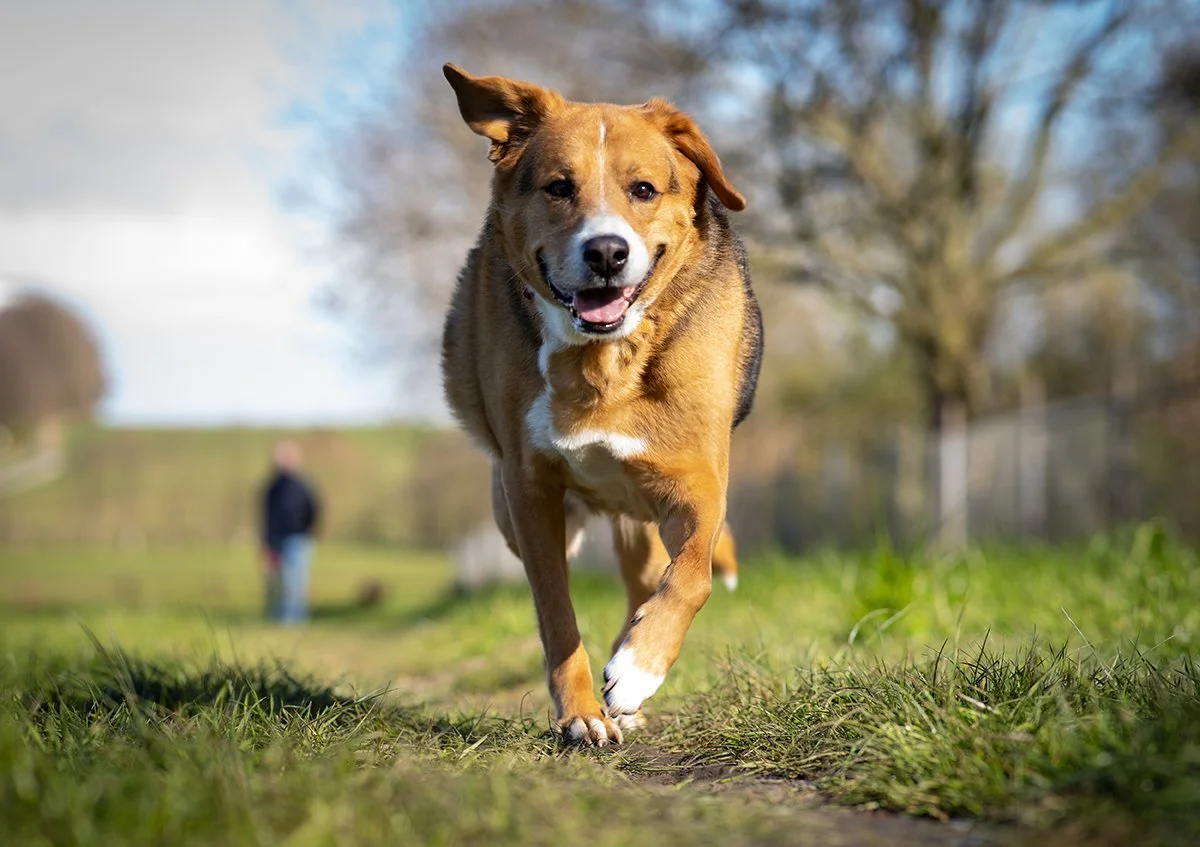
Someone shouting “he’s friendly” as their dog is racing towards you is no consolation. photo: AdobeStock
My friend had just returned from Europe and was telling me how wonderful the public spaces were. She saw people with their dogs everywhere in dense cities, moving through shared spaces without any stress, fear, or conflicts. The dogs did not approach each other and didn’t seem magnetically drawn toward other dogs. They simply relaxed, enjoying their walks and staying engaged with their own people.
Why is it so different here in San Francisco? Once I was walking a client’s dog who was recovering from a major spinal injury, when a large off-leash dog came bounding towards us. I called, “Please get your dog. It looks like he’s headed our way.” The woman just replied, “He’s friendly.”
I was enraged. This family had spent so much money on vet care, their hearts had broken when it seemed their dog might never walk again, and her fragile recovery was now at risk from this unleashed interloper. “Get your dog,” I said, with firm clarity. Again, she claimed he was friendly so I was forced to grab him by the collar when he got within range and hold him there, taking responsibility for both dogs while the other woman took no responsibility at all.
“I’m so glad he’s friendly,” I said. “Then he won’t mind if I just hold him here by the collar until you can come get him.” She was shocked, again repeating that he was friendly, but she did come and get him, scowling at me and apparently angry that her dog wasn’t welcome to touch my body, touch the dog in my care, or do whatever he wanted with us. What the hell?
More to the point: why do some people feel entitled to our personal space and our dog’s personal space without caring to get our consent first? If you’ve ever been guilty of this, instead of being shocked or angry, please take a moment to think about the many important reasons to allow each other plenty of room and comfort in shared public spaces - and why it’s so important to get consent before you or your dog approach others.
Remember that you don’t know anything about the other person, the other dog, or their lives. This means there could be any number of ‘what ifs’ in play.
What if:
The dog is recovering from surgery, injury, or illness.
The dog is dealing with blindness, deafness, or body pain.
The dog and person are working on engagement around distractions in public.
The dog or person is recovering from a traumatic experience with other dogs.
The person needs time to think about things during a peaceful walk in the sunshine, not wrangling your dog in addition to her own.
The person is raising a new puppy, showing him around, and doesn’t want extraneous dogs or humans involved in that process.
The person is caring for an old dog who is getting some gentle exercise on his arthritic joints.
The person is trying to teach an adolescent dog to focus and train.
The person’s dog is 10 pounds and shy, while your dog is 60 pounds and ready to rumble.
If I told you all the stories I have experienced as a professional dog trainer, this list would go on forever. So what can we possibly do instead? What does a socially skilled dog/human team look like?
First, select your dog friends with care and make sure they can walk together in comfort. Consider age, breed, size, and play style. Ideally, they should be lovely and skilled at just trotting along and sniffing and peeing, walking parallel to each other without physical blows. Socially skilled dogs can easily play with other dogs and easily return to their handlers.
For example, my buddies on our weekly hike have dogs who engage as well with their humans as they do with each other. We can call them and leash them up if we see other dogs approaching, and we usually move off the path and wait to let others pass (we’ve waited by the side of the path for dogs, joggers, trucks, even a lady who was out walking her cat!). We are nice to be around in public because we are really conscious of making space for others, considering their comfort as well as our own.
Of course, as professional dog trainers, we may have to take some responsibility for people not knowing how to behave with their dogs. After all, we tell you to bring your puppies out and show them the world, to expose them happily and comfortably to their environment, and help them learn how to interact with other puppies. But I think too often we may fail to make clear that dog/dog play that includes chasing, tackling, wrestling, and ignoring the handlers is not evidence of a socially skilled dog. We may not stress enough how important it is for dogs and humans to play together. And perhaps we don’t always emphasize how crucial it is for your dog to learn to move through the world without stress, fear, or frustration - to enjoy walking with you whether other dogs are present or not. Other dogs may be lovely friends, but a socially skilled dog should learn they are just part of the environment to be viewed and ignored, like so many other things on a walk.
Socially skilled animals must be able to strike a balance, interacting well with other dogs, but remaining neutral toward them when the occasion calls for it. Likewise, socially skilled humans must learn to be responsible for their dogs in public spaces - not assume that someone else should wrangle their own dog and yours, too.
So next time, instead of yelling, “He’s friendly!” think about showing respect, compassion, and care for others. After all, isn’t that really what it means to be a friend?