Trust First, Train Second
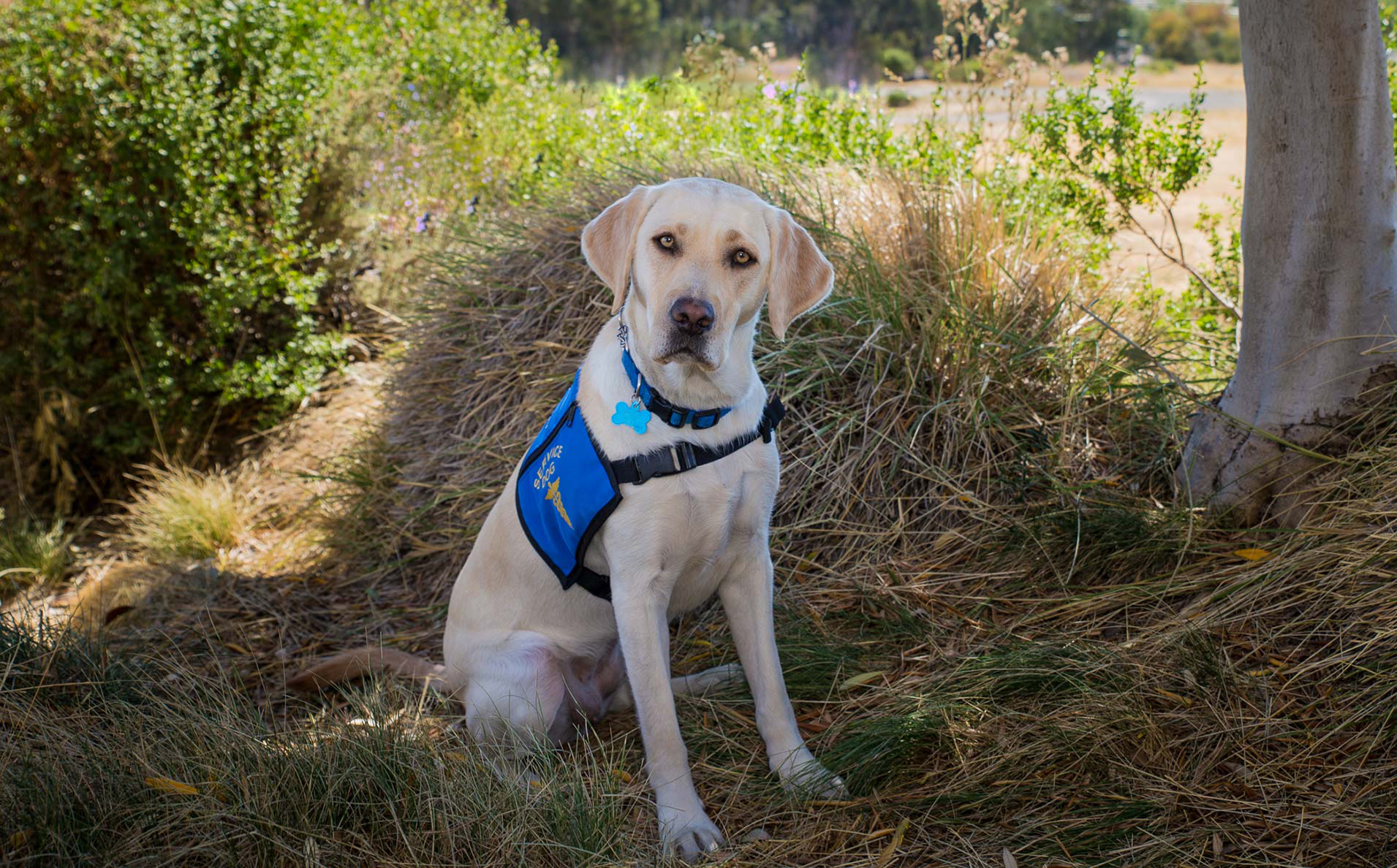
A trained service dog ready to help someone in need. photo: NICST
After decades of training service dogs, you'd think I'd have it all figured out by now. But recently, a five-month-old puppy reminded me of something fundamental, a lesson I've taught countless times but needed to relearn myself.
This particular pup came to me as a transfer from his starter home, the family who had raised him during his earliest months. He arrived with a solid foundation: sit, down, basic leash manners, and housebreaking. On paper, he was ready for the next phase of his service dog education. In reality, he wanted nothing to do with me or my instructions.
Defiant doesn't begin to describe it. Here was a puppy who knew exactly what I was asking - I'd seen his records and talked with his previous raisers. But he simply refused. Every request was met with that look dogs give when they've decided you're not worth listening to. He wasn't afraid. He wasn't confused. He just didn't care what I wanted.
My first instinct, honed by years of experience, was to troubleshoot. Was my timing off? Were my rewards not motivating enough? Was there an underlying health issue? I ran through my mental checklist of training problems and solutions.
Then I stopped. And I remembered.
This puppy didn't know me. He'd just been uprooted from the only family he'd ever known and placed in a strange house with a strange man making demands of him. Why on earth would he listen to me? I hadn't earned that privilege yet.
So I did something that felt almost counterintuitive after so many years of professional training. I stopped training.
For that first week, I asked almost nothing of him. We worked on basic housebreaking because some things are non-negotiable. I reinforced simple house manners like not jumping on guests. But formal training? Commands and corrections and shaping behaviors? None of it. Instead, I focused entirely on building our relationship.
I sat on the floor with him. I groomed him slowly, letting him get accustomed to my hands. I gave him gentle massages. We played - and this puppy had energy to burn, so play sessions were long and frequent. I let him explore the yard while I simply existed nearby, a calm presence without expectations.
When I did make requests, they were simple and came with outsized rewards. Sit while I prepare your meal? That's a small ask that earns you an entire bowl of food - a trade any smart puppy will take.
Days passed. And something shifted.
He started following me from room to room. When I sat down, he'd settle nearby. When I called his name, his ears perked and he'd trot over. The defiance melted into curiosity, then into something that looked remarkably like trust.
Only then did we begin training in earnest. And when we did, I had a different dog - one who wanted to work with me, who found joy in our sessions, who offered behaviors eagerly because he'd learned that good things happened when we worked together.
This experience crystallized something I teach but don't always practice: relationship must precede training. Trust isn't a nice-to-have. It's the foundation upon which everything else is built.
In positive reinforcement training, we talk a lot about rewards and timing and criteria. This matters enormously. But they only work when the dog actually cares about engaging with you. A perfectly timed treat means nothing to a dog who hasn't decided you're worth trusting.
Building that trust isn't complicated, but it requires patience. It means meeting your dog where they are, not where you want them to be. It means providing for their needs - physical exercise, mental stimulation, comfort, safety - before asking anything in return. It means being someone worth following.
And here's the part we often forget: trust must be maintained throughout the training process. It's not a box you check once and move past. Every training session either builds trust or erodes it. Every interaction matters.
That five-month-old puppy is thriving now. He's mastering skills that will one day help someone in need, approaching each training session with enthusiasm rather than resistance. But none of that would be possible if I'd pushed through his defiance with technique alone.
Sometimes the most advanced training strategy is the simplest one: slow down, build the relationship, and earn the trust. Everything else follows from there.