Ouch! How Hidden Pain Can Drive Your Dog’s Behavior

An unexercised dog panting on a cool day may be an indicator of pain. photo: Rebekah Piedad
Dogs can’t tell us how they’re feeling. And for that reason, many people aren’t aware how often pain and physical discomfort can influence their dog’s behavior.
I specialize in boarding and training dogs with fear, reactivity, and aggression. Of my last four board-and-train guests, three of four needed pain medication, and a different but overlapping three of four needed prescription diets. In fact, I find some cause of pain or discomfort - ranging from hip dysplasia or ear infections to spinal pain or inflammatory bowel disease - in roughly 75% of the cases that come through my door.
Address Medical Issues First
Since dogs can’t communicate their pain, it can be challenging to determine if they are experiencing discomfort and where that discomfort might be. That’s why, if you see sudden changes in your dog’s behavior, you should look closely for medical causes before seeking behavioral help. Addressing medical issues may resolve the behavior issues entirely.
Even if it doesn't, addressing the medical issues first will allow your dog to be in a better state of mind to learn during training sessions, developing positive conditioned emotional responses to both the training and the triggers that are being counterconditioned. If a dog is suffering during training, we run the risk of teaching the dog to hate training and everything associated with it - the exact opposite of what we need to improve behavior.
What To Look For
Some indicators of pain or illness in your dog might be:
Changes in appetite
Changes in energy level
"Bunny hop" running
Hesitance around stairs or jumping up on things
Resistance to training with repetitive sits or downs
Panting when it's cool and the dog has not been exercising
Sudden weight gain or loss when you haven't changed your feeding habits
Licking obsessively, either parts of their body or the ground
Pica (eating non-food items compulsively)
Rubbing ears, eyes, or mouth with paws
Shaking head
Stool that is frequently anything other than firm
Being slow to stand up from lying down
Suddenly avoiding you
Guarding sleeping spaces
Off-loading weight from one or more limbs while standing, which might look like leaning forward
Sitting on one hip and/or extending a hind leg while sitting
Squinting and/or bloodshot eyes
Standing with back hunched and muscles flexed
Pacing
Inability to sleep through the night
Every dog is different and this is by no means an exhaustive list. But it should give you an idea of the kind of clues to look for to determine if your dog is in pain or discomfort.
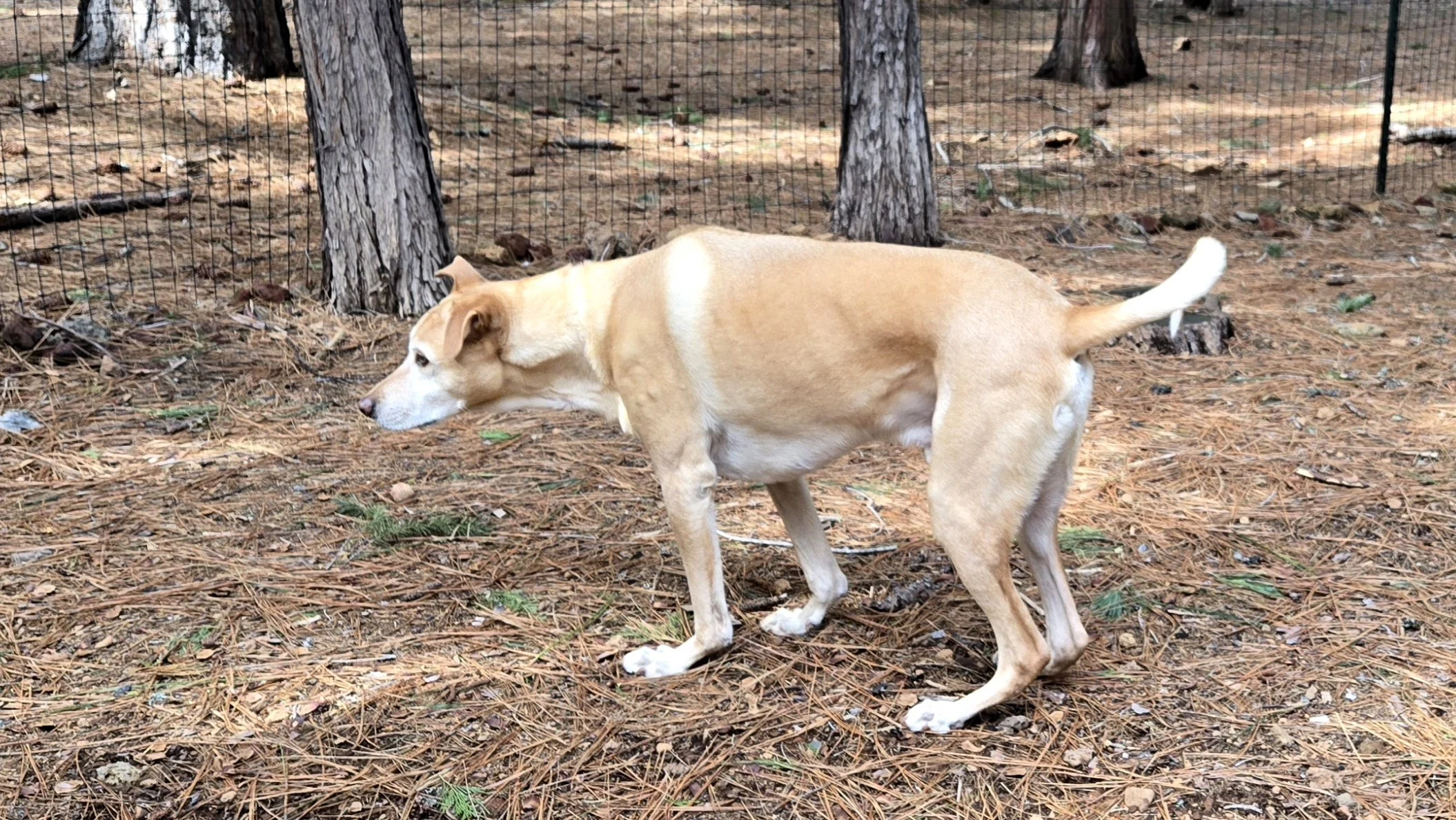
Indicators of pain include head held low with neck flexed, stiff spine and tail, and wrists and hocks low to the ground. photo: Rebekah Piedad
Communicate With Your Vet
Often your general practice veterinarian may not notice these signs when you bring your dog in for a quick annual exam and vaccinations because they are accustomed to seeing dogs who are experiencing stress at the vet, and the behaviors associated with stress overlap with those associated with physical discomfort. In addition, your vet won't be spending enough time with your dog to observe many of these behaviors or notice the changes you’re seeing at home. And many vets, while highly educated in diagnostics and treatment, might not be as educated about the behavioral changes your dog is exhibiting because behavior isn't in their wheelhouse.
That’s why it's up to you, as the owner, to advocate for your dog and help your vet know where to look. You know your dog best!
When your vet does make diagnostic recommendations, it’s important to follow them. Do the bloodwork. Get the imaging done. I know it's expensive (I cringe every time I have to take a dog to the vet). But treating sooner is almost always less expensive than delaying treatment. It will definitely alleviate their suffering sooner and it might save your dog’s life, which is money well spent.
We all love our dogs and want them to live their best lives. So if you notice changes in your dog’s behavior, make sure to investigate possible causes of pain or physical discomfort first.
Your dog may not be able to tell you what’s wrong, but you’ll definitely know when he’s feeling better. That tail wag will say it all.