It’s a Dog’s Life: Three Keys to Health and Longevity
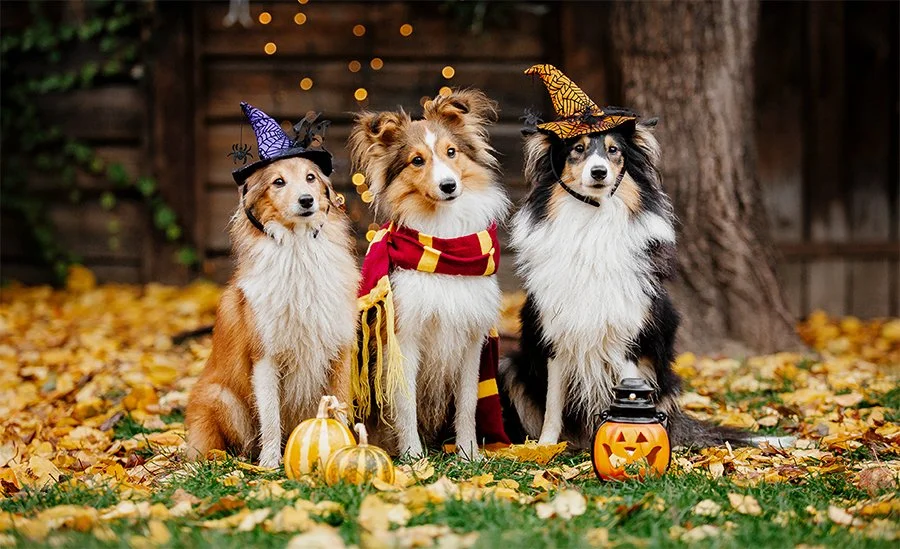
It's fun to be a healthy dog! photo: AdobeStock
When we think about canine health and wellness, three key issues immediately come to mind: (1) a dog’s physical health, (2) a dog’s longevity, and (3) a dog’s mental health. Fortunately, these are things over which we humans have some degree of control, if we’re willing to take that responsibility.
Let’s look at these issues one by one - and how our own actions can influence the outcomes.
Physical Health
Decades ago, a number of kennel clubs started programs to prevent inherited health conditions common to certain breeds, such as hip dysplasia and Collie Eye Anomaly. These laudable programs have helped raise consciousness among responsible breeders to only breed dogs known to be free of such conditions and diseases.
But we can do so much more. In fact, we should only breed dogs once we have evaluated their genotype to be free of any serious inheritable diseases or conditions. A genotype is the complete set of genes a dog, or any organism, inherits from its parents - but often the full range of a dog’s genotype isn’t apparent until later in life.
Dogs are selectively bred by their phenotype, which are the actual, observable properties of an organism. For dogs, this means how they look (conformation) and act (working ability). Unfortunately, most dogs are bred much too young, well before we have sufficient information about their genotype as it affects physical health.
For example, let's say a three-year-old male Golden Retriever wins Westminster or Crufts. Naturally, his dance card as a stud will soon be full. In the next two years, he may father 40 litters - all before dying of cancer at the age of five. Clearly, if his propensity for cancer had been known in time, he would likely not have been bred.
Back in the 1980s, I wrote an article for the American Kennel Club Gazette - and gave a talk at the International Congress of Kennel Clubs - suggesting that we never breed male dogs before they are seven years of age (recently, I increased that recommendation to age 10). Not surprisingly, I received enormous flak from breeders. What if my male dog cannot breed? What if his sperm count is too low?
But such concerns ignore the fact that several behaviors are necessary for animals’ survival. These include hunting, foraging, and most crucially, the ability to mate, which is essential for the survival of the species. In the wild, there is intense natural selection for good breeders. If a 10-year-old dog cannot breed by its own devices, there is something decidedly wrong, and that dog may likely also carry genes for other inheritable physical problems.
Finally, if sperm count is a concern, dog breeders could copy what dairy farmers have been doing for 60 years: collecting and freezing semen from young bulls, but only using it after the bull's genes have been proven to produce high-yielding heifers. Thanks to these programs, milk-yield in dairy cows has increased by 45% in the past 20 years.
The ability to mate - or not - is nature’s way of ensuring that only the healthiest and strongest pass on their genes to the next generation. Besides, there will always be plenty of 10-year-old purebred males who will gladly offer their services. Put me in, coach, I can do it!
Longevity
With the many advances in medicine, nutrition, and lifestyle over the past century, human life expectancy has nearly doubled. Unfortunately over the same period, the life expectancy of dogs has decreased.
Longevity is the single best index of overall physical and behavioral health as it is a direct reflection of a healthy genotype or genetic constitution. A long-lived dog is the best indication that the dog's genotype is free of genes for a variety of inheritable diseases and conditions, including cancer, allergies, and heart, kidney, or lung problems. That’s why I firmly believe we should only breed male and female dogs whose parents and grandparents all lived to be at least 10 years old.
At long last, some breed clubs and several individual breeders have begun implementing Bred for Longevity programs, which also would be easy to implement on a national level. All kennel clubs keep records of a dog's age of birth; if they began including age of death in their records, then a simple algorithm could calculate a potential Litter Longevity Index when considering a breeding pair. Breeders would know the best dogs to breed for health, and prospective puppy buyers would know the best litters to consider when searching for a long-lived companion.
Most purebred dogs are bred for conformation, obedience, or relatively short working careers. But in fact, most conformation-bred dogs become companion animals, whom every owner wishes would live to a ripe old age. With an intelligent selective breeding program, a dog’s life expectancy could easily be increased by 100 percent or more, along with a dramatic increase in their quality of life and a decrease in veterinary expenses. Wouldn't it be wonderful if every companion dog lived to enjoy their 20th birthday?
Finally, you may be asking why I’m so focused on the longevity of purebred dogs. What about our beloved Heinz 57s? The answer is that mixed breed dogs are often the result of the crossing of two or more purebreds. To increase longevity for all dogs, we need to start with the litters we can control.
Mental Health
Obviously, no one should breed dogs who have any temperament problems in case there is a genetic propensity for heritability. But we must also make the prevention of predictable temperament problems a top priority.
Historically, as dogs became domesticated, they were selectively bred for animals who more easily socialized with people and with their own kind. But today’s breeders and owners must still work to socialize young animals with unfamiliar people and expose them to unfamiliar situations.
The massive increase in adult dog anxiety, stress, fear, reactivity, and aggression over the past decade-and-a-half most certainly reflects a lack of early socialization with unfamiliar people and limited environmental enrichment before young dogs reach 12 weeks of age. This is especially sad because both socialization and environmental enrichment are easy, safe, and enjoyable to accomplish.
The Open Paw Minimal Mental Requirements for Puppies dictate that pups should meet and be handled and trained by at least 100 unfamiliar people in the breeding kennel before 8 weeks of age and by another 100 unfamiliar people safely at home between the ages of 8 and 12 weeks. This may sound daunting, but in fact it’s fairly easy: just invite 6 people over twice a week and ask everyone to bring a couple different friends each week (obviously, outdoor shoes should remain outside or risk being mistaken for chew toys).
Dog/dog socialization is a bit less urgent because most puppies will have played 24/7 with littermates for the first 8 weeks of their life. And after just a month in the doggy social vacuum in their new home, nearly all will bump-start puppy play behavior within the first few minutes of an off-leash puppy socialization and training class.
Please note that a puppy who appears confident and friendly with their human family or another resident dog at home is still not socialized. No matter how chummy they are with you, your young pup needs to interact with unfamiliar people and unfamiliar dogs in unfamiliar places. As they approach adolescence, puppies solidify their confidence with all that's familiar, but they become increasingly wary, fearful, and scared of the unfamiliar, especially unfamiliar people and unfamiliar dogs. That’s why it’s so important to expose them to all these things early and often.
Similarly, it’s easy to provide safe environmental enrichment for your new furry friend. Just carry, cart, or drive your puppy to your local main street or shopping center and sit on a park bench with your pup on your lap (you can even do this in your car with the windows down). Handfeed and stroke your pup while they take in all the sights, sounds, smells, and activity and become habituated to the hubbub and cacophony of the urban world.
Give your puppy plenty of time. If they act scared, they will quickly get over it as they progressively build confidence. In fact, puppies under 12 weeks of age can be flooded with stimuli without any untoward, long-lasting effects. When their brains are overloaded, they just fall asleep and then wake up, raring to go again. In a very short time with this kind of exposure, nothing will scare your young pup. Conversely, it will take considerably longer to progressively desensitize older animals.
Why It Matters
Not selectively breeding puppies for longevity and not socializing and training young puppies condemns them to a short lifetime of excruciating anxiety, stress, and fear. This is cruel for puppies, as well as their people.
When selecting a puppy - or adopting an adolescent or adult dog - what kind of companion are you looking for? A puppy who has been socialized with oodles of unfamiliar people? Who will be friendly and confident with visitors at home and with strangers on walks or in parks? Who has been housetrained, chewtoy-trained, and manners-trained? Who is likely to live to a ripe old age? I think most of us would answer yes to all of the above.
Sadly, a puppy who has not been socialized is likely to become fearful of unfamiliar people as they grow older. One who has not been housetrained is likely to pee and poop as it did in the kennel — anywhere and everywhere. One who has not been chewtoy-trained is likely to chew indiscriminately. One who has not been manners-trained may bark excessively or be hyperactively out of control. And saddest of all, a dog with inherited health issues may be likely to die young.
All dogs deserve a long, happy, healthy life. We owe it to them - and to ourselves - to take the steps we know will help make this happen.
For more information, please see the many free courses for owners, breeders, veterinarians, and trainers at DunbarAcademy.com (Free Course Collection); download three free puppy and dog training eBooks from dunbar.info/freepupbooks; or take a video look at the ease and speed of behavior and temperament modification and manners training in off-leash puppy classes at SIRIUSpup.com.