The Rough Walk: When Pup Meets World
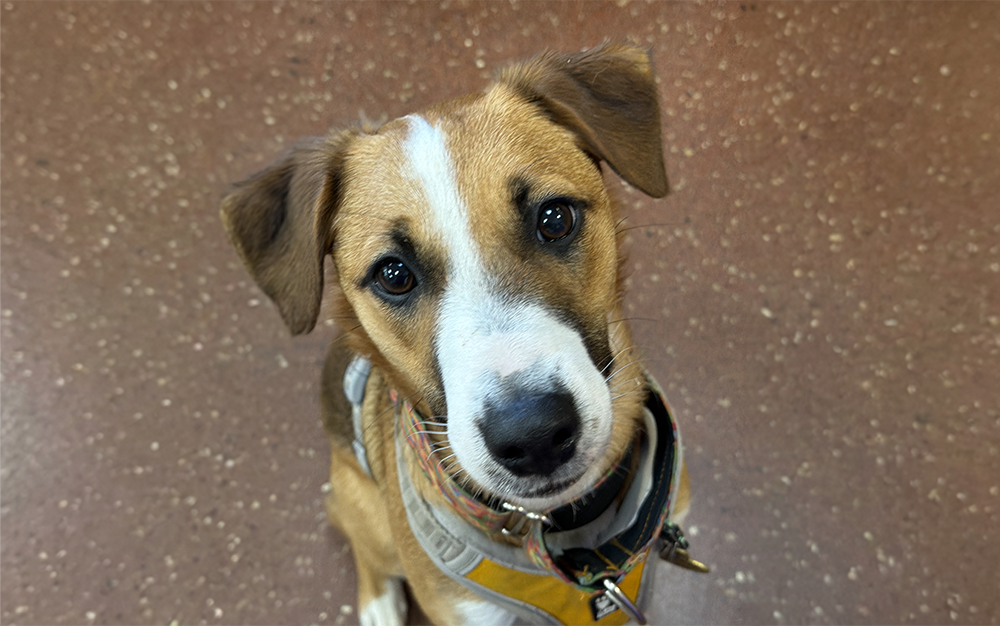
Sisu found some walks especially challenging. photo: Dawn Kovell
We recently welcomed a sport mix puppy into the pack. I use “we” lightly because, had it been a democratic vote, there would have been no new puppy (there’s a reason the democratic process is best). Be that as it may, Sisu is here and a couple of our other dogs almost even like him now at the eight-month mark.
Sport puppies are generally a stew of Herding, Terrier, and Sighthound genetics. Dog sports enthusiasts choose them for their moderate size, athleticism, and willingness to train and play for relatively long, focused periods of time. Generally, they can apply themselves to the task at hand while remaining peripherally aware of the environment. A dog trainer’s dream, in theory.
But some of us forget about puppyhood. Those admirable working characteristics so prized in a sport dog make for curious, busy, indefatigably annoying puppies. My particular model - let’s blame this on the Terrier gene - is extremely focused on his environment.
Now all dogs are hard-wired to notice new items in their environs, which is typically a good thing. Novel items can present a danger or, for the perpetually curious, an opportunity. But for a puppy, everything is novel. And for Sisu, the super-charged environmentally-focused puppy, that’s all multiplied to the nth power.
Novel items that Sisu deems opportunities are immediately grabbed and eaten. He has literally tried to eat a shadow off the ground (painted lines on asphalt aren’t safe either). But everything else is a potential danger. This combination of strong environmental focus coupled with general wariness plus a healthy dose of intensity is a clear recipe for undesirable reactive behavior.
Reactive behaviors in dogs are a significant societal problem. We have all seen, encountered, or lived with the dog who barks or lunges at bikes, cars, other dogs, joggers, strollers, or casual passersby. At its best, it’s no fun for anyone. At its worst, it’s terrifying.
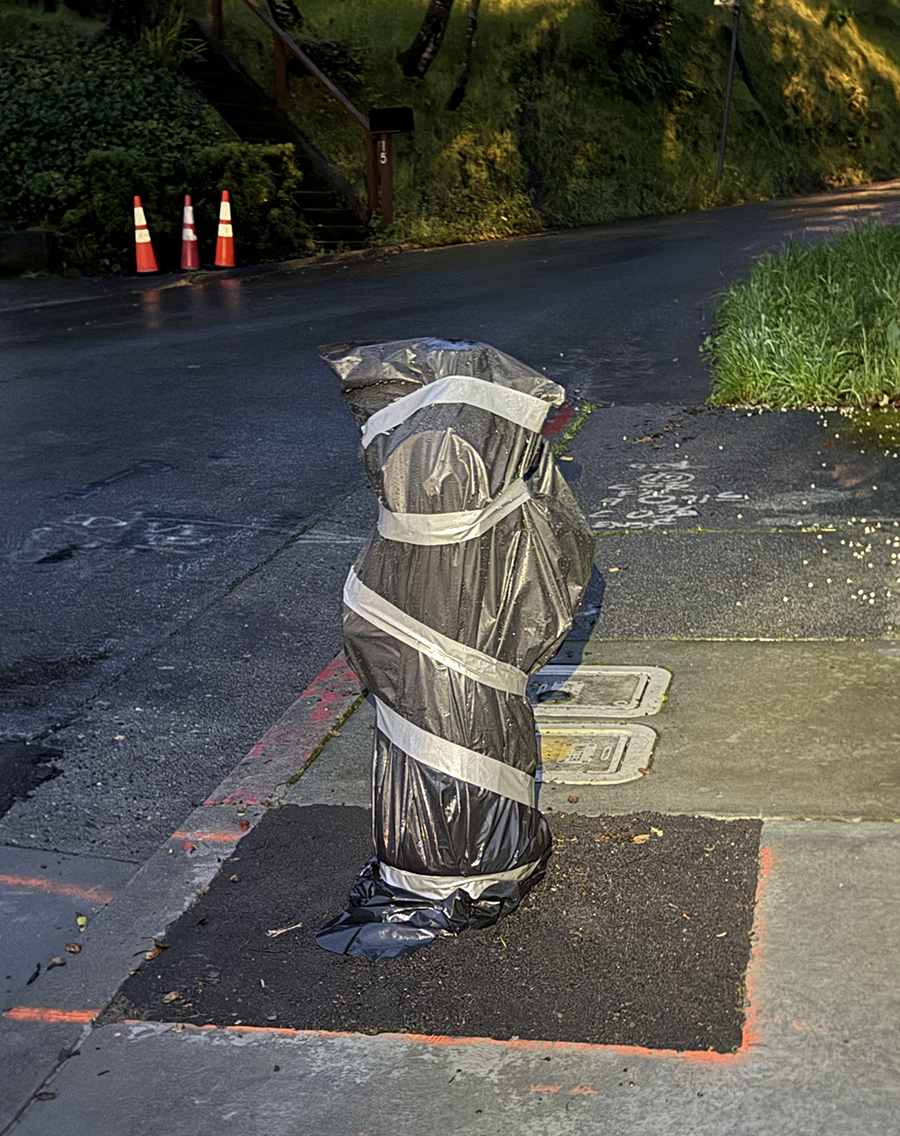
A wrapped hydrant at night proved itself a scary, impassable object to Sisu. photo: Dawn Kovell
These reactive behaviors generally originate in fear or frustration and are often perceived as aggressive. They can make dog guardianship a misery and, sadly, many of these dogs end up being surrendered to animal shelters. In fact, shelters nationwide currently face a surplus of larger adolescent dogs with problematic reactive behaviors. Modifying these behaviors requires early intervention, environmental management, and a long period of hard work. Tragically, there simply aren’t enough homes with people willing to take on this job.
But back to Sisu. Now that he’s eight months old, he and I are just starting to work on basic behaviors such as a proper sit and down. But a lot of prep work led up to this point. And the very first thing he had to learn was that he would be paid for his behaviors.
Happily, Terrier genetics often come with a strong food drive. With enough tasty payments, Sisu grasped how to relax in a crate or on a tie down. He learned his name, to reorient to me, to come when called, to forgo things he would otherwise ingest, and to release whatever was in his mouth, in that order. These were the foundational skills for addressing his response to his environment and preventing unwanted reactive or destructive behaviors.
We also included five months of careful exposure to the zillions of weird things a dog is expected to manage in the modern world: garbage trucks, kids shooting hoops, joggers, umbrellas, people in hats, people with binoculars, people laughing or jumping, electric bikes, scooters, skateboards, wildlife, domestic animals, and other dogs passing, staring, lunging, or barking. Then doing it all over again at dusk or dark when everything looks different than it did in daylight. Exhausting.
But Sisu is bright, earnest, able, and willing. And I know it’s my job to guide his journey, helping him develop enough confidence and resiliency to navigate the world I expect him to inhabit.
That bar is high. We live and walk in an active, densely populated suburban downtown area with wildlife neighbors. He comes to work in an office with many windows and lots of passing dog and human traffic. He needs to know how to interact with human and canine strangers on a daily basis. He has to learn his place in our canine pack. He has to be neutral with passing dogs who may be displaying varying degrees of provocative behaviors, and he needs to be social with his canine teammates. Hard stuff.
All of which brings us to our recent rough walk.
There are typically five of us on our walks: myself, Sisu, and our three older, well-trained dogs. The additional dogs are both problematic and a boon. Logistics are challenging, but they provide guidance and stability. We walk early at 6 a.m. to minimize the number and level of environmental training hazards. Any walk with a puppy is a training walk, and all training needs to be in a managed or thoughtfully considered environment.
This particular walk starts okay. We are one-and-a-half miles out, having survived an unplanned imbroglio with a recently and radically modified fire hydrant, but thankfully no issues with passing joggers in headlamps and reflective clothing or fast-whirring e-bikes.
That’s when we have the bad luck to encounter not one, but three separate groups of people walking dogs that bark or lunge at us on the path. The tight quarters and rapid succession of shouting canines proves dicey, but we all know the drill and manage to get through it without much reaction, assisted by the liberal application of treats.
A few hundred feet later we come across a workman in a hardhat sitting on a curb, which, in Sisu’s experience, has never before contained such an apparition. Under normal conditions he likely would have been mildly curious, but coming off all the joggers and bikers, plus the three debilitating episodes of other dogs yelling at him, he’s already above his coping threshold. Sisu barks and growls at the poor guy.
A training opportunity! We work on some behavior modification, again with an ample supply of treats. Sisu relaxes and I take it as a win - that is, until some bikers and joggers whoosh by 20 feet away and all ground is lost. Alas, one can never completely manage the environment.
Calling it a training draw, we move on. But almost immediately we pass a recruiting poster and Sisu starts to growl at the face on the poster! As we continue, I wonder how long it will take for him to regain his equilibrium. Behavior modification aims to create more resiliency but it can be difficult to assess, and this walk has been extra tough so far.
Almost home at the four-and-a-half-mile mark, I decide to take an additional, less-traveled loop, hoping to give us all a break. But around the first blind corner, we encounter an adolescent leashed Shibu Inu who, upon seeing us approach, moves into the center of the narrow road, angles his body towards us, and lies in a sphinx position, staring and stalking.
Okay, this is a problem. My normally stalwart older dogs take notice and, lacking sufficient space to move casually forward, come to a screeching halt. Knowing the dog’s owner is probably on this out-of-the-way road specifically to avoid situations like this, I apologize and say I need a minute. Trying to reassure me, he says (and this is classic), “My dog just wants to play” and takes one step forward - whereupon his dog launches itself at us growling and snapping. Sisu and crew actually manage admirably, but now I am rattled.
And this walk isn’t through with us yet - oh no. We next encounter a nanny pushing a plastic car containing a toddler. A friendly hello from the nanny deflects the dogs’ interest, though the baby’s excited gurgle does attract some attention. Still, everything is fine until she starts pushing the car back and forth creating a growling noise as the plastic wheels meet the road surface. Discretion being the better part of valor, we quickly move on, celebrating our successful encounter with a few more cookies. That’s when I realize the growling noise is getting closer. Ironically, the nanny is following us, using the sight of my walking dogs as environmental baby enrichment!
We’re almost home when I suddenly remember this route will take us through an alley with barking dogs behind a fence. I’m not too worried because we navigate this particular hazard on a fairly regular basis. But now Velo, the eldest dog, apparently decides he’d had enough and, by golly, he’s going to tell the next distraction exactly how his day is going. It’s only by the greatest good luck that a diversionary critter scent in a nearby sewer grate claims everyone’s attention.
We make it home without further fanfare. The walk is finally over. Sisu rockets into the house, grabs the first toy he finds, and races back to ask me if I want to play with him.
No, no, thank you, Sisu. I just need a minute.