Patience Makes Perfect: Getting Real About Puppy Training
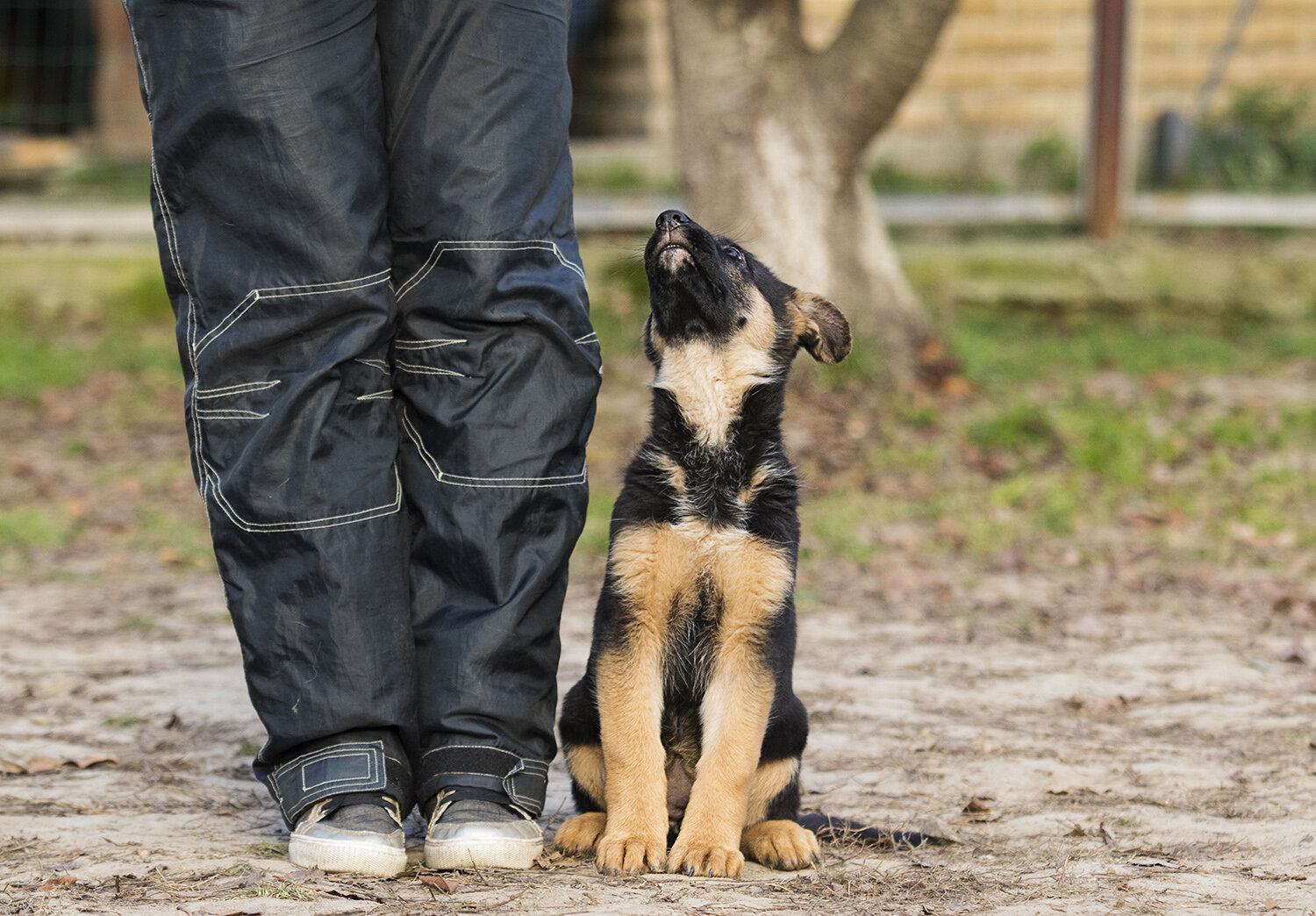
Dog training is both a language and a physical skill set.
When will my puppy stop biting?
When will she be potty trained?
How long before she can sleep through the night?
How long do I have to use food rewards in training?
When will she be able to go off-leash?
When will she stop chewing my socks and stealing tissues?
Day in and day out, I get messages from new puppy or dog owners asking these same few questions. Often these well-meaning people are already enrolled in class and/or have read our books and watched our videos. These folks are concerned. They tell me they are doing everything we recommend, by the book, and their puppy still isn’t trained. More often than not these questions come only one week into having the pup.
I don’t understand why humans are so impatient with pups and so unrealistic in their expectations. It boggles my mind.
Earlier this year I contemplated a move to Spain. I more than contemplated actually. I started to plan. I sold my home. I contacted an immigration attorney who specialized in Spanish residency. And I started to really put effort into learning Spanish. My goal was to be fluent in the six months or so that it would take me to get a visa.
I thought it would be a breeze. After all, I had several years of high school Spanish under my belt, there are multiple fabulous online learning programs available these days, and I live with a native Spanish speaker. I can practice every day!
Well, here we are, seventh months later and not only am I still hanging out on the west coast of the U S of A, but also, my Spanish? Nearly nada. Life got in the way. It was easier to speak English at home for expediency, my workload tripled, and our plans to move abroad were put on long-term hold due to the pandemic, all of which killed my deadline and subsequently dampened my motivation.
Skill acquisition is hard. It is also time consuming. Learning new things takes dedication and, most importantly, it takes regular practice. According to the U.S. Foreign Service Institute, it takes 480 - 720 hours to achieve basic fluency in a non-native language, depending on the language. That is an hour and a half of practice every day for a year, bare minimum. And that’s only for basic fluency.
Yet many people want their dogs trained to a top-notch standard in a matter of weeks.
Dog training is both a language and a physical skill set. And unless you’re a professional dog trainer with years of experience under your belt, there will be novices at both ends of the leash. Learning together, which means fluency, may take quite some time.
Also bear in mind that those 480 -720 hours of language learning don’t even take into account the developmental aspect of first language acquisition. Most humans don’t become fluent in their native tongue until they are about five years old, and even then, they still have a limited vocabulary.

Villanelle, just shy of 6 months old. photo by the author
Human children also stay in diapers for years. This is socially acceptable. Yet young puppies are expected to potty in the proper human appointed area and never chew anything except those objects we deem chew toys, both of which must seem completely arbitrary to them.
Puppies not only have to learn a foreign language, but they need time to mature enough to master certain skills, such as holding still in a stay - or even holding their bladders.
Training is also about relationship, history, and habits. It is absolutely unreasonable to expect your dog to be fully trained and able to ignore its doggy impulses and inclinations in order to follow your rules without putting in the requisite time and attention.
Practice may make perfect, but to succeed in training it’s also imperative to motivate your pup to want to do what you ask of her. Remember how I lost my motivation to practice Spanish? That was largely because I could no longer see the point in doing so. Why practice Spanish? What is the relevance? What is it I will get out of all of this effort if I can’t move to Spain because of COVID-19?
I’m pretty sure dogs feel the same way about many of the tasks we ask of them as well. “Sit? In the kitchen? When there is a roast on the counter? Why? I want the roast! I can’t get the roast off of the counter if my bum is on the ground. I must jump, you silly human!”
It’s our job to teach dogs that rewards come to good dogs who do as we say. It’s our job to manage undesirable behavior, to prevent mistakes as often as possible so they don’t become ingrained habits, and to reward the desired behavior so they do it more often.
So when it comes to training your own dog, please be patient and try to embrace the journey. Don’t rush. Time spent practicing and playing builds good habits, but it also builds bonds that will last a lifetime.
I just wish someone would give me a treat for slogging through my Spanish lessons. Hasta la proxima, amigos!