Stranded Pups, Campus Canines, Toy Addicts, and More!
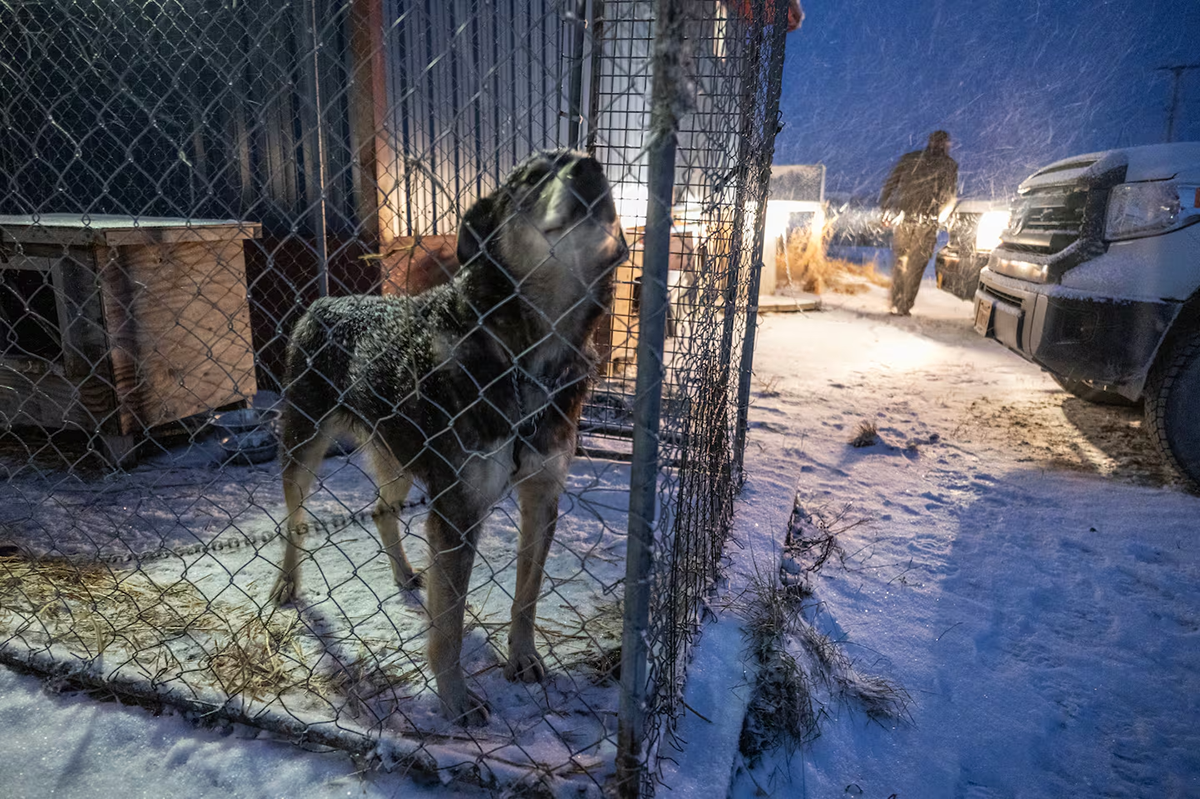
Rescued dog Gilbert is held in an outdoor pen at Bethel Friends of Canines, awaiting the next leg of his journey. photo: Marc Lester
Winging It:
Ad Hoc Airlift Saves Stranded Dogs
Sometimes you just have to step up even if you're not sure how.
When a catastrophic typhoon hit villages in Western Alaska last month, hundreds of people were suddenly forced to evacuate their homes for shelter inland. But with few exceptions, dogs weren't allowed on the evacuation flights. Families had to leave their beloved pets behind, with some leashed, some wandering outside, and others shut in damaged homes that had drifted in the flood waters.
"There was nobody doing anything," said Jesslyn Elliott, executive director of the small nonprofit Bethel Friends of Canines, after fielding a call from an elderly evacuee asking about his dog. "Somebody's got to do it," she thought. "Why can't we?"
Elliott quickly coordinated with a local veterinarian to launch the first charter flight to the villages, jump-starting a rescue effort they'd never attempted before. But once the first 15 dogs arrived, news spread and help soon appeared in the form of donations, volunteers, pilots, and other animal welfare groups.
With over 170 animals rescued so far, the challenges to shelter and reunite them with their families have sometimes seemed overwhelming. "This is all a big learning curve," said Elliott. "We are kind of winging it, trying to put the pieces together as we're doing it."
But the important thing is they are doing it. And we know those dogs and their owners are beyond grateful.
Source: adn.com
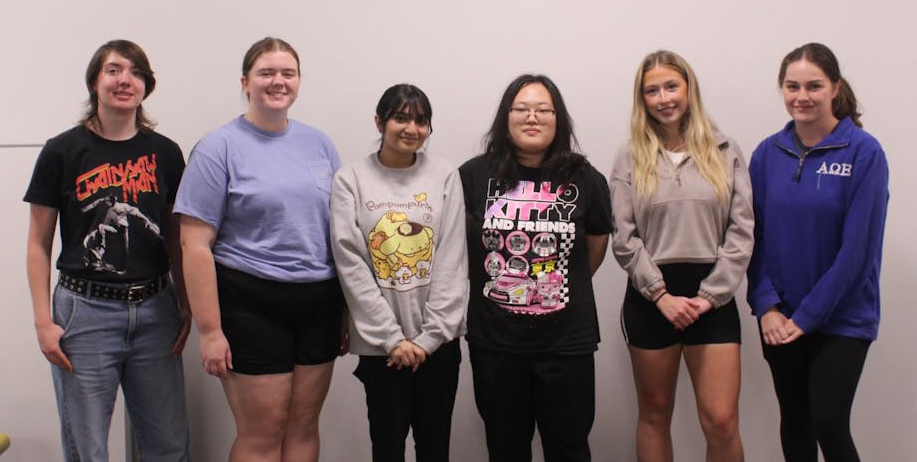
Members of Auburn University's PawPrint club. photo: Erica Teare
The Kids Are All Right:
College Students Go to the Dogs
Auburn University may have a tiger for a mascot, but some students there are definitely going to the dogs. In fact, three Auburn students recently started a new club called PawPrint, with the goal of printing 3D prosthetics, orthotics, and braces for injured dogs in need.
Co-founders Sajel Amin, Michelle Kim, and Rain Park are all juniors whose majors collectively cover the relevant bases for such a project: biomedical sciences, industrial systems engineering, and fine arts. The three originally met in high school as members of a club called Tails for Hope, which created toys for shelter dogs. Now they're using Auburn's 3D printing lab to take their love for pups to the next level.
While the group is still in its nascent stage, club members plan to partner with local shelters on service projects and to help identify animals in need. For now, they're working on a prototype leg brace for a dog who was hit by a car and planning an end-of-semester social event to raise funds and awareness.
The club offers students practical experience in design and engineering as well as softer skills like community outreach and fundraising, all while making a difference in animals' lives. If that's not a good use of young brains, we don't know what is.
Source: theplainsman.com/article/2025/10/student-organization-3d-prints-pawsthetics-for-dogs-in-need

The FETCH program combines service dog training with hands-on learning. photo: UMN.edu
Minnesota Nice!
Meet the FETCH Program
In more canine campus news, students at the University of Minnesota are going all in for FETCH (Fostering Education Through Campus Hosting). This unique program gives student volunteers - often animal science or veterinary majors - the chance to spend a semester living with a dog they'll train, care for, and prepare for its future life as a service animal.
The program is a partnership between the university and Can Do Canines, a local nonprofit that's placed over 900 assistance dogs since 1989. The college project started small in 2016 with just eight students, but it has since expanded to about 20 students per year. Students and dogs participate in twice weekly training with Can Do Canines staff. Several students typically share care for a single dog to ensure everyone can make their scheduled classes.
To date, 164 dogs have entered the FETCH program, with many going on to provide service to clients in need. "I've had students tell me, 'I came to the University of Minnesota for this program,'" says Kristie Feist, the school's assistant director of housing and residential life. "If even half of those dogs go on to live with clients, that's a lot of people's lives that were enriched."
Source: twin-cities.umn.edu
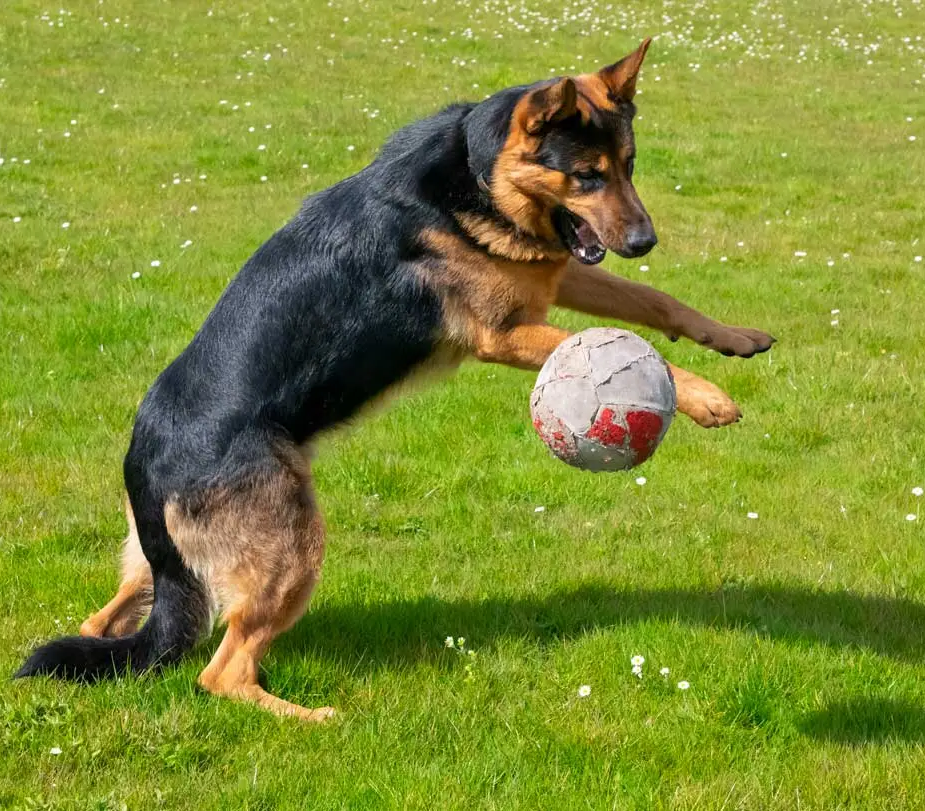
For some dogs, toys can exert an irresistible pull in ways that may parallel human behavioral addictions. photo: R A Kearton, Getty Images
Is Your Dog a Toy Addict?
New Study Sheds Light on Obsessive Behavior
We've all known dogs who never want to stop playing, who ask you to throw that slobbery ball again, again, and again. Tired? Nope. Hungry? Don't think so. Just throw the damn ball for me, please!
Now new research from the University of Bern finds this kind of canine behavior mirrors some of the all-too-familiar features of human addiction, including craving, lack of self-control, and mood modification.
Studying 105 highly play-oriented dogs, a team of Swiss scientists identified 33 pups whose behavior showed addictive tendencies, such as an excessive fixation on toys, reduced responsiveness to alternative stimuli, and persistent efforts to access toys.
Tests included placing a toy on an inaccessible shelf and measuring the time a dog spent whining, looking up, or jumping at it. Researchers also measured how long it took a dog to calm down after the toy was removed.
The Swiss team noted that dogs are the only non-human species to date that appear to "...develop addictive-like behaviors without artificial induction." If their work can shed light on the psychology underlying addictions, maybe there's hope for all of us.
Source: sciencenews.org

Dogs may not be the sharp social judges we believe. photo: Science Daily
Judgment Call:
But My Dog Seemed to Like Him...
Are dogs really good judges of character? Maybe not, says a new study from Kyoto University.
Earlier research has shown that chimpanzees can form opinions about humans - good or bad - by observing how humans treat others. But the picture is apparently far less clear for our canine pals.
For the study, researchers arranged for 40 pet dogs to observe two humans interacting with another test dog. The first human was generous and fed the test dog, while the other did not. The observing dogs were then allowed to interact directly with the two humans, while researchers noted who the dogs approached first, as well as behaviors like jumping or proximity to each person.
Surprisingly, the observing dogs across all age groups did not show significant preference for the generous person whom they had just seen feeding the test dog treats. In fact, they were just as likely to befriend the selfish person who refused to feed the test dog.
"It's clear that reputation formation may be more complex than previously thought, even for animals like dogs that closely cooperate with humans," said one researcher. In other words, don't rely on Fido to judge your next Tinder date.
Source: sciencedaily.com