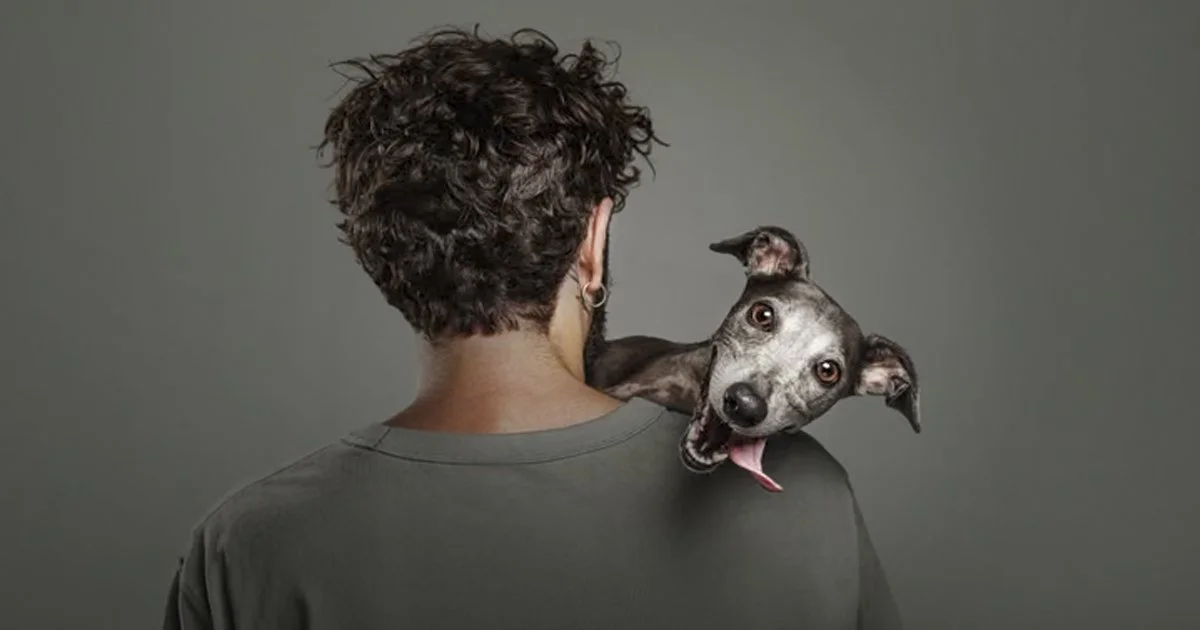
The photograph is titled The Weight of Connection and was captured by photographer Santos Román from Spain. It won 3rd Place in the "Dogs & People" category. photo: The Guardian
Ready for Their Closeups: 2026 Dog Photography Award Winners
Heads up, shutterbugs! The results of the 2026 Dog Photography Awards are in and, not surprisingly, they are doggone delightful.
Chosen from roughly 1,900 entries spanning 50 countries around the globe, the photos capture our favorite species with charm, wit, and drama, not to mention a couple gravity-defying action shots. Judges selected a total of 18 first, second, and third place winners across a range of categories including Studio, Outdoor Portrait, Open, Action, Documentary, and Dogs & People.
This year's overall prize went to Katie Brockman, a St. Louis-based photographer, for "Loved and Hated," a poignant portrait conveying society's complex feelings toward Pitbulls and bully breeds. Similarly, only the hardest heart wouldn't melt at the first place Documentary photo, featuring a crew of hopeful shelter dogs waiting for their forever homes. But it's not all about coming in first. Our personal fave is the second-place shot of Lulu, a sporty chunk showing off her impressive ball juggling skills in the Action category.
So if you're looking for a reset from the world's hard news, check out all the winning photos here. We humans may be going to hell in a handbasket, but our canine friends have never looked better.
Source: theguardian.com
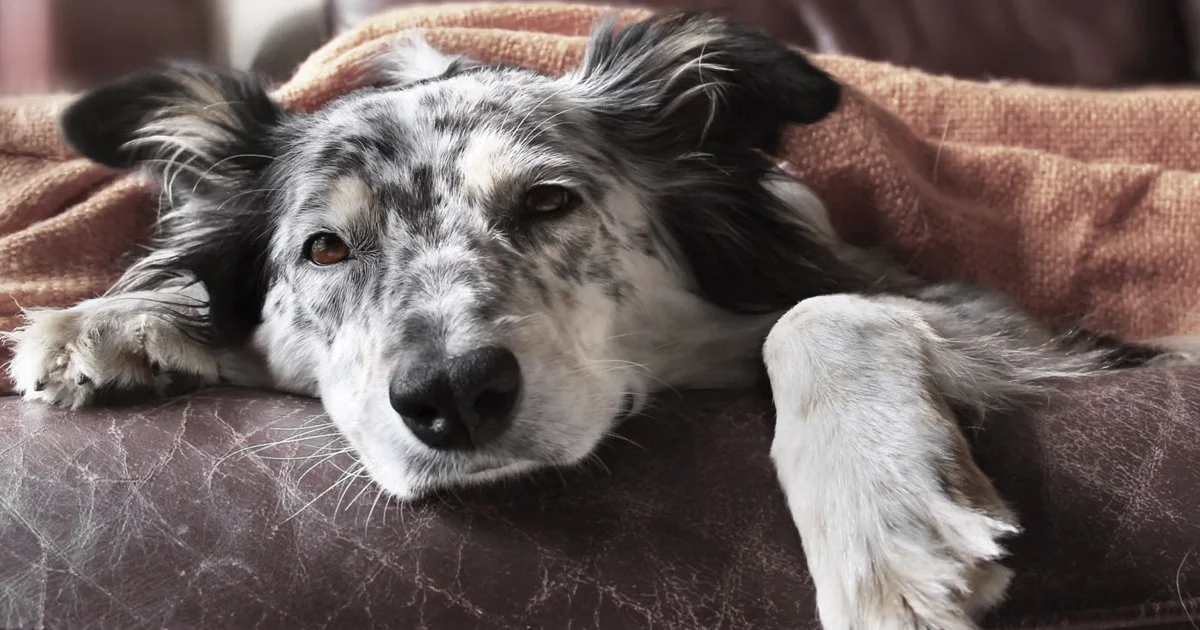
Signs generally began within 12 hours of exposure, with vomiting first. photo: Lindsay Helms, AdobeStock
Pup Poison Alert! Gel Packs Can Kill
You know those hot/cold reusable gel packs many of us use for relief from headaches and muscle pains? Turns out they may be deadly to our dogs.
New ASPCA research published in the Journal of the American Veterinary Medical Association reveals that dogs who chew hydrogel migraine caps, eye masks, or wraps can experience potentially fatal consequences. Symptoms include vomiting, tachycardia (racing heart beat), ataxia (loss of muscle control), and tremors. One-third of the dogs studied showed behavior changes including anxiety, agitation, restlessness, or aggression. Hypertension, panting, and hyperthermia were also reported in nearly a quarter of the dogs. Symptoms generally began within 12 hours of exposure, with vomiting coming first.
Among dogs for whom the outcomes were known after ingesting gel products, 67% died or were euthanized. For those who survived, recovery took up to several weeks. There is no specific antidote for gel pack poisoning in dogs. Treatment simply focuses on stabilizing the patient through the use of anticonvulsants, muscle relaxants, IV fluids, and electrolyte supplementation.
Gel samples ingested by the dogs studied contained acrylamide monomer, a known neurotoxin. While labels on gel products often describe the contents as "nontoxic" or "medical grade," the study authors noted that "non-toxic" is an unregulated term. Depending on the concentration in an individual product, less than 20 grams of gel - a little over a tablespoon - would be enough to cause convulsions in a 21-pound dog.
"At ASPCA Poison Control, we are receiving reports of suspected acrylamide toxicosis...on a weekly basis," says Colette Wegenast, senior director of quality assurance at ASPCA Poison Control and the study's lead author. She advises owners to keep all migraine caps, eye masks, and wraps out of their pets' reach and to monitor any pets using cooling pads, especially those who like to chew.
So please, go hide those gel packs right now, people. Don't leave them lying on your nightstand or any other dog-accessible surface where their squishy toy-like appearance (that smells like you!) may prove irresistible to a passing pet. And if you suspect your dog has ingested any amount of a hydrogel product, don't wait. Contact your veterinarian or call ASPCA poison control at 888-426-4435 immediately.
Source: dvm360.com
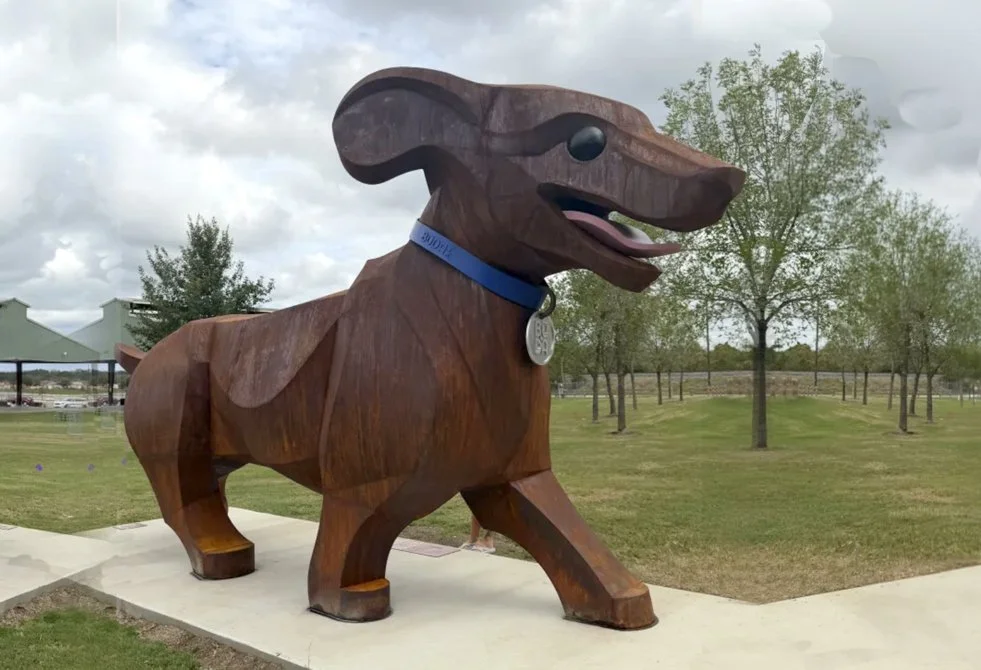
Buda, the “Weiner Dog Capital of Texas,” recently unveiled a mammoth new Dachshund statue in the same town that hosts the infamous Dachshund races. photo: KXAN
That's One Whopping Weiner: Texas Town Unveils Giant Dachshund Statue
The "Weiner Dog Capital of Texas" recently unveiled a mammoth new Dachshund statue, believed to be the biggest in the state, if not the nation. Created in honor of the town's annual Weiner Dog Races, the massive metal pup sports a blue collar and a jaunty grin; it measures 19 feet long and 10 feet tall.
Founded in 1881, the tiny town of Buda has since grown into a bedroom community for nearby Austin. After holding its first Dachshund race in 1997, the local Lions Club is now poised to celebrate the event's 30th anniversary this spring. In fact, the races have grown synonymous with the town itself, drawing thousands of visitors each year to watch more than 300 Dachshunds and Dachshund mixes compete in races and costume contests.
Prize money for the short-legged competitors has grown, too. Last year's winner took home a cool $1,000, with $500 and $350 payouts for the second and third place finishers, respectively.
And they're not total breed snobs in Buda either. As long as a dog is part Dachshund, they're allowed to compete in the Mixed Breed races, though the Buda Lions Club retains the right to disqualify a dog if there are questions regarding its mix or size. So don't go trying to pass off your retired racing Greyhound as a Dachs mix, folks. As they say in Texas, that dog don't hunt.
Think your weiner pup has what it takes to go the distance? Find details and register through the Buda Lions Club Registration Page once the 2027 forms go live this spring.
Source: kxan.com
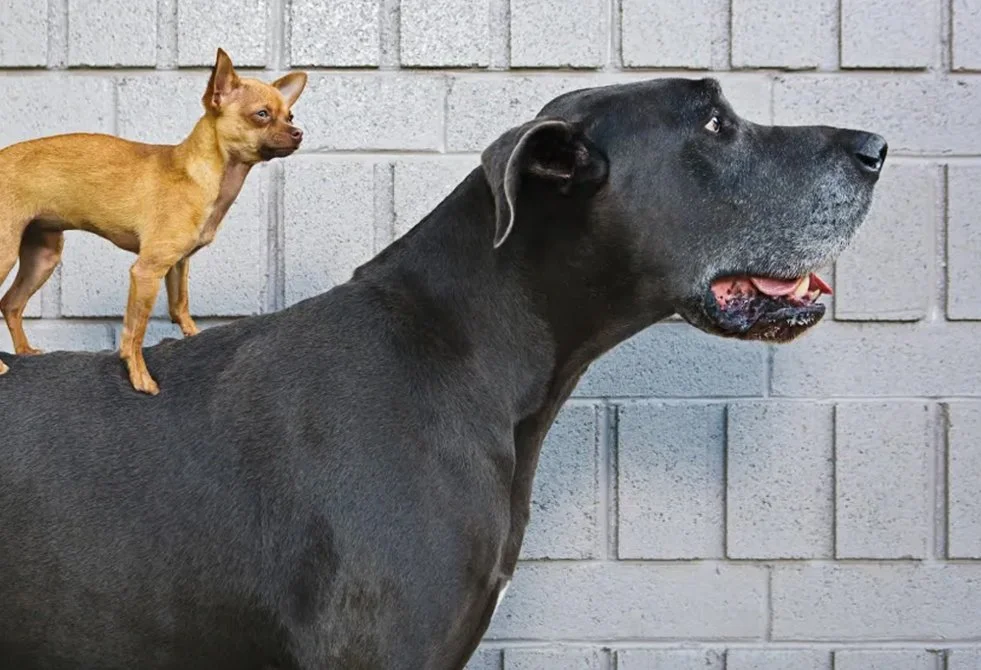
Unlike many other mammal species, it’s not the case with dogs that a larger size corresponds to longer lives. photo: Brand X Pictures via Getty Images
Big Dogs, Short Lives - Why? Scientists Search for Answers
Anyone who's ever loved a big dog is likely aware of this sad truth: our extra-large pals generally don't live nearly as long as their diminutive counterparts. In fact, Great Danes are considered senior dogs at just 5-7 years of age, while some Chihuahuas may live up to 20 years. This is a stark contrast to most other animal species in which larger mammals tend to live far longer than tiny ones (think whales vs. mice).
Now a team of scientists led by evolutionary biologist Noah Snyder-Mackler, believes they've found a reason for this canine age disparity. Analyzing genetic data from 864 dogs stored with the Dog Aging Project, researchers mapped DNA methylation, a widely known indicator of aging and DNA regulation. That's when they discovered that the more rapid aging we see in larger dogs is tied to decreased regulation of a class of transposable elements, or "jumping genes" called LINE1s, which leap between chromosomes, damaging DNA.
These jumping genes aren't much of a problem in a dog's early years due to the regulation provided by DNA methylation. But that ability to regulate decreases with age, leading to more damage in the form of genetic instability, diseases, and cancer. Snyder-Mackler's team found that larger dogs lost an average of 35 percent more LINE1 methylation than smaller canines.
As non-scientists, we'd like to point out that this still doesn't explain why larger dogs are more prone to these "jumping genes" than their smaller pals. Still, identifying LINE1s as a major factor in how quickly dogs age is an important finding.
Snyder-Mackler's team hopes its work may eventually lead to future therapies to extend healthy life spans not just for large dogs, but for humans, too. For now, it's one more step to unraveling the mystery of aging in our biggest and best friends.
Source: popsci.com

The person charged with fraud for registering her dog to vote was forced to pay for anti-voter fraud billboards featuring her own dog. photo: Orange County DA’s office
Stupid Human Tricks: Woman Busted for Registering Dog to Vote
Sure, you may think your pup is smarter than a lot of humans out there casting ballots. But it's still illegal for dogs to vote, something a Southern California woman recently learned the hard way.
Laura Lee Yourex of Costa Mesa was originally charged with five felonies after it was discovered she'd registered her dog, Maya Jean Yourex, to vote and had submitted mail-in ballots in the dog's name during California's 2021 gubernatorial recall election and the 2022 primary. The dog's vote was counted in 2021, while the 2022 ballot was rejected.
As part of a plea deal to reduce the charges against her, Yourex has now been required to pay $1,500 for four anti-voter fraud billboards along two Orange County freeways. The billboards feature a photo of the dog Maya wearing an "I Voted Sticker" with the message "Don't be a dog" and a warning that voter fraud is a crime. The billboards must remain up at least through the November 3 midterm elections.
Yourex was busted after making (repeated!) social media posts about registering Maya to vote, thus providing conclusive proof that she wasn't as smart as her own dog.
Source: ktla.com