Former Shelter Dogs on SoCal Fire Duty, Outside Rescue Orgs Relieve LA Shelters, Westminster's Back, and More!

(L-R) Jacy Hernandez with Mason, and Kristine Priebe with Emmett, are two teams of Search and Rescue professionals working in LA during the recent fires. The pups were formerly shelter dogs. photos: National Disaster Search Dog Foundation.
Zeroes to Heroes:
Former Shelter Dogs on the Case in SoCal Fires
Once abandoned as "too high energy," former shelter dogs are on the job in the Southern California wildfires, working with their handlers to locate survivors or human remains among the burned-out rubble.
The same relentless energy and drive that made them hard to place as family pets turns out to be their strongest asset in grueling search-and-rescue work. The dogs are trained by the National Disaster Search Dog Foundation (SDF), which certifies and deploys elite teams to fire stations nationwide free of charge. At least five SDF teams are now working in the Los Angeles area, with a total of 95 active teams currently stationed across nine states and Baja California, Mexico.
"Many of these incredible dogs have truly gone from rescued to rescuer," said an SDF spokesperson. To learn more or to support this work, visit searchdogfoundation.org.
Sources: newsweek.com, ktla.com

Handsome Reggie is one of the many great dogs available for best friend status, and he is waiting for you at Muttville. photo: Muttville
Trickle-Down Love:
Rescue Orgs Bring Relief for LA Shelters
As Los Angeles's wildfires burn, shelters across the country are showing their love for their Southern California counterparts. In recent weeks, animal rescue groups have worked to move hundreds of adoptable pets out of shelters in fire-stricken LA to make room for lost or evacuated animals to be held locally until they can be reunited with their families.
Bay Area groups are doing their part, including Muttville, which specializes in placing senior dogs, ages 7- 17. "We are taking in dogs that were at the shelter and up for adoption...and immigrating them up here to San Francisco to put them back up for adoption up here so that the local shelters in LA have room for the evacuee dogs," says Muttville CEO and founder Sherri Franklin.
Meanwhile, the nonprofit Best Friends Animal Society estimates it’s already moved over 250 animals to other states, with multiple ground transports and at least one flight to Utah. Organizations all over the country are reaching out to take more animals, according to executive director Brittany Thorn. "We just need to be able to get them there," she says.
So if you've been thinking about celebrating the month of love with a new pup or senior dog, now's the time. No matter where you live, opening your home to a shelter dog can have a trickle-down effect by freeing space for another pet in need.
And that's the best Valentine of all.

Candidates for top bragging rights line up in preparation for the judging. photo: Westminster Kennel Club Dog Show
Dog Snobs of the World Unite:
Westminster's Back!
We're confirmed mutt lovers at our house, but somehow we can't look away from this annual spectacle of overbreeding. Yes people, it's time for the 2025 Westminster Kennel Club Dog Show, returning to New York's iconic Madison Square Garden for the first time since the pandemic on February 8, 10, and 11.
Westminster often uses the show to introduce new-to-them dogs who've just been accepted into their exalted roster of official breeds. This year's fresh face is the Danish-Swedish Farmdog, which to our untrained eyes looks a lot like a slightly buffer Jack Russell. Historically, the DSF's main job has been rodent control, but they've also served as playful companions for farmers' children or even circus performers.
You can find the newest breed plus all the festivities on Fox Sports 1 and 2 or streaming on the Westminster website. For a full schedule, visit westminsterkennelclub.org.
As always, we recommend warming up by watching Christopher Guest's classic mockumentary Best in Show. No time for the full film? Just do a quick sing-along with Eugene Levy and Catherine O'Hara on "God Loves a Terrier."
Sources: westminsterkennelclub.org, wdsu.com
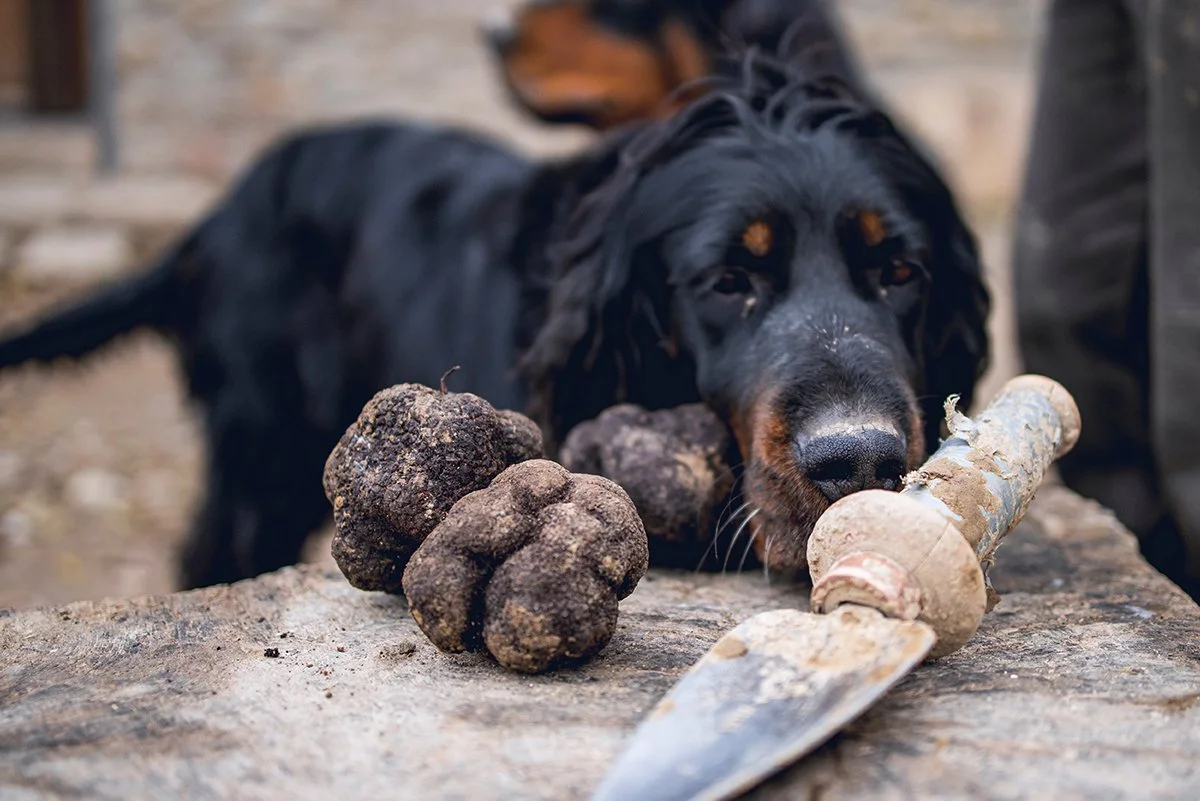
A truffle hunter with her spoils. photo: AdobeStock
Savvy Sniffers: Truffle Pups Unearth Two New Kinds of Yum
Heads up, food hounds! A couple of talented truffle-hunting dogs recently turned up not one, but two, new U.S. species of the luscious fungi.
The Tuber canirevelatum (Latin for "dog-found truffle") was nosed out by Monza and her trainer Lois Martin, while the Tuber cumberlandense was unearthed by Margaret Townsend and her pup Luca on Appalachia's Cumberland Plateau. Researchers at Michigan State University have confirmed both finds as new species of truffles, the culinary delicacy prized by chefs and savvy home cooks around the globe.
According to MSU associate professor Gregory Bonito, these pricey gems could have great economic impacts for the areas where they grow, but more truffle dogs are needed to find them. "If you have $20,000 of truffles growing underground, you need to find them before they perish," says Bonito. "So the dogs are very important."
Well, of course, they are. We could have told them that for free.
Source: sciencedaily.com
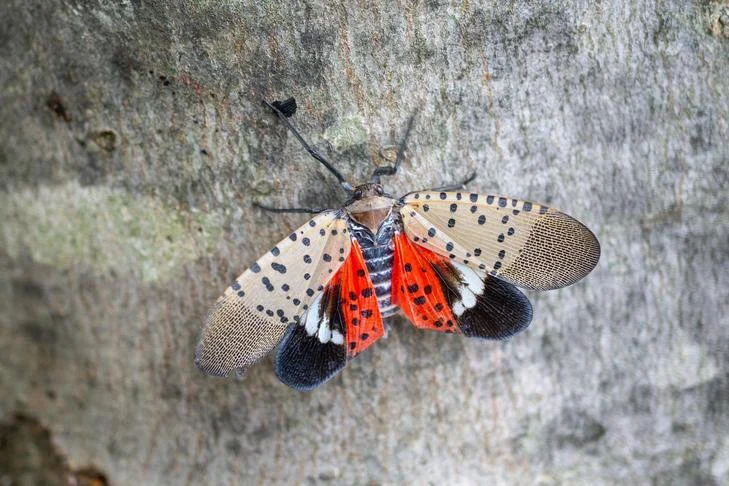
The dreaded Spotted Lanternfly is no match for detection dogs. photo: AdobeStock
Dog Noses: New Weapons in the Fight Against Lanternflies
Meanwhile, other smart sniffers may soon be deployed to save important food crops from the dreaded Spotted Lanternfly. First detected in Pennsylvania in 2014, lanternfly infestations have now spread to 18 states, threatening harvests of grapes and hops, as well as apple, maple, and walnut trees.
While humans are able to see lanternfly egg masses in controlled settings like vineyards, a recent study found that trained dogs did a better job of detecting egg masses by smell in more complex environments such as forests where many lanternflies spend the winter before emerging in the spring to infest nearby vineyards and orchards.
Spotted Laternflies travel in swarms and have no natural enemies. Left unchecked, they're predicted to reach California's vineyards by 2033, costing billions to other states along the way.
Let's hope our canine friends can help stop this winged scourge before it comes to that.
Source: sciencedaily.com