Choco's Long Way Home, Dogs Are Getting Better, Shelter Pups Help Young Offenders, and More!
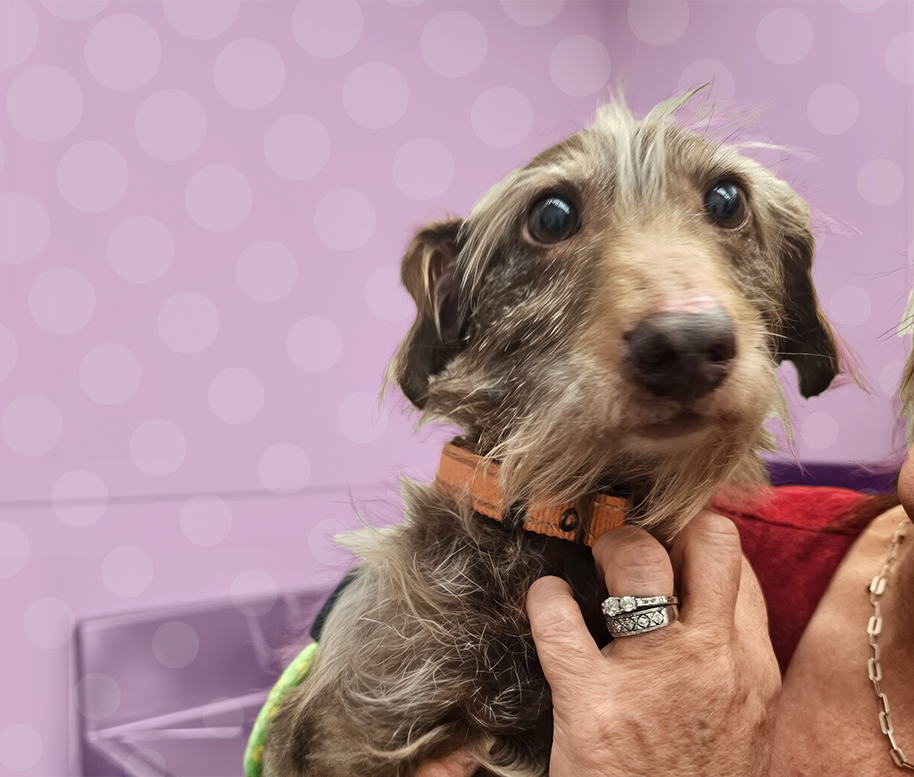
Choco made it home to Sacramento, CA, all the way from Michigan. photo: Helping Paws and Claws
Five Years and 2,300 Miles Later: Choco Takes the Long Way Home
Sacramento resident Patricia Orozco couldn't believe it when she first got the text from a microchip company. Her dog Choco, who'd disappeared almost five years ago, had turned up tied outside a shelter in Lincoln, Michigan - 2,300 miles away!
Orozco had never stopped missing the little Wirehaired Dachshund mix she'd adopted from her local shelter back in 2016. When he first disappeared, she'd put up posters and checked all the city's shelters but Choco was nowhere to be found. "I still talked about him all the time," she says. "Is he alive? Is he okay? Is he being treated well?"
But by now Orozco was a mother with two young children, including a 4-month-old. With her new responsibilities, she worried about whether she'd be able to find a way to bring Choco home.
She posted on Facebook asking for advice and Cindy Walden responded. Walden, a former animal control officer and now a board member of Helping Paws and Claws, a nonprofit in Loomis, CA, vowed to help. Airfare would be quite expensive, but at least 15-pound Choco would be able to fit in a carrier under someone's seat.
Walden put out a call on social media and Penny Scott, another Sacramento dog lover, responded. Scott's son worked at an airline and would be able to secure a cheaper standby ticket, which Scott originally planned to give to Orozco. But once she learned about Orozco's two young children, she realized someone else might have to make the flight. "Suddenly, I said, 'well, maybe I could go," she recalls.
Luckily, another community member had responded in the meantime and was willing to donate airline miles to cover the full cost of the trip, relieving Scott of having to go standby. With a ticket in hand, Scott flew on December 2 to Detroit where a Michigan volunteer was waiting to hand off Choco.
But on the return trip, things hit a snag. A delayed flight caused them to miss their connection, stranding Scott and Choco for nearly 14 hours at Chicago's O'Hare International Airport. "This dog was amazing," Scott recalls about her unplanned layover with an unknown pup. "Never whimpered, never growled at anybody. I walked him through the airport on a leash the whole time."
When they finally landed in Sacramento, Walden met them at the airport and drove straight to Orozco's house, the same one she'd lived in back when Choco disappeared. "As soon as we got out of the car, I set him down and he went right to her," Scott says. "He wanted to go home."
Now 11, Choco's slowed down a bit with age, but his personality hasn't changed. "He's still the same, most loving, cuddly, always-wants-to-be-on-top-of-you dog." Orozco says.
As to the village it took to bring him home? "I'm just extremely grateful. Words can't describe it."
Source: washingtonpost.com
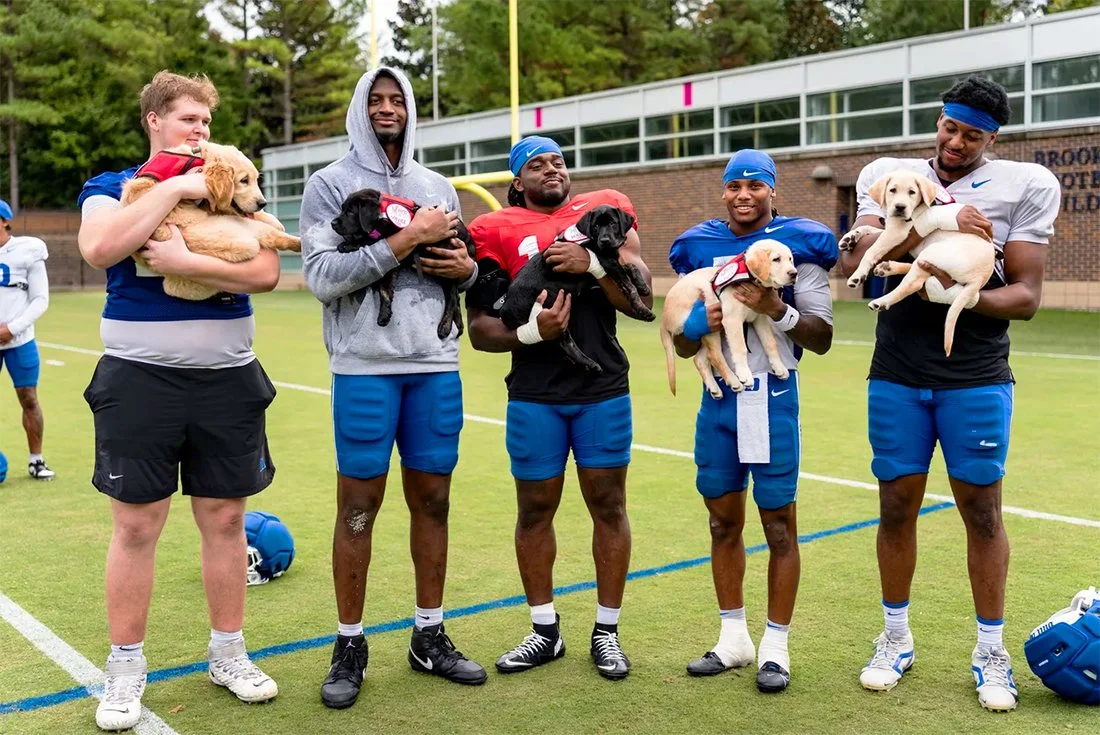
Duke University athletes hold some of the subjects of the study. photo: Duke University
Better All the Time:
Meet the Third Wave of Dog Domestication
Dogs are already pretty perfect in our admittedly biased opinion. But now new research finds our favorite species is somehow getting even better.
Working with 101 young would-be service dogs, a research team at Duke University set out to test the puppies' intelligence, including their abilities in problem-solving, impulse control, socialization, and memory. They found that puppies learned the most from 8 to 20 weeks of age, and like humans, exhibited different types of intelligence with some being better at certain tasks than others.
Individual puppies also learned at different rates, similar to humans. But one of the first learned traits was what the researchers called "mind reading," meaning the ability to understand and interpret human gestures. Most of the study puppies could already demonstrate this ability starting at about 8 weeks of age.
The Duke team believes its findings support the theory of a "third wave of domestication" for dogs, which describes how today's canines are evolving to better adapt to their lives with today's humans. The first wave of domestication occurred when early dogs started sidling up to humans' campfires. The second took place during the Victorian era when dogs began to be bred for more specialized looks and characteristics.
"Now we're experiencing a cultural shift again, where dogs are becoming much more part of our families," explains Duke researcher Vanessa Woods. "They're inside our houses, instead of wandering outside. They depend on us for socialization, food, and exercise. They're on leashes and no dog was bred for that. They were bred for defense, but now we don't want them barking every time someone walks by our houses."
In fact, Woods believes that typical service dog breeds - Labradors, Golden Retrievers - have already undergone that third wave of domestication. "We've seen that they have more oxytocin in their brains," she noted, referring to the hormone that reinforces bonding, love, and connection.
Glad to know canines are evolving for the better. Now if only we could see the same progress in our own species.
Source: usatoday.com
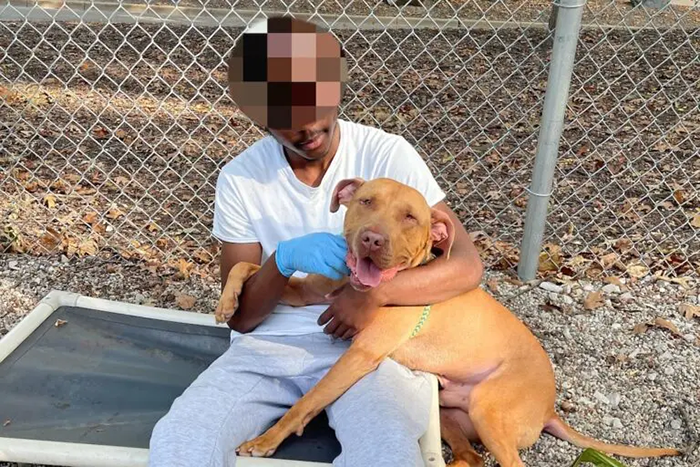
Teacher’s Pet hosts a 10-week program pairing students in the juvenile justice system with homeless shelter dogs. photo: Teacher’s Pet
Teacher's Pet: Shelter Dogs and Young Offenders Learn Together
It's not easy to be a kid in today's so-called justice system. But now a Detroit-based program called Teacher's Pet is pairing homeless shelter dogs with young offenders, building participants' empathy, patience, and responsibility while helping harder-to-adopt dogs move closer to finding their forever homes.
Founder Amy Johnson says they chose shelter dogs for the program, rather than trained therapy dogs, because the kids can better identify with them. "The youth will often say, 'Oh, my dog's locked up just like me,' or 'My dog lived on the streets like me,' or 'My dog's unwanted like me...So it gives them an opportunity to connect," she says.
Throughout the 10-week program, students and dogs meet twice weekly for two-hour sessions that combine classroom instruction with hands-on positive-reinforcement dog training. The dogs learn basic good manners, improving their chances of adoption, while the kids learn to build trust and practice communication skills they can use beyond the program.
"The one thing across the board the kids will say that they got out of the program is increased patience," says Johnson. "Because if you don't have patience or impulse control, that's what's getting you into trouble."
Sounds like a win/win to us - and a program worth replicating.
Source: michiganindependent.com
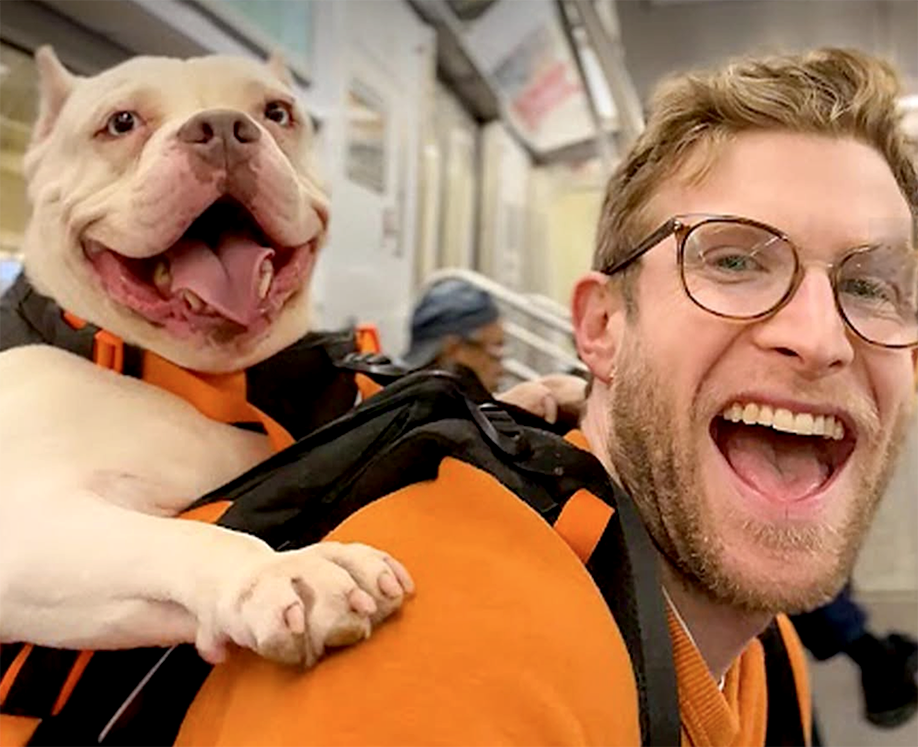
Bertha gets a respite from the shelter via the free (backpack) ride program offered by volunteer Bryan Reisberg in New York City. photo: Brian’s Instagram
From Subway to Social Media:
Backpack Pups Find Forever Homes
For all the harm social media has unleashed on our world, it's nice to see it do some good occasionally.
Meet filmmaker Bryan Reisberg who last summer started calling attention to dogs who need homes by putting selected shelter pups in his specially designed "Adopt Me" backpack, then taking them on the subway for adventures around the city.
Since then, Reisberg's videos of their outings - including information about each dog complete with fun captions - have amassed an astonishing 75 million views across various platforms. Of course, it didn't hurt that he already had a huge social media following, thanks to videos of his Corgi, Maxine, whose own subway commutes in Reisberg's backpack had made her internet famous.
Of the 11 shelter dogs Reisberg's featured to date, 10 have already been adopted (the 11th had a medical issue that still needed to be resolved). Even better, his videos have sparked a ripple effect well beyond those 10 pups. In the past six months, the shelter has seen "about 100 more dogs get adopted compared to last year...it's been a huge game changer for us," says Julie Castle, CEO of Best Friends Animal Society.
"It's crazy to me, to be able to see a real-world direct impact that you're improving the life of another person and the life of a dog because you took a few hours to go make some content," says Reisberg. "I can be a force for some good and some change here, and that's been really empowering."
Source: washingtonpost.com
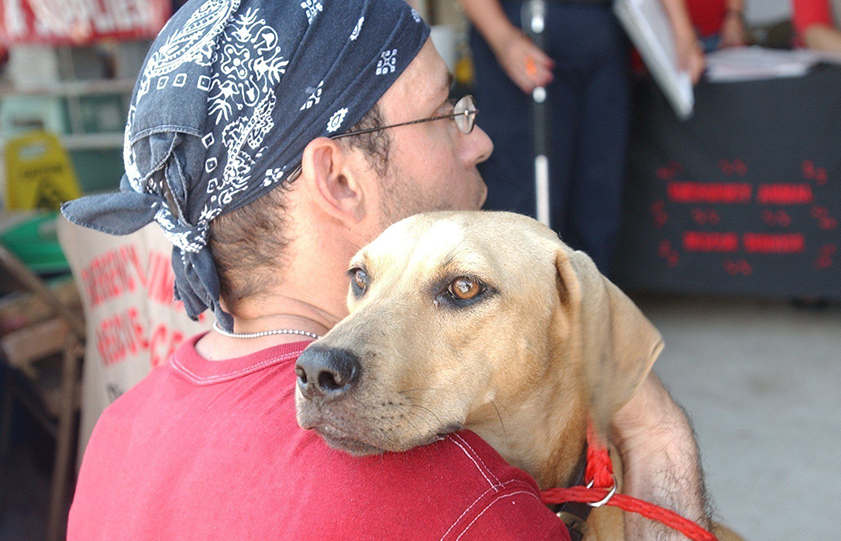
RedRover is helping to keep domestic violence survivors with their pets through generous grants. photo: RedRover
Staying Together: Grants Help Domestic Violence Survivors Keep Pets
In a last round of 2025 giving, the national animal welfare nonprofit, RedRover, has awarded over $1.3 million in Safe Housing grants to seven domestic violence shelters and two animal shelters to create or expand programming for survivors' pets. The funding will support veterinary care, pet supplies, boarding, grooming, and the construction of dog-friendly features, like runs and play yards.
“It was a light bulb moment for me when I learned that survivors often delay escaping an abuser for fear of leaving their pet behind," said RedRover President and CEO Katie Campbell. "Our grants enable shelters to create essential pet-friendly programming so no survivor faces the impossible choice of leaving a family member behind.”
Studies show that 50% of domestic violence survivors would not consider shelter for themselves if they couldn't take their pet with them. And a full 91% report that their pets' emotional support and physical protection were significant in their ability to heal and survive.
RedRover hopes to acquire more funding for this work in 2026, with Safe Housing grant application deadlines already slated for March 1, June 1, and September 1. If you know a shelter that might be interested in applying, now's the time to get the word out.
Source: RedRover.org