What Are Animal-Assisted Interactions? LAPS Lets You in on The Scoop

LAPS volunteer Amanda and Quinn. photo: LAPS
Where do you turn when you need a friend and the humans in your life just don’t seem to get it? Your beloved pet, of course. Animals have a special way of soothing us. In fact, the value of interactions between pets and troubled individuals has been noted as far back as the early 1800s.
But not everyone is lucky enough to have a furry friend on call. That’s where Animal-Assisted Interactions (AAI) come in.
AAI programs provide skilled animals and volunteers who work as teams to help others. Early AAI programs typically involved dog trainers visiting elder care facilities, but many programs have now expanded to include work at hospitals, schools, mental health facilities, trauma scenes, and more.
And dogs aren’t the only ones doing AAI these days. All types of domesticated animals now serve in AAI roles including cats, rabbits, parrots, donkeys, horses, potbellied pigs, chickens, and even llamas.
To be clear, AAI animals are not the same as comfort or emotional support animals. While comfort or emotional support animals provide support to their individual owners, AAI teams work together to share their time and love with others in need.
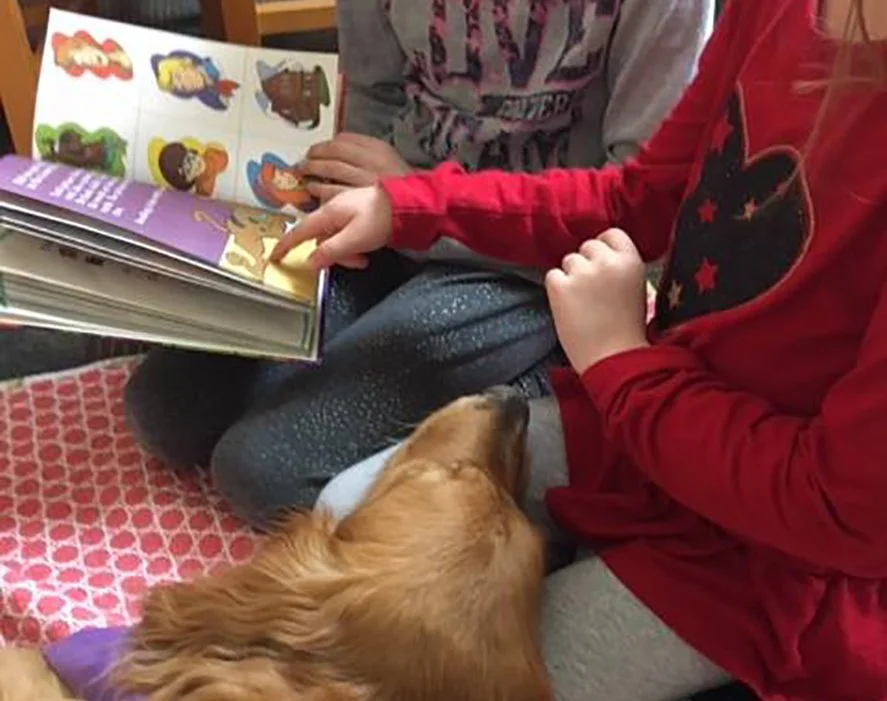
Bailey listening intently. photo: LAPS
Here in the North Bay area, the nonprofit Loving Animals Providing Smiles (LAPS) has been providing high-quality, well-trained AAI teams since 2001. This all-volunteer organization includes trained handler/pet teams, as well as associate members who do not have a working pet but provide support to the organization. The goal of LAPS is to enrich the lives of its clients and improve their overall wellbeing.
What makes LAPS different from many AAI groups is its belief that a variety of animals can be beneficial to clients. LAPS trains volunteers and their dogs, cats, and even mini-horses to serve a wide range of clients in Napa, Solano, and Sonoma Counties. Clients may include elementary-age children facing learning or emotional challenges, incarcerated teens, older adults in assisted living centers, or patients in skilled nursing facilities.
LAPS has found that a visit from a dedicated individual with a trained pet can create an opportunity to establish a personal connection with an often-marginalized member of the local community. It’s also a successful formula for a highly rewarding and effective volunteer experience.
Here’s what some local facilities’ staff have to say about visits from LAPS volunteers.
"Our community loves to have the LAPS teams visit regularly as they bring such pleasure to our seniors and give them a sense of pure joy and unconditional love." - Robin S., facility manager
“LAPS continues to make a significantly positive impact on all participants of our day program. These special dogs, along with their kind and compassionate owners, light up lives and bring smiles to all.” - Kristin E., activities coordinator, Senior Day Program
Such words mean a lot to Marilane Bergfelt, a LAPS co-founder and the organization’s current president. “Loving Animals Providing Smiles has remained focused on quality and commitment since its inception,” says Ms. Bergfelt. “Our group has one of the highest standards of training, testing, and mentoring of animal-assisted interaction teams you’ll find anywhere in the country.”
And LAPS volunteers concur.

LAPS volunteer Cindy and Benson. photo: LAPS
“Seeing a breed of dog that reminds them of, maybe, the farm they grew up on can really open up a friendly conversation with a withdrawn individual,” says one volunteer. “Seeing a smile on the face of an older adult when we are waiting in their shared living room after dinner can make my day.”
Want to get involved? LAPS welcomes volunteers and their pets interested in training to become one of its skilled teams working with the public. LAPS also welcomes associate members who support the organization’s activities and wish to donate their time.
For more information, visit LovingAnimalsProvidingSmiles.org or follow LAPS on Facebook.