Keeping Families Together: Removing Barriers For Pets and People
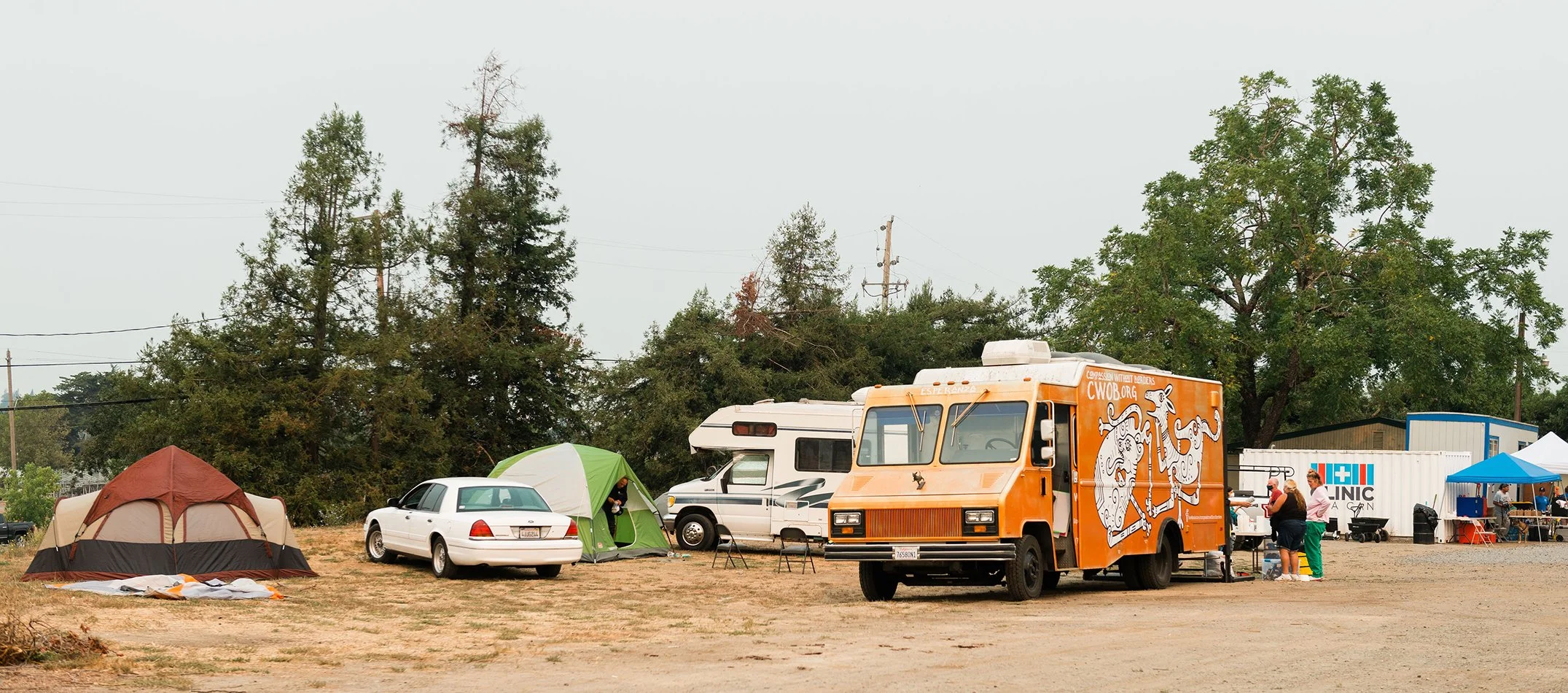

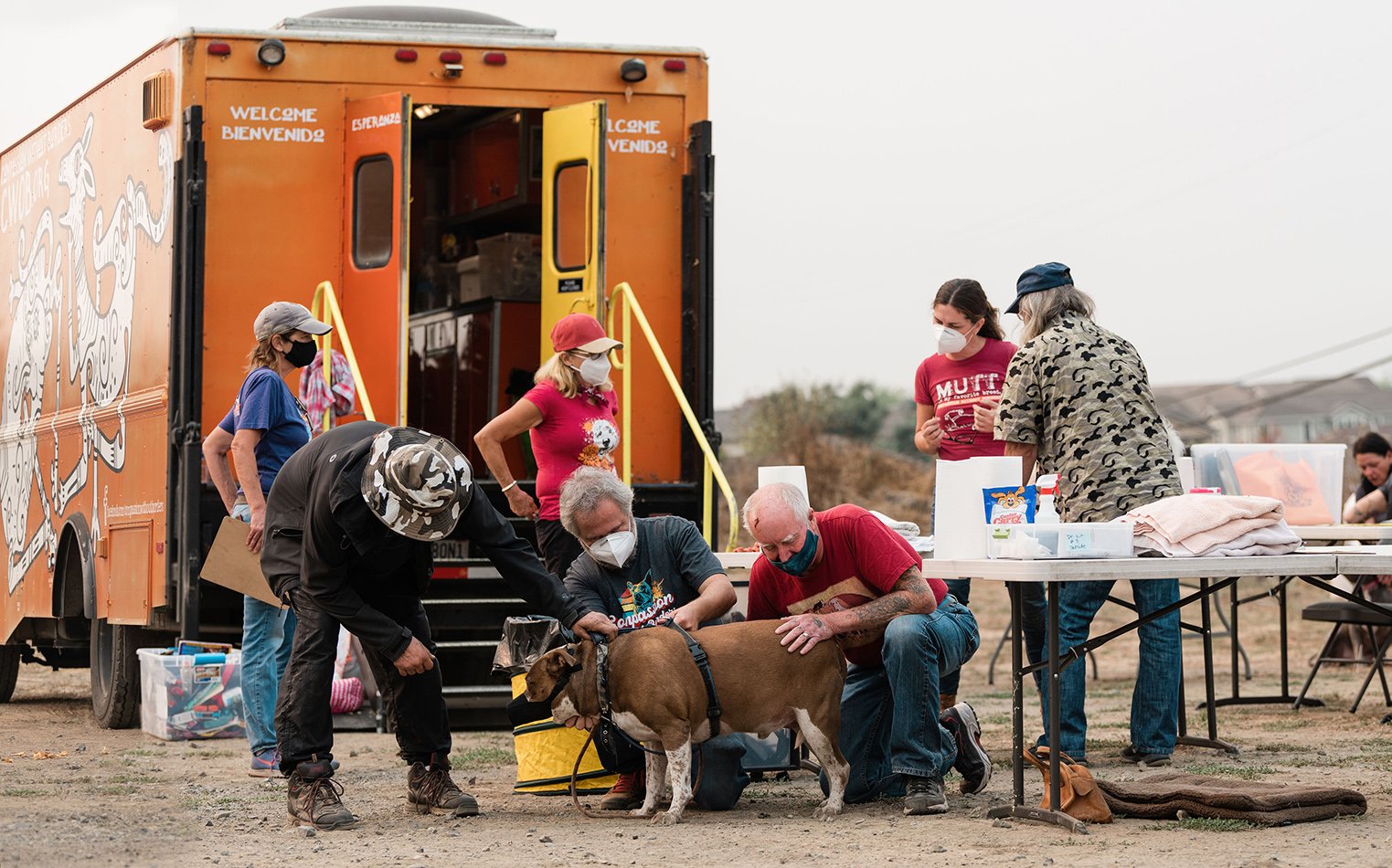

Compassion Without Borders hosts a monthly low-cost veterinary clinic in Sonoma, providing a valuable service to companion animals and their people. photo: Shelby Hinte, CWOB
It’s 11:30 p.m. on a Friday night and Jorge Espinoza is sleeping in his car outside the gates of Hessel Church in Santa Rosa, California. He has a perfectly good bed at home, but the following morning is the monthly low-cost Compassion Without Borders Veterinary Clinic and he doesn’t want to miss it.
Espinoza has been bringing his pets to the clinic for years. This time, he is cuddled up in his car with Kenny, a Miniature Pinscher he recently took in from a coworker whose new housing situation wouldn’t allow her to keep him. Kenny is there for a wellness exam, including vaccinations, flea and tick prevention, and any additional care he may need.
Espinoza isn’t the only one who will line up for hours waiting to get affordable care for his pets. Each month, rain or shine, up to 100 families wait to have their animals seen.
These monthly clinics provide affordable veterinary care while serving a broader goal: helping families keep their pets healthy and reducing the number of animals that enter shelters. In addition to providing basic veterinary services, they also treat ongoing medical issues and work with families to get their pets signed up for affordable spay/neuter services via their partnership with the Humane Society of Sonoma County.
Compassion Without Borders co-founder Dr. Christi Camblor believes that access to affordable care plays a major role in the fight to keep animals out of the shelters and off the streets. “Veterinary costs have been steadily rising and have reached a point where they are cost-prohibitive for many families to provide even the most basic care to their animals,” she notes. “Offering access to care helps to provide more equitable communities by providing opportunities for people to get their pets the care they need to thrive.”
Critics of fee-waived animal services sometimes argue that pet ownership should remain a privilege reserved solely for those in a financial position to cover any costs that may be incurred over that pet’s life. But this argument overlooks the socioeconomic inequalities that face an increasing number of people in today’s society. And if a family is willing to sleep in their car overnight to get their animal the care they need, are they any less equipped to provide a loving home than someone with more economic privilege?
The reality is that companion animals provide immense benefits to the humans who love them. At the same time, many animals in this country are suffering as a result of overcrowded shelters. According to the ASPCA, “5.8 million dogs and cats entered U.S. shelters and rescues in 2025 and the length of time dogs, especially large dogs, are staying in shelters before being adopted has increased in the past five years.”
In an effort to create more equitable opportunities for families and their pets, this year Compassion Without Borders implemented a “Name Your Price Adoption Fee” payment structure. “Often when you reduce or waive adoption fees there can be a misconception that removing the barrier to adoption increases the risk of bad adoption outcomes—animals going into crummy homes or being given away or not being as valued,” says Dr. Camblor. “But studies carried out by national animal welfare organizations such as the Humane Society of the United States and Best Friends have shown that fee-waived adoptions do not result in negative outcomes.”
According to the ASPCA: “Free adoptions help find more animals homes. Waiving fees can expedite the adoption process, reducing the length of stay for animals in shelters and alleviating overcrowding.” And it’s true. Since implementing its new fee model, Compassion Without Borders has placed multiple long-stay dogs into homes and has heard from adopters that they wouldn’t have pursued adoption without a pay-what-you-can model.
“While we do love and advocate for dogs here, people are important, too,” says Heather Hinks, Compassion Without Borders’ Adoption Manager. “Dogs enrich people's lives and bring so much joy and peace. It's such a privilege in my life to take care of my dogs. I would hate to deny that experience to somebody based solely on their financial standing at one specific point in their life.”
Dr. Camblor seconds that thought. “When you remove barriers to veterinary care you keep animals in the homes of families that love them, you allow those animals to thrive, and you help people by helping their animals,” she says.
And if there is one resource that is abundant in these homes it’s love.
Back at the clinic, it’s 8 a.m. when Kenny, the Miniature Pinscher, is finally checked in to be seen. He’s wearing a fuzzy brown sweater to stay warm, snuggled up in Espinoza’s arms and getting forehead kisses as he waits for his exam.
But the wait has been worth it. Nine hours after arriving at the church where the mobile veterinary clinic is held, Kenny has received the care he needs and is ready to head home with Espinoza.
As they leave, nearly 100 more pets are still patiently waiting for their turn.