A Story of LGBTQ+ Veterinary Pride
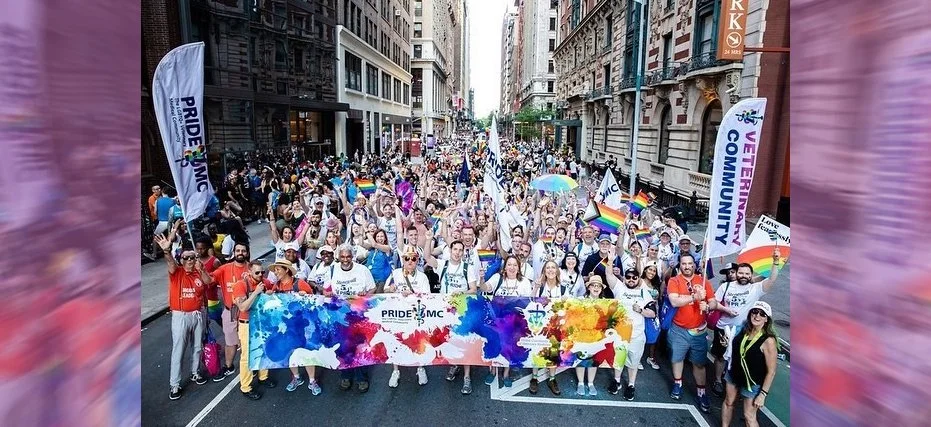
The LGBTQ+ Veterinary Community marching at the Stonewall 50th Anniversary Celebration in 2019. photo: Pride VMC
Why do we celebrate Pride?
We celebrate in June to coincide with the initial spark of the modern Gay Liberation Movement: the Stonewall Uprising in the early morning of June 28, 1969, when police brutally raided a popular gay bar in NYC’s West Village. We dedicate the entire month to uplifting LGBTQ+ voices, highlighting LGBTQ+ culture, and supporting LGBTQ+ rights. Pride is part celebration and part political activism.
If you’re on the young side, it may be hard to remember a time when LGBTQ+ people were not celebrated, before Will and Grace, Ellen, and same sex marriage became mainstream. But diversity was not always celebrated as it is today. Until the 1970s, being gay was considered a mental illness and sodomy laws were still on the books into the 2000s. Gay people were persecuted, jailed, or murdered for the crime of being themselves. Even today across the globe, we are still being murdered in many conservative societies.
Until the U.S. Supreme Court overturned sodomy laws in 2003, many professions, including veterinary medicine, also had “moral turpitude” clauses in their bylaws, putting “out” veterinarians at risk of losing their licenses - especially if they were outed by the police and had their names published in the local newspaper. Given all this, it shouldn’t be surprising that gay people historically remained closeted due to very real fears about discrimination and safety. But we have always been here, contributing to society across a spectrum of professions.
The story of our perseverance is an important one. After the Stonewall Uprising, many professions, universities, and industries began to create LGBTQ+ support networks. Eight years after Stonewall, veterinarians Dr. Jeff Collins and Dr. Wayne Westmoreland met at a veterinary conference in Atlanta and posed the question, “How many others like us are in the veterinary profession?”
They decided to place an ad in the Advocate - a national gay magazine - to announce the first meeting of the Association of Gay Veterinarians (AG Vets) to be held in 1978 in Las Vegas. It was a success and nearly a dozen veterinarians showed up for the inaugural annual event.
Unfortunately, just a few years later in 1981, the AIDS pandemic hit. By 1988, many of the original AG Vets members had died. Others went back in the closet due to fears of homophobia and AIDS-phobia, which were rampant at that time. The fledgling group disbanded for lack of interest and membership.
But our story continued, nonetheless.
The AIDS pandemic brought a new crisis for animal companionship and veterinarians. Many physicians had started recommending that AIDS patients give up their beloved pets at a time they were most needed as support. Veterinarians, however, knew the powerful medicine that animals offered our clients and friends. We helped mitigate the danger of zoonotic risks posed by animals for people who were immunosuppressed, while also helping people with AIDS keep their cherished companions with them.
At this same time, the San Francisco AIDS Foundation Food Bank realized that struggling clients were feeding their human rations to their pets, so they started adding pet food to their deliveries. Soon it was apparent that AIDS patients with pets had many other needs, such as dog walking, foster care when someone was hospitalized, or fundraising for veterinary care. Very quickly the San Francisco gay community sparked a new movement, redefining how important the human-animal connection can be for psychological and physical health and emphasizing the vital need to maintain this connection in the face of illness.
It was an honor for me to be a part of this movement from the very beginning. In the summer of 1984, I started to practice small animal medicine near the Castro District. The AIDS pandemic had already created terror and uncertainty, and many of my first clients were asking about the risks of keeping their pets. I started spending my evenings at the UCSF medical library (this was before the internet) to research the scientific literature. The information I found became known as the Safe Pet Guidelines.
At this time, I was also serving on the board of a veterinary medical association in San Francisco, so I suggested that we bring in a public health expert to speak to us about pet-associated zoonotic infections. A vocal minority of the group opposed this opportunity, saying that AIDS was a human disease and not our concern. Knowing that this veterinary group was not going explore the urgent issue of how to help the gay community keep their pets safely, I resigned from the association.
The very next day, there was a front-page article in the Bay Area Reporter featuring a Wilkes Bashford fashion fundraiser for a new San Francisco initiative called “Pets Are Wonderful Support of People with AIDS/ARC” or PAWS for short. I contacted their leadership and jumped at the opportunity to become the founding veterinarian for this group. PAWS helped the LGBTQ+ veterinary community publish the Safe Pet Guidelines, which were subsequently adopted by other veterinary and medical groups across the nation. Some 15 years later, they were officially adopted by the national Centers for Disease Control and published on the CDC website as Healthy Pets, Healthy People.
This new network of LGBTQ+ veterinary AIDS activists rekindled the early network of AG Vets, and in 1993, we held our first meeting at the March on Washington for Gay Rights. Dozens of veterinarians and veterinary medical students met near the Washington Mall. We decided to name our group the Lesbian and Gay Veterinary Medical Association (LGVMA), and we began meeting annually at the national veterinary conference. Working together, LGVMA members created student scholarships, provided mentorship and advocacy, and became an important asset to the greater veterinary profession. In 2018, LGVMA changed its name to Pride Veterinary Medical Community (Pride VMC) to better reflect the entire LGBTQ+ community and our allies.
This brief history shows the power of LGBTQ+ people despite all the hardships we’ve endured. We’ve long been recognized for our contributions in fashion, media, and art, but the same is true in every field, including the veterinary profession. Although the AIDS pandemic caused AG Vets to close abruptly, it brought gay and lesbian veterinarians together on the front lines of AIDS and animal companionship activism. Human-animal support service organizations like San Francisco’s PAWS sprang up in New York, Los Angeles, Washington, D.C., and many other cities.
Stories like these are nice to remember, but sadly these issues are not just history. Today, gay people are still under attack by far-right autocrats here and abroad. All professions, including the veterinary one, must join together to make sure we don’t regress to the ugly and hurtful era we hoped we’d left behind.
Now, in a remarkable echo of previous times, a new pandemic has brought the therapeutic and lifesaving effects of animal companionship back to the forefront of a stressed society. Just as in the AIDS pandemic, people suffering from long COVID and their pets will need the same support offered during the AIDS pandemic, support pioneered by gay people and their allies that worked so well in the past.
So this June, give a thought to our history. Thank your veterinarians - gay or straight - for all that they do, especially during the ongoing health crisis created by COVID. Then hug your favorite dog or cat, and stay safe out there.