Fun with Fido: Putting Dog Toys to Work for You
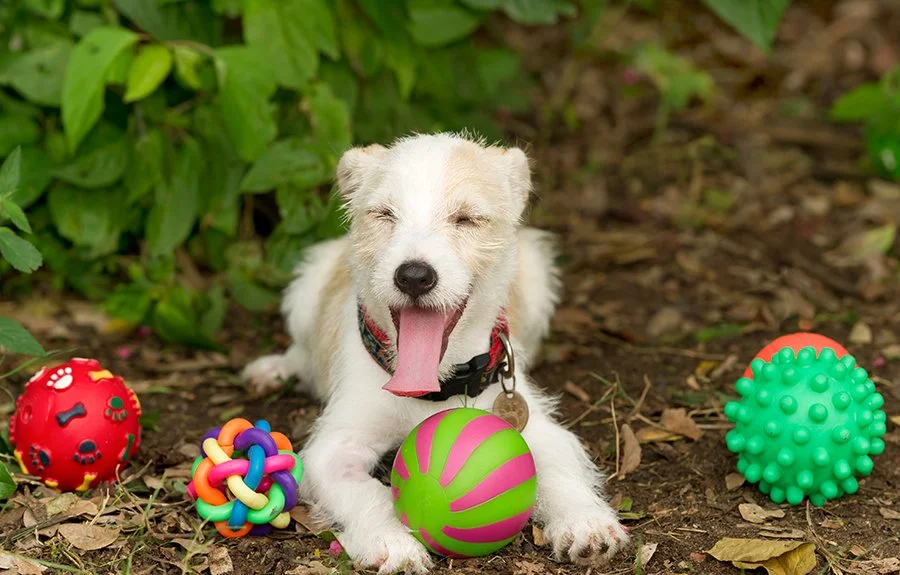
Toys can be a great way to redirect your dogs behavior towards a positive action. photo: AdobeStock
Did you know you can use your dog’s toys strategically to make your life easier? Here’s how!
Hold a toy to greet
If your dog greets you with too much happy jumping and mouthing, you can teach an alternate behavior. Keep some dog toys near your front door and on arriving, give your dog a toy to hold in their mouth or start a game of fetch.
Rotate for novelty
Keep half of your dog’s toys in the house for easy accessibility and box the other half away in a closet. Rotate the toys on a weekly or monthly basis to keep your dog’s interest fresh.
Play hide and seek
Take a favorite toy and hide it. Put out a few boxes and hide the toy in one of these, then let your dog sniff out which one has the toy. The prize for finding the toy could be a game of tug or fetch or a food reward - whatever is most delightful for your dog at that moment.
Amp up your puzzle toy game
When using food puzzles, the trick is to find ones that keep your dog challenged enough to stay engaged (sniffing, pawing, licking, rolling, biting the puzzle) but not so difficult that they walk away. If you’re looking for creative ways to make puzzle toys more challenging, try one of the following:
After stuffing food into a Kong or similar puzzle, wedge a soft toy into it so that your dog has to remove the toy before getting to the food.
Take a food-filled puzzle toy and wrap it in a towel or two that your dog will have to unroll to get to the puzzle.
Place a food-filled puzzle in a cardboard box that your dog has to open or shred to get to the puzzle.

Shira working on her “tug.” photo: Althea Karwowski
Play tug
Dog guardians sometimes tell me that they don’t play tug with their dog because they’ve heard it will make their dog aggressive. In fact, tug can be a wonderful form of play, exercise, enrichment, and relationship building. Playing tug gives your dog exercise and can tire them out without the need for a large space or a lot of physical movement on your part. Unlike many other exercises for your dog, tug can be played in a small room with you sitting on the ground or in a chair.
Playing tug with appropriate toys gives your dog an outlet to do normal dog behaviors. If your dog is making their own games by chewing on furniture or clothing, try giving them more opportunities to chew, bite, and tug on the right stuff.
Tug tips:
If your dog gets over-excited during tug, build in structure and rules. Tug only if all four paws are on the floor, the dog’s mouth is on the toy (not your hands), and tug is alternated with sits, downs, waits, or breaks.
Pick a long tug toy so that your hands can hold it far away from where your dog will be biting on the toy.
Teach a happy drop
Do you get frustrated with your dog holding onto a toy or dropping it only after you’ve said “drop” five times? Make life with your dog easier by teaching them to drop a toy in a way that is pleasant for both dog and human.
Start by creating a happy association for your dog with a new verbal cue for dropping something. Pair the new word with a food treat your dog is stoked about and repeat, repeat, repeat. Next, practice saying the cue and then delivering the treat while your dog has the toy (not taking the toy, just delivering food). Last comes exchanging the toy for the food item (giving it to you), followed by you returning the toy. If this process seems tricky, working with a trainer who uses humane training methods can help.
With creativity and a little practice, you can put dog toys you already own to work for you and your pup. It’ll make everyone’s life a little easier - and a lot more fun!