Food For Thought: In Praise of Sometimes Treats
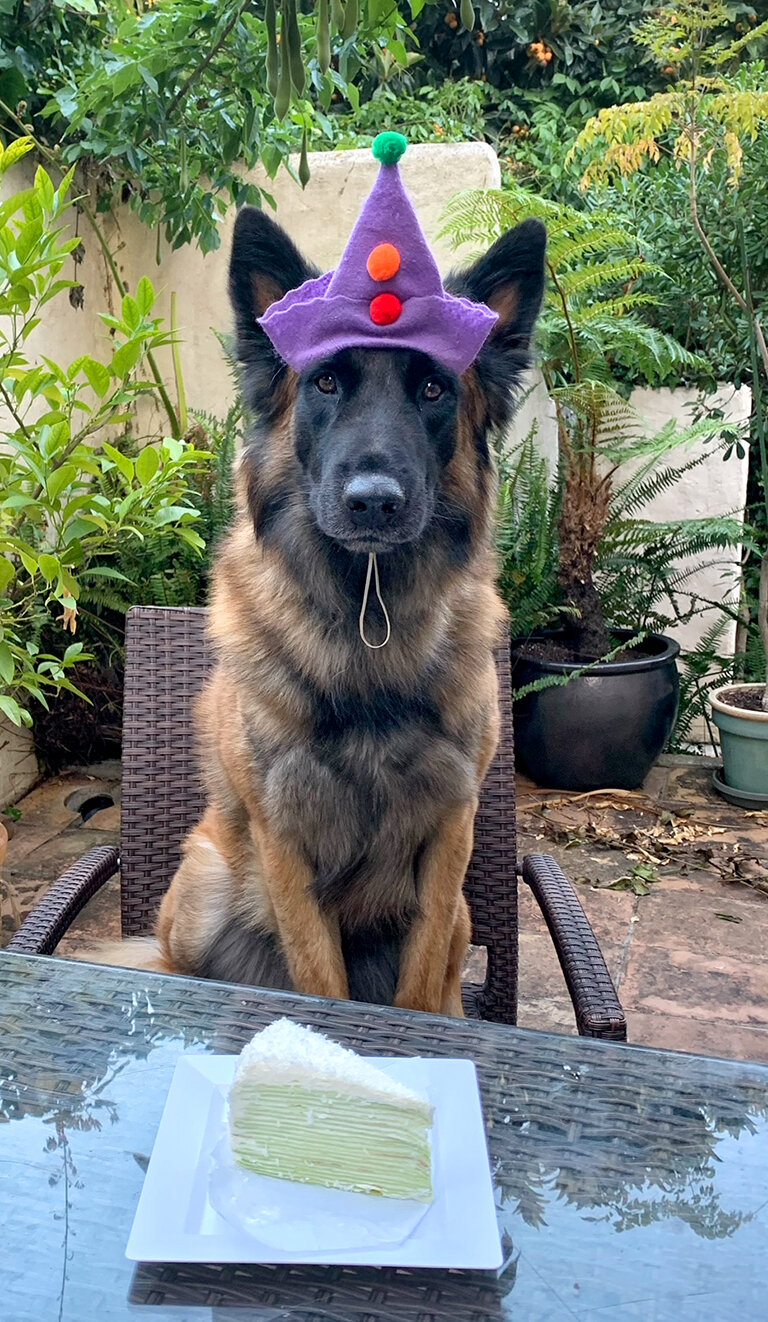
Mars with his birthday cake, photo - Kelly Gorman Dunbar
I train my dogs with meatballs, the kind you can get in the freezer section at any grocery store. Sometimes.
After a spectacular performance on the training field, I’ll occasionally stop at In N’ Out and buy my pup Laz a burger (no onion) for a job well done. I’ve also let Arabella taste milk and cookies when she seemed particularly curious. And my dearly departed elder bull, Missy, ate nearly an entire roasted chicken at her going away party for her last day on this planet. I say nearly, because my friends Emily and Laurel kept sneaking bites, too.
I train with fancy, nutritionally dense air-dried jerky, made especially for dogs, but I also train with kibble. Sometimes.
There are a lot of myths and odd notions around dogs and food. I’ll address a few of the more common ones here.
Myth: Don’t feed your dog raw meat. Once they taste blood, they’ll become aggressive.
Dogs are canids, not vampires. Meat - whether raw, freshly cooked, or partially rotten - is a normal part of a canine diet. Dogs are designed to eat nearly anything, including meat, and they are naturally omnivores who both scavenge and hunt. In most cases, left to their own devices, dogs will scavenge more frequently than they’ll hunt because it’s easier and involves less energy and definitely less danger. When they do hunt for themselves and/or their offspring, they most certainly don’t cook the meat before they eat it.
Despite all this meat-eating, there are very few instances of true “aggression” in dogs, compared to the numbers of dogs in existence. Eating is not an act of aggression. Hunting and eating are necessary acts of sustenance. Aggression is a functional behavior brought on by fear, territoriality, defensiveness, or the need to protect resources. Both eating and aggression are survival mechanisms, but they don’t really overlap.

Mars licking his chops while he stands over a goat head treat from SFRAW
That said, raw meat is an extremely high value treat for most dogs, especially for those who rarely or never get it. In that case, a dog prone to resource guarding may act to protect a precious chunk of raw meat from others if they somehow manage to score some.
Myth: Don’t ever feed dogs people food. And never feed your dog from the table - it will teach them to beg.
Let me start by saying, your dog, your decision. I’m not here to tell you that you should feed dogs people food. I’m just saying if you want to, it’s okay with a few important exceptions. Dogs must never eat grapes, raisins, chocolate, or anything with aspartame. Also too much fatty food may cause a serious case of pancreatitis. But generally speaking, much of what we eat, they can eat, too. In fact, studies have shown that introducing a little bit of fresh real food and variety to your dog’s regular diet, even just once a week, can be quite beneficial to their gut health. Not to mention, variety adds a bit of spice to their lives and provides olfactory enrichment, which is an excellent perk as a dog’s sense of smell is the main lens through which they experience the world around them.
As for feeding your dog from the table or kitchen counter? Well, there is some truth to this one. Dogs will go where the reinforcement happens. If morsels are regularly “dropped” (ahem) from the table, especially by a specific person, the dog will absolutely be at that person’s feet at mealtime (I’m looking at you, Leslie!).
But that need not mean never giving table scraps again. If you really want to share your scrumptious meals with your dog, but you’d rather not raise a drooling beggar, save your scraps and either put them into a Kong, or other rubber food dispensing toy, as a special treat, or put a placemat or dog bed a few feet away from the dining table or kitchen counter and occasionally reward your pup with tasty tidbits for minding their manners and staying on their place.
Myth: If you use treats in training, your dog will only listen when you have food. Using food in training is bribing.
Food is a life source. To dogs, it is currency. It’s something you are going to give to them every day. They need it, and they like it! Failing to use a valued item as a reward for good behavior or to teach a new skill is inefficient to say the least. Rewards make your requests relevant to a dog. Relevancy aids clarity. Clarity is essential to communication and training. Additionally, behavior that is rewarded will indeed be repeated. Remember the table begging scenario above?
To avoid bribing your dog, just make sure the food reward comes after the behavior - as a direct consequence - way more often than it does as a prompt to make the behavior happen. Luring with food is a great way to initially get your dog to understand what you want him to do, but you must fade it from the cue (your hand signal and/or verbal prompt) as soon as possible to avoid it becoming a crutch. That said, after the fact, food is one of the most powerful and impactful rewards you can give most dogs.
Because…
Food is life.
Food is love.
Food is care.
Food is a reinforcer.
Food is enrichment.
In short, special “sometimes” treats are a versatile and pleasurable way to show appreciation for your canine companion. So set the old myths aside (except maybe the begging one). Go ahead and feed your dog in ways that are fun for both of you.