Does My Dog Need Friends? Understanding Canine Sociability
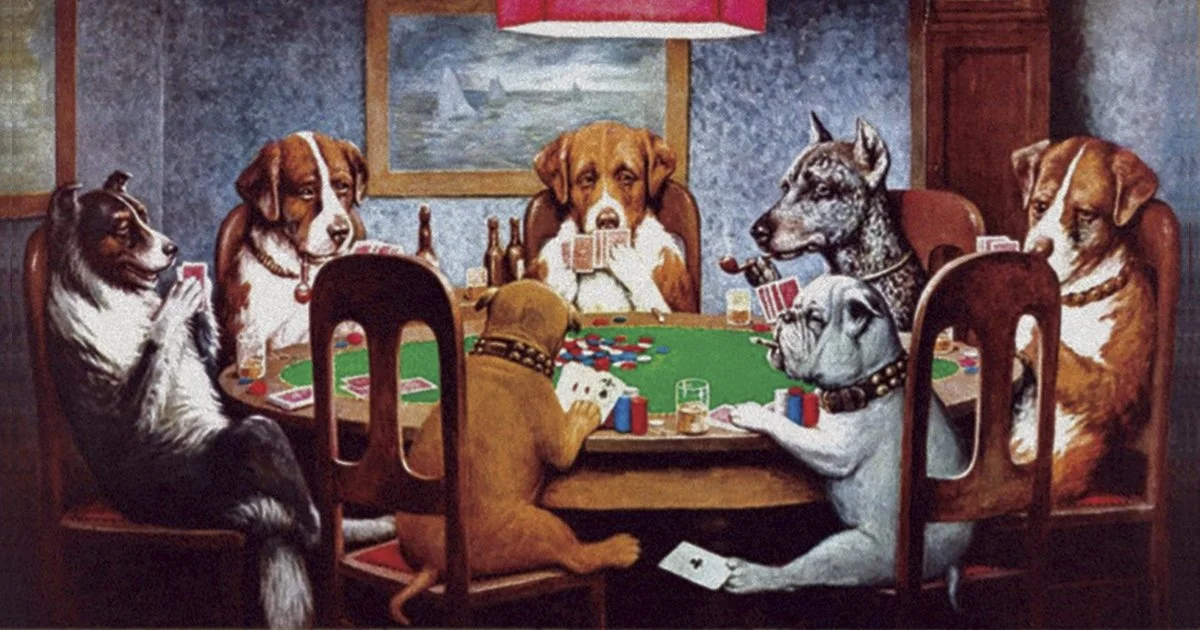
What kind of friends does your dog need? mage: from Dogs Playing Poker series by Cassius Marcellus Coolidge.
Does my dog need friends? It's a question a lot of dog owners eventually ask, especially if their dog seems less interested in other dogs or people than they expected.
The short answer is not necessarily. Some dogs thrive with lots of dog friends, while others are happiest with just their own household. What every dog does need, though, is enough social skills to move comfortably through the environment they live in.
Dogs are social animals but that doesn't mean every dog wants or needs the same amount of contact with others. Sociability exists on a spectrum. At one end, you have dogs who seem genuinely delighted by every chance to meet new people and dogs. At the other, you have dogs who prefer a quieter social life, spending time primarily with the people and animals they already know well. Most dogs fall somewhere in between, and their needs may also change depending on age, environment, experience, and who they're with.
Humans aren't all equally social either. Some people thrive on parties, busy workplaces, and meeting new people, while others are perfectly happy with a small circle of close friends and a lot more time to themselves. Neither is inherently healthier.
The same is true for dogs. When we talk about behavioral wellness, the goal shouldn't be to create the most social dog possible. The goal is to understand your individual dog's social needs and make sure their life gives them appropriate opportunities to meet those needs.
Socialization vs. Sociability vs. Social Skills
The terms socialization, sociability, and social skills often get used interchangeably when, in fact, they describe different things. For example, people frequently tell me that they think their adult dog “needs more socialization.” But socialization actually refers to a specific developmental process that primarily takes place during puppyhood, roughly between 3 and 14 weeks of age.
During this developmental period, puppies are learning about the world around them. Thoughtful socialization exposes puppies to people, animals, environments, surfaces, sounds, handling, transportation, household experiences, and all the other things they’re likely to encounter later in life. Meeting as many dogs or people as possible isn't the point. Good socialization helps a puppy develop into an adult dog who can navigate the world comfortably and successfully.
Sociability is something different. Sociability refers to how much social interaction an individual dog actually wants. You can do an excellent job socializing a puppy and still end up with an adult dog who has relatively little interest in meeting unfamiliar dogs. Yet another dog socialized in the same way may grow into an adult who remains extremely interested in interacting with others.
Sociability is influenced by many things, including genetics, breed tendencies, early development, maternal behavior, individual temperament, learning history, and life experiences. Good puppy socialization matters tremendously, but it doesn’t solely determine where an adult dog will ultimately fall on the sociability spectrum.
Finally, there are social skills. Social skills are the behaviors that allow a dog to successfully navigate social situations throughout their life. These are also skills we can continue teaching well beyond puppyhood.
What Do Good Social Skills Look Like in Dogs?
People sometimes imagine good social skills in a dog as the ability to enthusiastically play with other dogs or happily greet strangers. Those can certainly be social behaviors, but social competence is much broader than that. Good social skills for a dog might include walking past another dog on the sidewalk without needing to interact with them or lying under a table at an outdoor cafe without assuming - or insisting - that every nearby person or dog is there to say hello.
Good social skills can also include the ways dogs communicate with one another. An adult dog may tell an overly persistent puppy to back off with a growl rather than escalating the interaction further. One dog may ask another dog to play, receive a clear “no thank you,” and respond appropriately by leaving that dog alone. Those are social skills, too.
A socially skilled dog isn’t necessarily a highly social dog. In fact, one of the most useful social skills a dog can learn is how not to interact. This distinction matters because we often unintentionally teach dogs that proximity means engagement: every dog on a walk becomes a potential greeting and every visitor is expected to interact. That’s not a recipe for social success.
Does Every Dog Need Dog Friends?
A healthy social life should fit the individual dog rather than an idea of what dogs are supposed to enjoy. A dog with relatively high social needs may benefit from regular opportunities to interact with compatible dogs, familiar people, or both. Another dog may be perfectly content with their household members and plenty of other things to do.
This is also why the dog park and doggy daycare aren't requirements for a happy dog. If your dog doesn't like other dogs or only enjoys a few carefully chosen friends, that isn't automatically a problem to fix. For some dogs, a busy dog park or a full day of group play is fun. For others, it's stressful even if they tolerate it. A dog who would rather sniff a quiet trail than wrestle with strangers isn't missing out.
More social interaction doesn’t automatically mean better social wellness. Watch what your dog tells you about the amount and type of interaction they enjoy. Do they repeatedly choose to approach another dog? Do they initiate play? Are they relaxed during the interaction and able to disengage when they want to? Do they seem to enjoy groups, or are they much more comfortable one-on-one? Do they seek out unfamiliar dogs or mostly enjoy dogs they already know?
Also be aware that those answers may change over time. A young dog who once wanted to play with every dog they encountered may become more selective as they mature. That doesn’t necessarily mean anything has gone wrong. Part of supporting behavioral wellness is allowing a dog’s social life to evolve instead of continually trying to recreate the behavior they showed as a puppy.
Your Dog’s Environment Shapes the Social Skills They Need
All dogs need enough social competence to function in the environment where they live, and what those skills look like will depend heavily on that environment. Consider two dogs living in very different parts of the Bay Area. A dog living in a suburban Walnut Creek neighborhood usually has room to cross the street when another dog approaches. For that dog, being able to notice another dog on the opposite sidewalk and continue walking may be the only social skill they need for that particular situation.
Now picture a dog living in San Francisco’s Mission District. This dog may routinely encounter other dogs at much closer distances. They may pass dogs on narrow sidewalks, walk through crowded intersections, enter shared apartment hallways or elevators, and navigate outdoor restaurants or other tight spaces.
Those two dogs don't necessarily need the same social skills because they aren't being asked to function in the same environment. Training should prepare the dog for the life they actually live.
Supporting Your Dog’s Social Wellness
When thinking about your dog's social life, start by separating what your dog actually needs from what you think a dog is supposed to want. Pay attention to how much interaction your dog seeks out and what kinds of interaction they seem to enjoy, and give them appropriate opportunities for social contact without assuming that more is always better.
At the same time, teach the skills that allow them to move comfortably through the environment around them. That may include passing other dogs, disengaging from social interactions, settling around people and animals without greeting them, communicating appropriately with other dogs, and responding when another dog asks for space.
Perhaps most importantly, don't judge your dog's behavioral health by how many friends they have. Some dogs genuinely love a large social world, while others are happiest with a very small one. Behavioral wellness comes from recognizing the difference and building a social life that actually fits the dog in front of you.