A World of Thanks: Service Dogs and the Gift of Independence

Service dogs are highly trained professionals who perform specific tasks that directly mitigate their handler's disability. photo: AdobeStock
For the past 25 years, I’ve experienced firsthand what it means to live with a life-altering disability and a service dog partner. In this season of giving thanks, I find myself reflecting on the profound gift these remarkable animals represent - not just for me, but for thousands of people with disabilities around the world who depend on their canine partners for independence, safety, and dignity.
Service dogs are far more than loyal companions. They are highly trained professionals who perform specific tasks that directly mitigate their handler's disability. Under the Americans with Disabilities Act, these working animals have full public access rights, accompanying their partners into restaurants, workplaces, schools, hospitals, and anywhere else the public can go. But what truly sets them apart is the intensive, specialized training that transforms them into life-changing partners.
The scope of their work is truly breathtaking. Guide dogs navigate busy streets and crowded spaces for people who are blind or visually impaired, making split-second safety decisions through "intelligent disobedience." Hearing dogs alert deaf and hard-of-hearing individuals to critical sounds: doorbells, fire alarms, crying babies, or someone calling their name. Mobility assistance dogs open doors, retrieve dropped items, brace their partners during transfers, and pull wheelchairs - tasks that mean the difference between living independently or requiring constant human assistance.
Medical alert dogs detect subtle chemical changes that signal dangerous conditions like low blood sugar, oncoming seizures, or cardiac events. Psychiatric service dogs support veterans and others living with PTSD and anxiety, providing grounding during panic attacks, creating protective barriers in crowds, and interrupting nightmares.
The training these dogs receive is extraordinary. Accredited nonprofit organizations under Assistance Dogs International (ADI) and the International Guide Dog Federation (IGDF) maintain rigorous standards that ensure dogs are not only task-proficient but also well-socialized, reliable, and safe in all public environments. These nonprofit organizations invest between two or more years in breeding, raising, training, and matching each dog with their future partner. The process often costs $30,000 to $60,000 or more per dog, yet most accredited programs provide service dogs at no cost to qualified recipients.
What makes ADI and IGDF accreditation so important is the assurance of quality and ethics. Accredited programs must demonstrate a strong track record of successful placements, provide lifetime follow-up support, ensure humane treatment of dogs, and train both the dog and handler as a team. These standards protect recipients from poorly trained dogs or unscrupulous programs that charge exorbitant fees while delivering inadequate training.
The partnership between a person with a disability and their service dog goes well beyond practical tasks. These dogs become trusted confidants who never judge, never tire of helping, and never question their partner's worth. As one handler put it, when a "nonjudgmental, hairy, four-footed friend" alerts you to something wrong, there's no ulterior motive - just unconditional love and steadfast devotion. A person’s bond with their service dog builds confidence, reduces isolation, and restores a sense of normalcy that a disability too often strips away.
Service dogs also serve as social bridges, helping children with autism navigate overwhelming environments, giving veterans the courage to venture into public spaces again, and allowing people with mobility challenges to live independently. The freedom these dogs provide for their humans is immeasurable. It's the ability to go to work, attend school, travel, and participate fully in life.
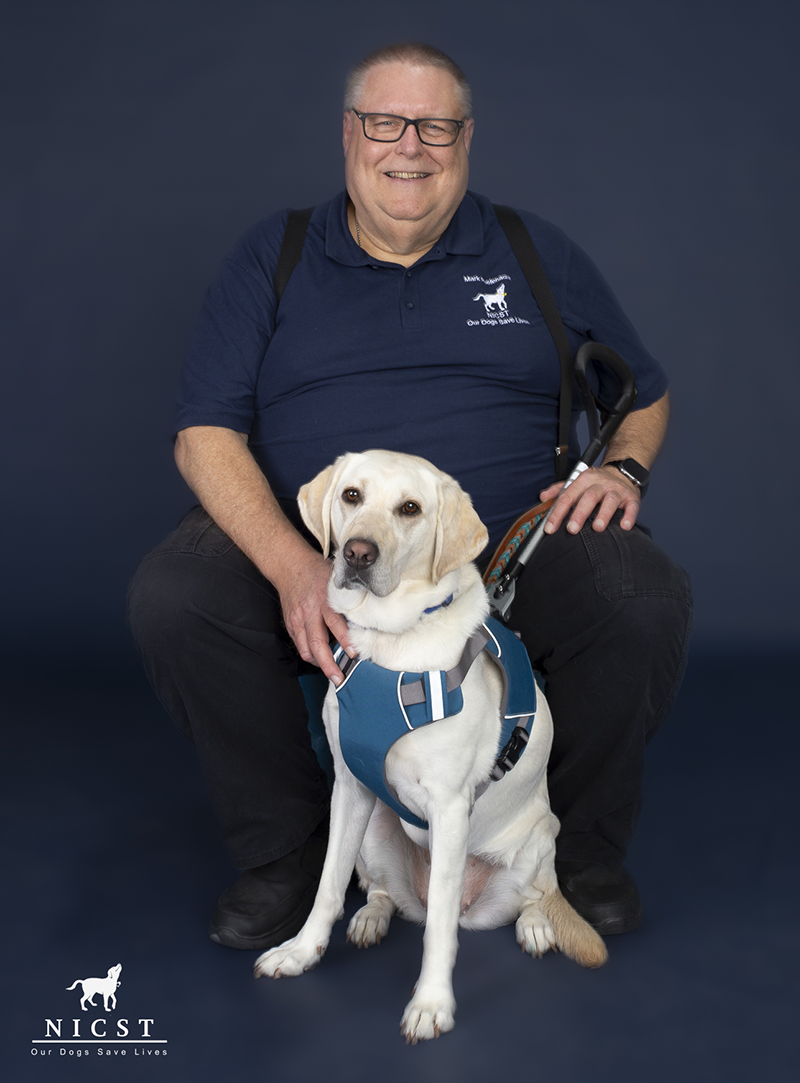
The author with his work partner. photo: Mary Hooker
An estimated 500,000 assistance dog partnerships exist in the United States alone, with thousands more throughout Europe, Asia, Australia, and beyond. Each partnership represents a carefully cultivated match between a person's needs and a dog's abilities, maintained through ongoing training, veterinary care, and the deep bond that develops over years of working side by side.
Service dogs give people with disabilities what everyone deserves: independence, security, and the ability to pursue their dreams without constant barriers. For those of us fortunate enough to partner with a service dog, our gratitude runs deeper than words. These dogs don't just change lives. They save them, enrich them, and make them infinitely more worth living.
In a world that often overlooks people with disabilities, service dogs see only the person they love and the work they were born to do. For that unwavering dedication - for every opened door, every timely alert, every steadying presence in a moment of crisis - we are profoundly, eternally grateful.