When the Community Speaks, City Hall Listens!
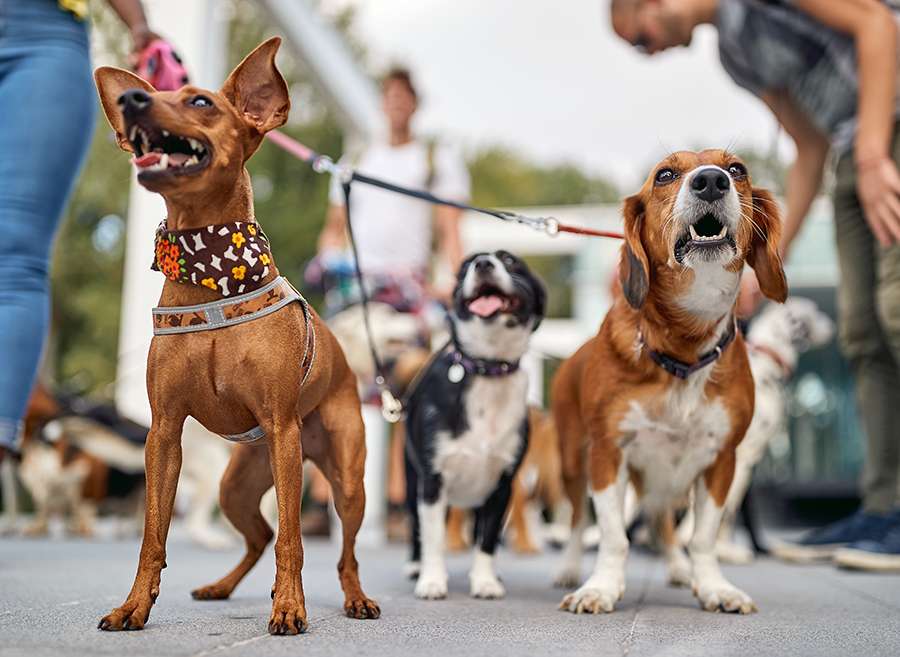
The locals are glad the SF Animal Commission will be sticking around to continue its good work. photo: AdobeStock
It’s December again, time to reflect on events of the last 12 months and prepare for the year ahead. At the Animal Commission, we have much to reflect on and even more to work toward in 2026.
As an advisory board, our commission has the honor of looking into issues involving any and all animals in our city. Based on our findings, we then make recommendations to the mayor, Board of Supervisors, and city administrator. Though we don’t have the authority to create legislation ourselves, we’re fortunate that our recommendations, along with the support of the community, are often enough to create awareness and possible action at City Hall.
Last month, I shared the breaking news that the city’s Commission Streamlining Task Force had issued an interim decision to recommend eliminating the Animal Commission. Fortunately, the task force reversed course at its last meeting and instead voted unanimously to keep our commission. Though I question why the task force had considered our commission for elimination in the first place, the last minute reprieve was still an exciting turn of events.
The question now is: what’s next?
Changes Ahead
Although the task force ultimately recommended keeping the Animal Commission in place, there will be some changes. In addition to making recommendations regarding a number of public bodies, the task force also created a template for the structure of the city’s advisory bodies and has recommended that all commissions, including ours, align with it.
These proposed changes are still in the discussion stage, but here’s an idea of what that might look like:
The Animal Commission would now come under the city’s Administrative Code, along with nearly all other advisory bodies.
Commissioners would shift to at-will removal, consistent with the citywide template.
A 6-year term limit would apply to all commissioners.
A 3-year sunset clause would mean the Board of Supervisors would need to periodically reauthorize all commissions.
Our commission’s name (officially the Commission on Animal Control & Welfare) would be changed to avoid confusion with the Department of Animal Care and Control.
Commission Seat 7 would become a preferred veterinarian-designated seat, instead of a required veterinarian seat as it is currently.
Reporting requirements would shift from quarterly to annual.
Although I don’t agree with all of these changes, a few are things I’ve wanted for years and I welcome the task force’s assistance in making them happen. Fortunately, nothing in the proposed changes undermines the core purpose of the Animal Commission. We will still meet regularly, hear from the community, and take action on animal-related matters that might otherwise be overlooked.
Given where the commission was just a month ago, this is a clear victory!
Why Did the Task Force Reverse Course?
As I wrote in last month’s column, it was really the community that turned this around. According to its chair, the task force received more letters, messages, and public comments about the Animal Commission than about any of the roughly 135 city bodies under review. That’s worth repeating: a small, volunteer commission with no budget and scarcely any administrative support drew more public engagement and support than any other commission or public body in the city. Wow!
This happened because San Francisco residents genuinely care about animals and they care about having a public, accessible forum where their concerns can be heard. Community members wrote to the task force about wildlife, companion animals, shelter operations, environmental issues, public safety, and the need for transparency.
And the task force listened.
So many amazing people in the community did a tremendous amount of outreach to ensure people knew what was happening with the task force recommendations and how to get involved (a special shout-out to Commissioners Ozernoy and Garfinkel). Their work made a real impact, and the outcome reflects how much community involvement can make all the difference in our city.
What Happens Next?
Even though the task force now recommends keeping the Animal Commission, the process isn’t over. The task force’s recommendations will be compiled into a final report, which will be sent to the mayor and Board of Supervisors in early 2026 for their consideration and possible action. The task force’s recommendation to keep our commission may have just been the first step, but it was a big first step and it cannot be overstated just how big it was.
And with all this churn comes opportunity. The Animal Commission now has the chance to focus on issues we’ve long wanted to dig into, especially those raised by the community but not fully addressed due to time, capacity, or structural uncertainty. Last month, I wrote that the commission should "go big” and I stand by those words even more strongly now.
So to everyone who spoke up, wrote in, forwarded links, encouraged friends, or even just checked in to ask how things were going: THANK YOU! This all happened because of you. You didn’t just protect a commission — you protected a public voice for animals in San Francisco.
Here’s to carrying that momentum into the new year! See you at City Hall!
* * * * * * * * * * *
The next meeting of the Commission of Animal Control & Welfare will be held at 5:30 p.m., Thursday, January 8, Room 408 at City Hall, 1 Dr. Carlton B. Goodlett Place, San Francisco, CA 94102. Information concerning remote access to meetings is on our website (agendas for upcoming meetings are published within 72 hours prior to that meeting).
* * * * * * * * * * *
Please be aware that the views and opinions expressed in this column are those of Commissioner Torres and do not necessarily reflect the official policies or positions of the Commission of Animal Control and Welfare.