Respect the Nest

Ms. Robin feeding her babies, photo courtesy of US Fish and Wildlife
Lately, when I head out for a hike with a friend, I find these questions carry our conversation up the hills: Can we find some good in this tragic year? How has sheltering in place changed us? Are we ready to leave our nests? What should we humans do differently now?
As part of the Animal Control and Welfare Commission (ACWC) public education initiative, we recently extended an invitation to Alison Hermance, Director of Communications and Marketing at WildCare. Though Ms. Hermance has been with WildCare for over 18 years, she radiates “first-day-on-the-job” enthusiasm. Her visit to the commission was also timely. Spring is the most active nesting season for wildlife and their vulnerabilities during this time demand our attention and care.
As it turned out, Ms. Hermance’s presentation also answered some of my own questions about post-pandemic life. But let’s start with what we learned about WildCare.
The Mission
WildCare’s programs work together to deliver world-class medical care in an open admission wildlife hospital. The organization also provides exceptional environmental education, community engagement, and effective advocacy for protecting wildlife and our shared habitat.
The Impact
In any given year, WildCare typically cares for 3,500-4,000 wild animals representing over 200 species. WildCare’s education programs have served roughly 40,000 participants to date through summer programs, school and group programs, and family adventures. In 2020 alone, Wildcare answered nearly 15,000 hotline calls. All these efforts help shape the group’s advocacy and community outreach programs, including the 2020 “Respect the Nest” campaign.
Wildlife Do’s and Don’ts
In a perfect world, a more informed public would become better stewards of wildlife and nature, reducing the demands on the wildlife hospital and hotline at Wildcare. If we’ve learned anything from this tragic year, it’s that humans are far from perfect. But we can learn to do better.
During the pandemic, many of us experiencing personal “nest fatigue” turned our interest to the goings-on in the natural world. Many of those interests yielded exciting discoveries. For example, I now know when to expect the nightly arrival of the raccoons that use our neighborhood park-to-park fence line as a superhighway. I’ve realized our Meyer Lemon Tree is a sweet destination for hummingbirds. And I’ve learned that crows are fascinating, intimidating, and smart - just ask them.
But our new interest in nature, along with more time to tackle home garden projects, has also led to some unintentional and preventable missteps. WildCare’s presentation provided a quick checklist of wildlife do’s and don’ts to ensure we can all cohabit more peacefully.
Know a Nest
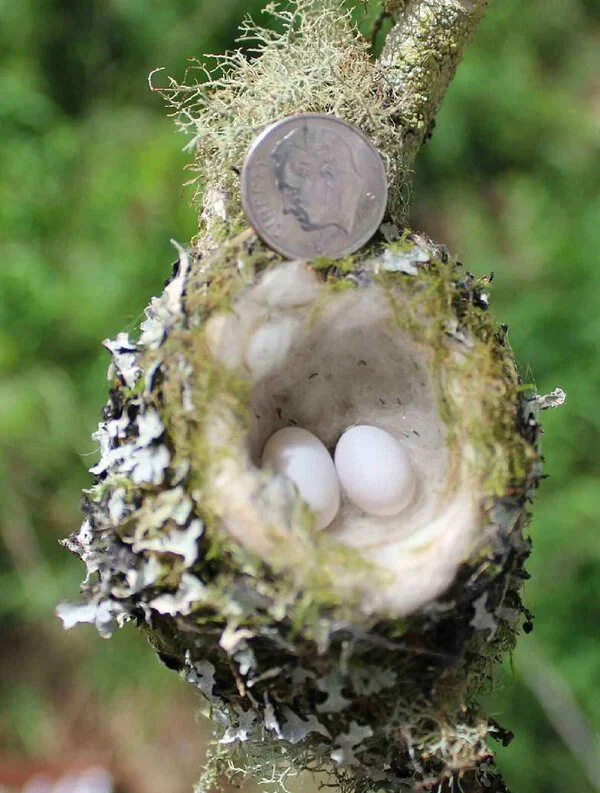
Birds, squirrels, and raptors are clever architects, building nests in coveted tree cavities, on limbs, or in bushes or shrubs, effectively rendering their nests invisible to predators. Hummingbird nests, in particular, are so tiny they are easy to miss. It’s hard to imagine that within 23 days of hatching, the birds that emerge from these tic tac-sized eggs will be dancing from flower to flower, wings beating more than 40 times per second.
Photo: Jon Heale, US Fish and Wildlife
As we head to our gardens to tidy our own “outside” nests, WildCare urges us to do so with caution and knowledge.
Look Out
Pay attention: nests are everywhere. If you notice unusual bird activity in your garden - such as birds darting back and forth - you likely have a nest. Any cavity in a tree is prime animal real estate and will almost certainly contain a nest. A drey (the correct term for a squirrel’s nest) may look like a mess from the outside, but don’t be fooled. Mother squirrel keeps a tidy, cozy home for her babies. Respect her nest and the life within it.
Leave It
If at all possible, hold off on trimming your trees and sprucing up your outdoor garden during peak nesting season, generally March through October. If you find a nest, resist your lookie-loo urges. Your curious attention attracts predators.
Listen Up
Turn off everything that hums and clicks in your house, and listen to the world outside your own nest. It’s fascinating. It won’t take long before you can identify the birds who call your home their home, too. Apps such as Song Sleuth may help you name that bird tune.
Learn More
Educate yourself so that your discoveries don’t put wildlife in danger. Start by visiting wildcare.org to learn the basics. If you have found an injured or orphaned wild animal, call 415-456-7283; after 5pm, call 415-300-6359.
In San Francisco, we are fortunate to share habitats with wildlife. As a commissioner, I remain committed to transforming any conflicts that emerge from the blurred boundaries between wildlife and our urban world into peaceful, respectful coexistence.
Perhaps this is one good thing that can come from this tragic year. This time of captivity in our own nests may yield more committed stewards of the natural world. I know it has for me. What about you?
Join the Animal Control and Welfare Commission on Thursday, May 13, at 5:30 pm when Mary Jean “Corky” Quirk of NorCal Bats will be our guest presenter in our public education series. Visit the Animal Control and Welfare Commission for more information.