Make Sure Your New Year is a Healthy One!
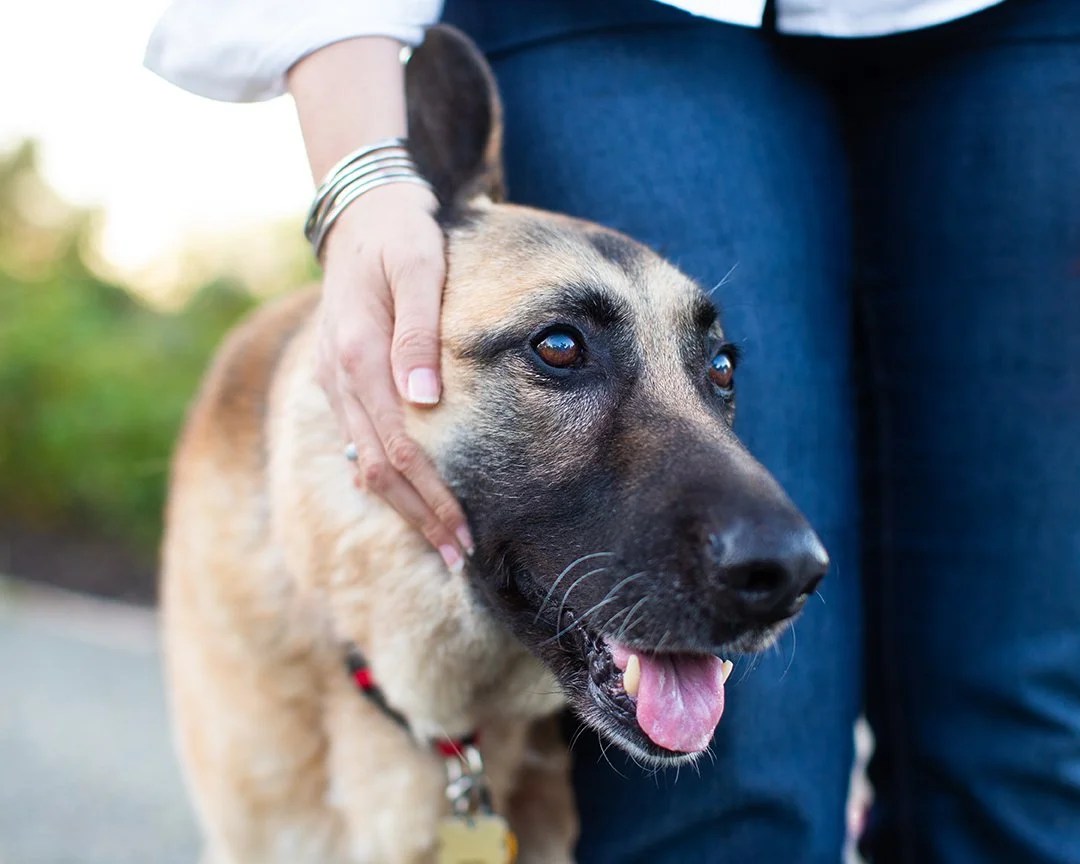
Halley, the good dog, on a walk with Jane. photo: Mark Rogers
For the first time ever, I am grateful my dog Halley is a stinker around other dogs. We don't go to dog parks and rarely interact with other dogs. We're also not regulars at grooming salons because (1) there will be dogs, and (2) there will undoubtedly be a dreaded bath. But Halley does go to the veterinarian so she's up-to-date on her vaccines, including the Bordetella vaccine that helps to ward off kennel cough.
Luckily, Halley's anti-dog, slightly smelly, pro-vaccine status means she's a low risk for the mysterious and alarming new respiratory illness now plaguing the dog community. But can I be sure?
Canine Respiratory Illness Awareness
Not much is known about this new infection, which first appeared in the northeastern U.S., but has since spread to at least 16 states including California, Colorado, Florida, Georgia, Idaho, Illinois, Indiana, Maryland, Massachusetts, Nevada, New Hampshire, Oregon, Pennsylvania, Rhode Island, Vermont, and Washington.
We do know veterinarians are concerned. Maybe you received a note of caution from your veterinarian suggesting that to be the most protected, your dog should be fully vaccinated with the Bordetella and CIV (canine influenza) vaccines and should forgo interactions with other dogs, steering clear of dog parks and communal water bowls. Vets have also recommended limiting any social time with other dogs to small groups of known dogs with guardians with whom you can communicate. In other words, your dog needs a bubble. Sound familiar?
What to Look Out For
My fellow commissioner, veterinarian Dr. Brian VanHorn, is my go-to for pet-related diseases, and he shared this advice. If your dog exhibits any symptoms, such as coughing, sneezing, or eye or nose discharge, isolate your dog and call your veterinarian, no matter how mild the symptoms may be. Dogs may often sound like they have kennel cough, but if they are lethargic or have decreased appetite, get to your veterinarian ASAP to have chest X-rays taken for insidious pneumonia, as well as respiratory PCR testing for concurrent illnesses that veterinarians can treat. Of course, call first to alert your vet that your dog may be contagious so they can take appropriate steps to limit interactions with other dogs at their office.
As I write this, it is mid-December 2023. As you're reading this, it's January 2024. I hope by then this new illness may be less of a mystery or threat. But one thing is certain. We must document and learn from this illness to prepare ourselves for the next one. It's an opportunity. Let's not drop the ball.
Who's Looking Out for Our Dogs?
Commissioner VanHorn has warned about being fully prepared and the importance of sharing and tracking disease data at Animal Commission meetings. In addition to his service on the commission, Dr. VanHorn is the current president of the San Francisco Veterinary Medical Association (SFVMA), which is instrumental in protecting the animals of San Francisco. The SFVMA is the authorized voice for the veterinary profession in San Francisco, presenting its views to government, academia, agriculture, pet owners, the media, and other concerned members of the public.
Both the Animal Commission and the SFVMA are spreading the word about this new illness, but as always, there is room for improvement. Many partners work to protect our community’s animals including San Francisco Animal Care and Control, private veterinarians, the state and local Departments of Public Health, San Francisco Recreation and Parks, and, of course, ourselves - the public. Our pets are our family and we all need to do our part to educate others and protect our pets.
Keeping Animals Healthy at the ACC Shelter
I recently spoke with Deputy Director Amy Corso of San Francisco Animal Care and Control (ACC) about how this disease and others impact the shelter and its animal residents. Fortunately, the design of ACC’s new building is instrumental in offering a first line of defense to protect against the spread of disease and provide flexibility for treatment and care. For example, the building contains three isolation wards. Separating animals with upper respiratory illnesses, including parvovirus, has kept these diseases from infecting the shelter's healthy population.
Animal care attendants at the shelter also track the health of the animal residents with apps that notify the vet staff if an animal is exhibiting symptoms. ACC's veterinary staff then treat any symptomatic animals immediately, separate them as needed, and monitor the rest of the community.
Further, all animals at ACC are vaccinated upon intake, which also curbs the spread of disease. More recently, ACC re-started its quarterly rabies clinics and has also responded to an uptick in parvovirus cases by adding the option of low-cost parvo vaccines (DPHH) to its menu of services. ACC’s next low-cost vaccine clinic is scheduled for March 9, 2024. More details will be available soon.
Animal Commission To Explore Disease and Data Tracking
Looking ahead, the Animal Commission plans to explore animal disease and data tracking in 2024, including the state and local response and how our neighboring communities are managing it. In the meantime, I will definitely follow my veterinarian's advice, ensure my animals' vaccines are up-to-date, and limit interactions with unknown dogs. Like all of us, I hope this new canine respiratory illness will fade with time or at least become more treatable. But until then, each of us must do our part to contain its spread.
The Animal Commission meets the second Thursday of every month, except December, at 5:30 p.m. in Room 408 at City Hall, 1 Dr. Carlton B. Goodlett Place. Please join us - we'd love to see you there.
Wishing you and yours a happy and healthy 2024!
* * * * * * * * * * *
The next meeting of the Commission of Animal Control and Welfare will be held at 5:30 p.m. on Thursday, January 11. Meetings are held in Room 408 at City Hall, 1 Carlton B Goodlett Place, San Francisco, CA 94102. Information regarding remote access to meetings is available at https://sf.gov/animalcommission . Agendas for upcoming meetings are published 72 hours prior to that meeting.
* * * * * * * * * * *
Please be aware that the views and opinions expressed in this column are those of Commissioner Tobin and do not necessarily reflect the official policies or positions of the Commission of Animal Control and Welfare.