Celebrating Shelter Dogs, New Treatments for Rats, and More!
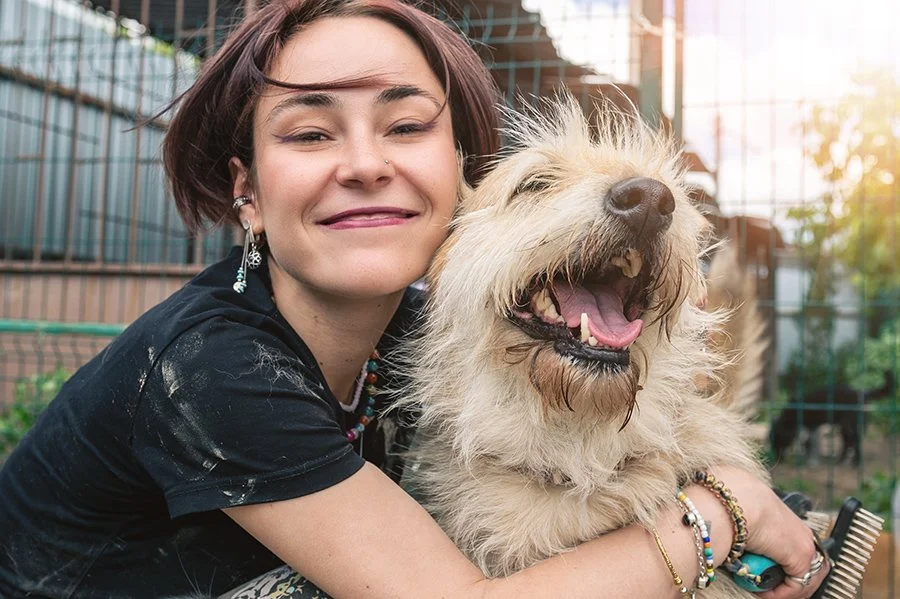
October is National Adopt a Shelter Dog Month! photo: AdobeStock
It’s October and that means it’s National Adopt a Shelter Dog Month! This is the month when multiple animal rescue organizations and animal shelters work together to encourage people to adopt dogs, as well as other animals, from local shelters.

Of course, encouraging people to adopt, not shop, is something these organizations do all year long. But during October, national media attention is focused on these efforts, highlighting awareness for people who may never have considered a shelter dog before. So if you have been thinking about adopting a special furry friend, there is no sweeter time than this month to do so.
October is also the month of Halloween, a time to celebrate with ghost stories, tricks and treats, and jack-o-lanterns. But even though it’s lots of fun, not all is well in Halloween-land. Though Halloween culture has evolved over the years (does anyone remember the minimalistic and retro-fabulous bedsheet with two eye holes cut out?), some unreasonable fears associated with the holiday have not. Concerns about hidden razor blades in apples may no longer top our collective list of fears, but illogical phobias about certain types of animals - such as bats, black cats, and rats - still persist, not just during Halloween but throughout the year.
Take rats, for example. It’s amazing that these misunderstood animals could be the stars of popular motion pictures (“Ratatouille”) and beloved hit songs (“Ben” by Michael Jackson), yet be despised by so many in real life. These small rodents are not only adorable and full of personality, but they support our vast wildlife ecosystem of hawks, owls, coyotes, raccoons, and more. Unfortunately, their ubiquitousness and their role in the food web has led to a huge problem: the prevalence of rat poison in San Francisco.
It’s shocking to think you could be strolling in one of our beautiful San Francisco parks, gazing awestruck at a hawk or owl soaring above, only to find a poison bait box across the street. The harmful impacts of modern rat poison - specifically, anticoagulant rodenticides (ARs) - have become a widespread problem. Poisoned rats not only suffer painful deaths, but they become disoriented and lethargic, making them easy prey. As non-target wildlife (or even roaming pet cats) eat these rats, they too become poisoned by the ARs, leading to illness and death.
The impacts of ARs have been well-documented in California. National Park Service researchers around the Santa Monica Mountains found that 88% of evaluated bobcats, coyotes, and mountain lions tested positive for one or more anticoagulant compounds. Birds of prey are also affected; one study detected AR residues in 84% of tested birds. Mange related to ARs is another cause for concern. The list goes on.
But it doesn’t have to be this way. The choice isn’t between opening our homes to all rodents or using inhumane substances to kill them. In addition to tried-and-true approaches like keeping lids on all trash receptacles, researchers are exploring new innovations and methods to ensure rodents stay out of our homes without harming wildlife.
Commissioners are excited to welcome one of these researchers to the Commission of Animal Control and Welfare’s November 9 meeting. Tanea Stephens will join us to share her findings from a pilot program in the Upper Queen Anne district of Seattle, spearheaded by the nonprofit Raptors Are The Solution (RATS). This program experimented with using nontoxic fertility methods to reduce rat populations in the pilot area. The findings are extremely promising and suggest this could be an effective long-term solution to curtailing rat populations in wider areas. We hope you will join us for this exciting talk to learn more about the rat issue.
And there’s more! At our October 12 meeting, we will also hear a presentation from Mickaboo Companion Bird Rescue. As you may be aware, the wild parrot was recognized earlier this year as the official animal of San Francisco. Since then, the commission has received requests from people asking for more information about these amazing birds. The Mickaboo folks recently provided an informative presentation to the San Francisco Board of Supervisors regarding the organization’s work helping and celebrating the wild birds in our city. We look forward to having representatives of this group join us this month.
Best wishes for a safe and happy Halloween. See you at City Hall!
* Commissioner Michael Angelo Torres also contributed to this column.
* * * * * * * * * * *
The next meeting of the Commission of Animal Control and Welfare will be held at 5:30 p.m., Thursday, October 12, in Room 408, City Hall, 1 Dr. Carlton B. Goodlett Place, San Francisco, CA 94102. Information about remote access to meetings is available at sf.gov/animalcommission. Agendas are published 72 hours prior to the meeting.
* * * * * * * * * * *
The views and opinions expressed in this column are those of Commissioners Garfinkel and Torres and do not necessarily reflect the official policies or positions of the Commission of Animal Control and Welfare.